
Serving Detroit
Day Translations, Inc.
Serving Detroit & Wayne CountyAvailable 24/7 across Michigan
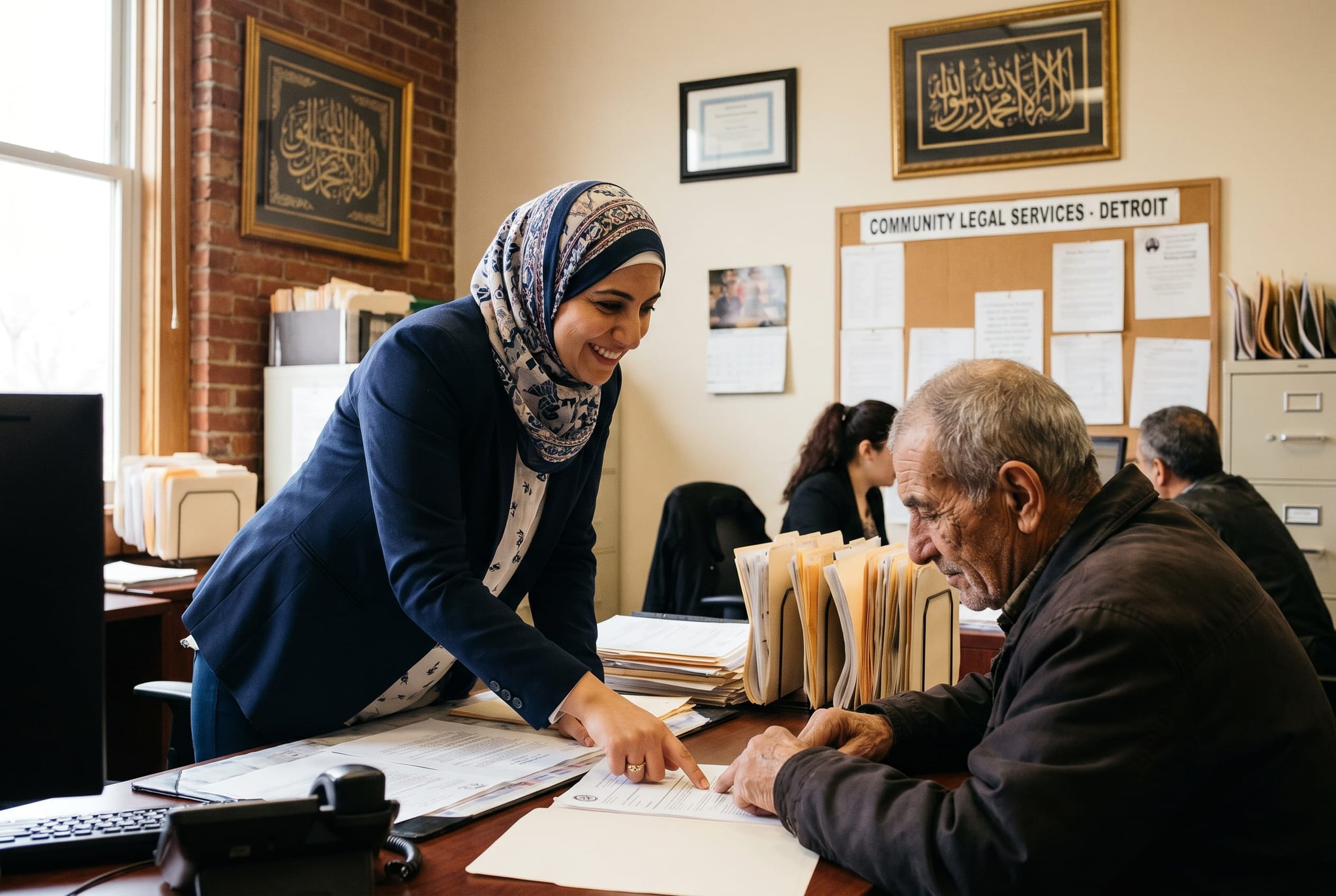
From Dearborn’s Levantine cafes to Hamtramck’s Banglatown and the Big Three’s engineering floors — certified translation, dialect-aware Arabic interpreters, and Wayne County court-ready language services in 500+ languages, on ISO-certified workflows, with same-day rush when deadlines can’t wait.
Trusted across regulated industries
Featured Detroit Report
Tracing the linguistic evolution from the 1880s Lebanese mahjar to today's vibrant Yemeni, Iraqi, and Bangladeshi communities — and the modern translation demands that follow them.
To understand the linguistic fabric of Detroit, one must look beyond the assembly lines and the rhythmic pulse of Motown. The true voice of the Motor City is a polyphonic chorus — Arabic guttural consonants and sweeping vowels woven with the melodic cadence of Bengali. The story begins not with Henry Ford, but with the mahjar, the great Arab diaspora of the late 19th century that transformed southeastern Michigan into a complex tapestry of dialects.
In the 1880s, the first wave of Lebanese and Syrian immigrants arrived in Detroit. Fleeing the declining Ottoman Empire, these early pioneers were predominantly Christian Maronites, Melkites, and Orthodox Christians from Mount Lebanon, peddlers and laborers navigating a new world with limited English. Today, Dearborn boasts the highest concentration of Arab-Americans per capita in the nation, while Hamtramck made history in 2015 as the first U.S. city to elect a Muslim-majority city council.
The initial influx of Arabic speakers was modest but culturally potent. Early Lebanese immigrants settled near the Detroit River and the eastern edges of the city, establishing small businesses, bakeries, and places of worship. Arabic-language newspapers began to circulate, providing news from the old country and helping the community navigate civic life.
When the automotive industry exploded in the 1910s and 1920s, the promise of the $5 workday at Ford's Highland Park plant drew thousands more from the Middle East — Palestinians, Yemenis, and Lebanese Muslims among them. The factory floor became a melting pot of languages, and informal translation by bilingual community leaders became essential — not just for workplace safety, but for housing, civic life, and legal navigation.
Today, the demand has evolved from informal community help into specialized, USCIS-accepted certified translations for immigration, legal proceedings, and corporate documentation. The descendants of those early autoworkers are now doctors, lawyers, and business owners who require sophisticated linguistic support that honors the nuances of their heritage.
The linguistic landscape of Detroit is a living archive of migration — every dialect tells a story of displacement, resilience, and reinvention.
By the late 20th century, the demographic center of Arab Detroit had shifted to Dearborn’s South End, near the sprawling Ford Rouge Plant. The 1971 founding of the Arab Community Center for Economic and Social Services (ACCESS) marked a turning point, providing structured support and services for new immigrants.
According to research from the University of Michigan’s Arab American Studies program, linguistic diversity within Dearborn expanded significantly after the Lebanese Civil War in the 1970s and the Gulf Wars in the 1990s and 2000s — bringing massive influxes of Iraqi and Yemeni refugees, each with distinct dialects.
For legal and medical professionals in Wayne County, generic Modern Standard Arabic translation is often insufficient. Precision requires ATA-certified translators who understand regional nuances and colloquialisms — ensuring that a medical diagnosis or legal deposition is conveyed with absolute accuracy. This is where HIPAA-compliant medical translation becomes a moral imperative, not just a regulatory one.
Estimated Arab-American population in the Detroit metropolitan area, illustrating the cumulative impact of the mahjar, post-war migration, and Gulf-era refugee waves.
Population estimates
While Dearborn solidified its status as the capital of Arab America, a different linguistic phenomenon emerged on the border of Detroit and Hamtramck. Historically a Polish enclave, Hamtramck began shifting in the late 20th century. From the 1990s onward, Bangladeshi immigrants transformed the area now known as Banglatown into a vibrant hub of South Asian culture.
The introduction of Bengali — specifically the Sylheti dialect spoken by many of the immigrants — added a new layer of complexity. The Hamtramck Public School district reports students speaking over 30 different languages at home, with Bengali and Arabic the most prominent alongside English.
When Hamtramck issues public health advisories, voting information, or municipal updates, it must do so in English, Arabic, and Bengali to ensure equitable access for all residents.
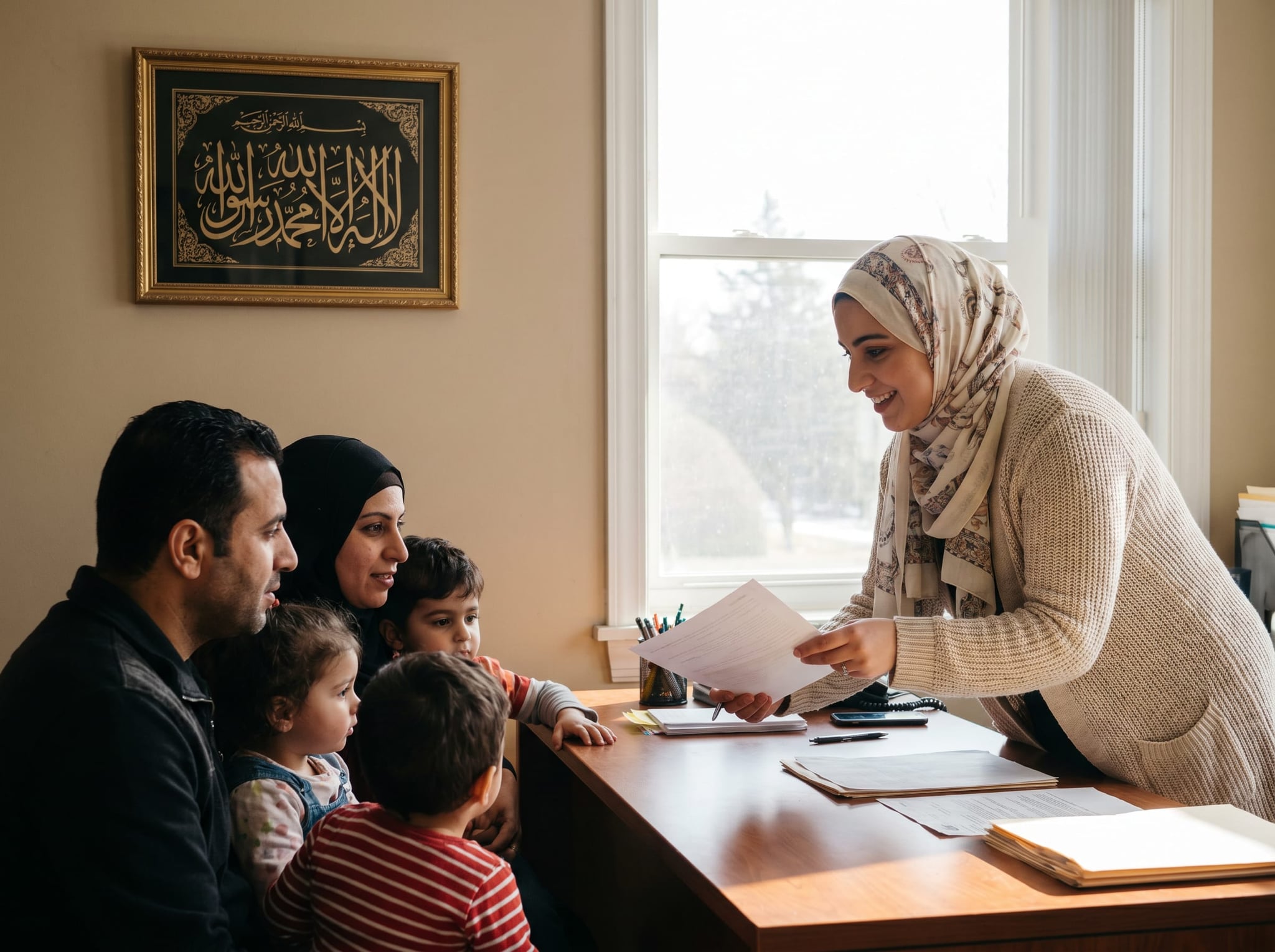
Detroit's economic engines have diversified, and so have the translation needs of its industries. The automotive sector — long the lifeblood of the region — is now a global enterprise. Detroit-based automakers and suppliers engage in international contracts that require meticulous technical translation: engineering schematics for Mexican plants, software interfaces for European EVs, joint venture agreements with Asian partners. ISO 17100 standards are critical to ensuring quality, safety, and precision.
The robust Arab-American legal community in Dearborn handles a vast array of international and immigration law cases. These often hinge on the precise translation of foreign records — birth certificates, marriage licenses, academic transcripts, and court rulings from the Middle East. The demand for USCIS-accepted certified translations is constant, requiring linguists fluent in source and target languages and deeply versed in the legal frameworks of both jurisdictions. A single mistranslated word in an asylum application can have profound consequences.
In Banglatown, a different industry is quietly thriving. Drawing on Bangladesh's textile heritage, a niche garment and tailoring industry has emerged. As these small businesses expand, connecting with suppliers in South Asia and customers across the United States, the need for commercial translation and localization grows — from import/export documentation to e-commerce localization.
Detroit's story is one of continuous reinvention, driven by the diverse communities that call it home. The Arabic spoken in Dearborn cafes and the Bengali heard in Hamtramck markets are repositories of history, culture, and identity. Language attrition — the gradual loss of a native language across generations — is a significant concern for many immigrant families. Professional translation and interpretation services bridge this generational gap, ensuring elders can communicate with healthcare providers and legal representatives, while younger generations can access the documents and histories of their ancestors.
At Day Translations, translating a document is not merely a mechanical substitution of words. It is an act of cultural mediation. When we provide certified translation services in Detroit, we honor the legacy of the mahjar, support the entrepreneurial spirit of Banglatown, and facilitate the global reach of the Motor City’s industries.
Industries
The work we deliver across Detroit is shaped by the city’s biggest engines and the regulated, deadline-bound environments they operate in.
Engineering schematics, supplier contracts, and software localization for Detroit automakers and tier-1 suppliers — translated under ISO 17100 with deep automotive terminology expertise.
Dearborn-based immigration and legal practices need precise USCIS-accepted translations of Middle Eastern records — birth certificates, marriage licenses, and court rulings.
Sylheti-aware Bengali translators for Hamtramck's Banglatown — covering schools, civic notices, and the neighborhood's growing garment and small-business sector.
Patient consents, discharge instructions, IRB protocols, and on-site medical interpreters — HIPAA-aligned, for Henry Ford Health, DMC, Beaumont, and the region's research hospitals.
Translation for TARDEC, Selfridge, and defense contractors operating across the Detroit corridor — handled under role-based, audit-logged workflows.
Multilingual public health, voting, and municipal communications in Arabic, Bengali, Spanish, Polish, Albanian, and Chaldean Aramaic for Wayne, Oakland, and Macomb counties.
How we work
Files received over encrypted transfer; mapped against IATF 16949 supplier qualification windows, OEM PPAP / APQP submission deadlines, Wayne County Circuit Court calendars, and any Henry Ford or DMC discharge timeline. Glossary aligned with Day’s Detroit domain bank — Big Three engineering and recall terminology, Lebanese vs Yemeni vs Iraqi Arabic register notes, Sylheti Bengali for Banglatown, and Hamtramck municipal lexicons.
Court-certified Arabic, Bengali, and Spanish interpreters dispatched for Wayne County and U.S. federal hearings; ISO 17100 automotive translators (with IATF 16949 familiarity) routed to Big Three engineering schematics and supplier PPAP packets; HIPAA-aligned medical linguists matched to Henry Ford Health Arabic patient interactions and DMC discharge consults; Sylheti-aware Bengali specialists assigned to Hamtramck and Banglatown community work.
Signed Statement of Accuracy, bilingual PDF formatted for Wayne County Circuit Court e-filing and USCIS asylum / family-petition packets, IATF 16949-aligned supplier documentation pack with controlled terminology, and on-site Arabic or Bengali interpreter dispatch when the hearing or hospital encounter demands it. Apostille and notarization handled in-house when the receiving authority requires it.
Dedicated linguist pools
Brand-voice memory across years
Encrypted file transfer
Role-based access · signed NDAs
99.9% accuracy rate
Across 100,000+ clients served
Why Detroit
When a single document can shift an immigration ruling, a supplier negotiation, or a hospital discharge — these are the operational realities the city demands, and what we set up our Detroit work around.
On-site interpreters dispatched across Wayne, Oakland, and Macomb counties — Dearborn, Hamtramck, downtown Detroit, and supplier campuses in the suburbs.
Certified translations formatted for USCIS packets and Wayne County and U.S. federal court submissions — with signed Statements of Accuracy.
Yemeni, Iraqi, Lebanese, and Levantine Arabic interpreters — not generic MSA — for civil, criminal, immigration, and medical settings.
Overnight, weekend, and holiday coverage for filings and clinical communications that don't respect office hours.
Legal, medical, and automotive documents routed through secure, role-based workflows with signed NDAs and audit logs.
ISO 17100-certified technical translation for engineering schematics, supplier contracts, and EV software interfaces destined for global markets.
Services
Certified translations formatted for USCIS packets and Wayne County / U.S. federal court submissions — with signed Statements of Accuracy.
Yemeni, Iraqi, Lebanese, and Levantine Arabic specialists — not generic MSA — for legal, medical, and immigration matters across Dearborn and the metro.
Patient consents, discharge instructions, IRB protocols, and clinical trial documentation — under HIPAA-aligned PHI workflows for Henry Ford, DMC, and Beaumont.
Court-certified Arabic, Bengali, and Spanish interpreters for civil, criminal, and immigration cases across Wayne County and U.S. federal courts.
ISO 17100 certified translation of engineering schematics, supplier contracts, and EV software interfaces for the Big Three and tier-1 suppliers.
Legal, medical, financial, and technical document translation for Detroit clients — covering contracts, marketing, and global rollout localization.
Credentials
Verified · third-party audited
Get in touch
Multiple ways to reach us. Choose what works best for you.
Serving Detroit
Our online form is the easiest and fastest way to submit your documents.
Email your scanned documents to [email protected]
Fax your documents to 1-800-856-2759
FAQ
Why Day Translations
Since 2007 we’ve been the linguistic operations layer for the Big Three (Ford in Dearborn, GM in Detroit, Stellantis in Auburn Hills) and their IATF 16949 supplier base, the Arab-American legal and medical community in Dearborn and East Dearborn, Hamtramck and Banglatown’s Bengali-Yemeni civic infrastructure, Henry Ford Health and Detroit Medical Center, and the Wayne County Circuit Court. Court-certified Arabic, Bengali, and Spanish interpreters dispatched within hours; ISO 17100 automotive translators paired with IATF 16949 and OEM-approved glossaries; HIPAA-aligned PHI workflows for Henry Ford’s Arabic-speaking patient panel and DMC’s discharge teams.
That same Detroit operations layer runs on ISO 17100 quality and ISO 27001 security with HIPAA-aligned protocols and a SOC-2 Type II certification — calibrated to the city’s actual working day. A Stellantis tier-1 supplier qualification packet in the morning, a Wayne County asylum hearing for an Iraqi family in the afternoon, and a Henry Ford labor-and-delivery interpretation for a Yemeni patient that evening all route through the same audit-ready vendor without you switching providers mid-week.
Get started
Quote requests return quickly. Standard translation begins the same day. Rush windows confirmed by a project manager as soon as we have your requirements.
Nearby metros, the languages your market speaks, and the industries we know best — all under one roof.