
Baltimore Office
Day Translations, Inc.
Serving Baltimore & Baltimore CountyAvailable 24/7 across MarylandGet directions
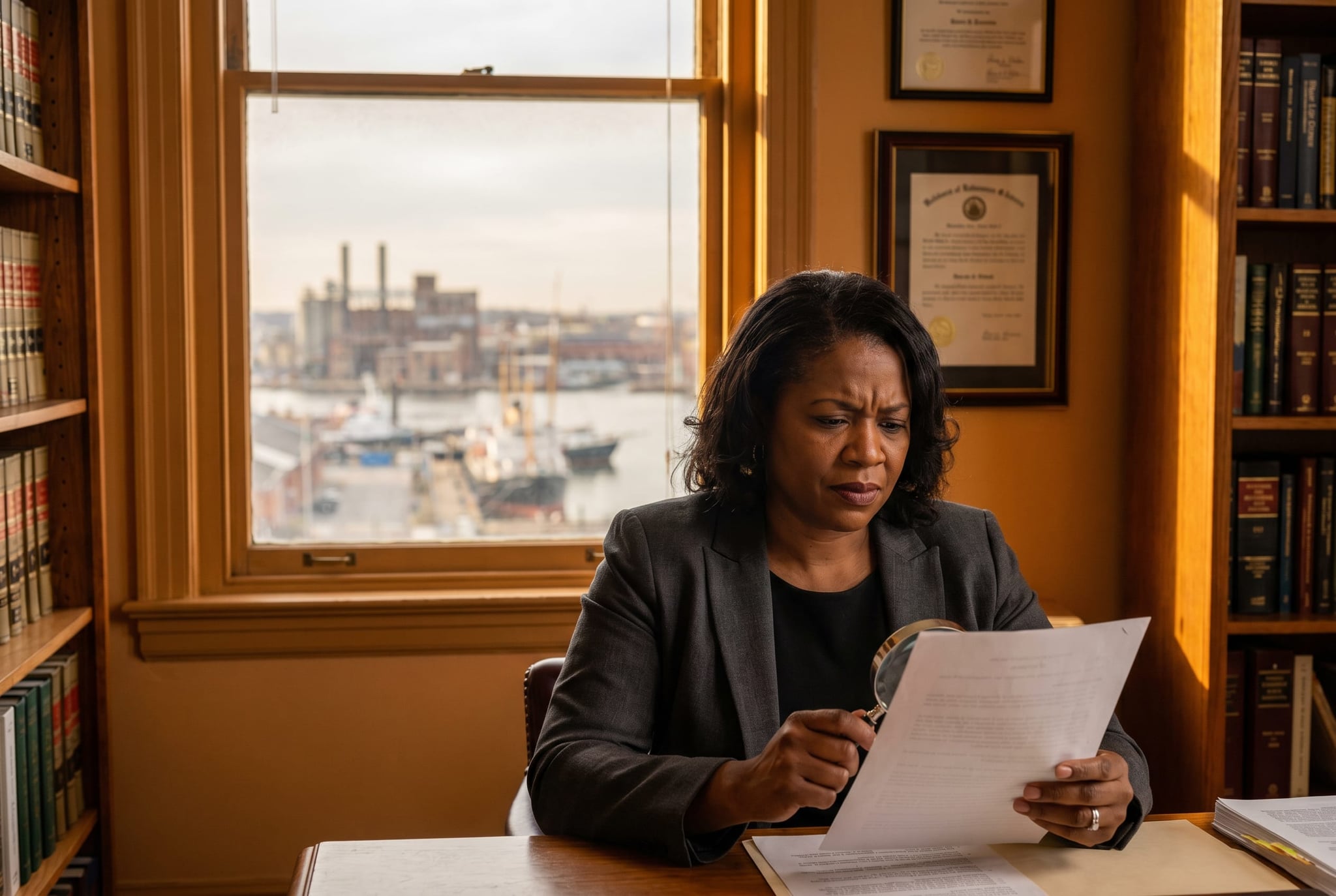
Day Translations supports the Port of Baltimore, Johns Hopkins International, federal contractors along the Baltimore-Washington corridor, and Baltimore’s growing East African and Latino communities — in 500+ languages on ISO-certified workflows.
Trusted across regulated industries
Industries
The work we deliver across Baltimore is shaped by the city’s biggest engines and the regulated, deadline-bound environments they operate in.
Bills of lading, customs declarations, hazmat SDS, and commercial invoices translated for U.S. CBP and logistics partners. The nation's leading port for autos and farm machinery moves on multilingual paperwork.
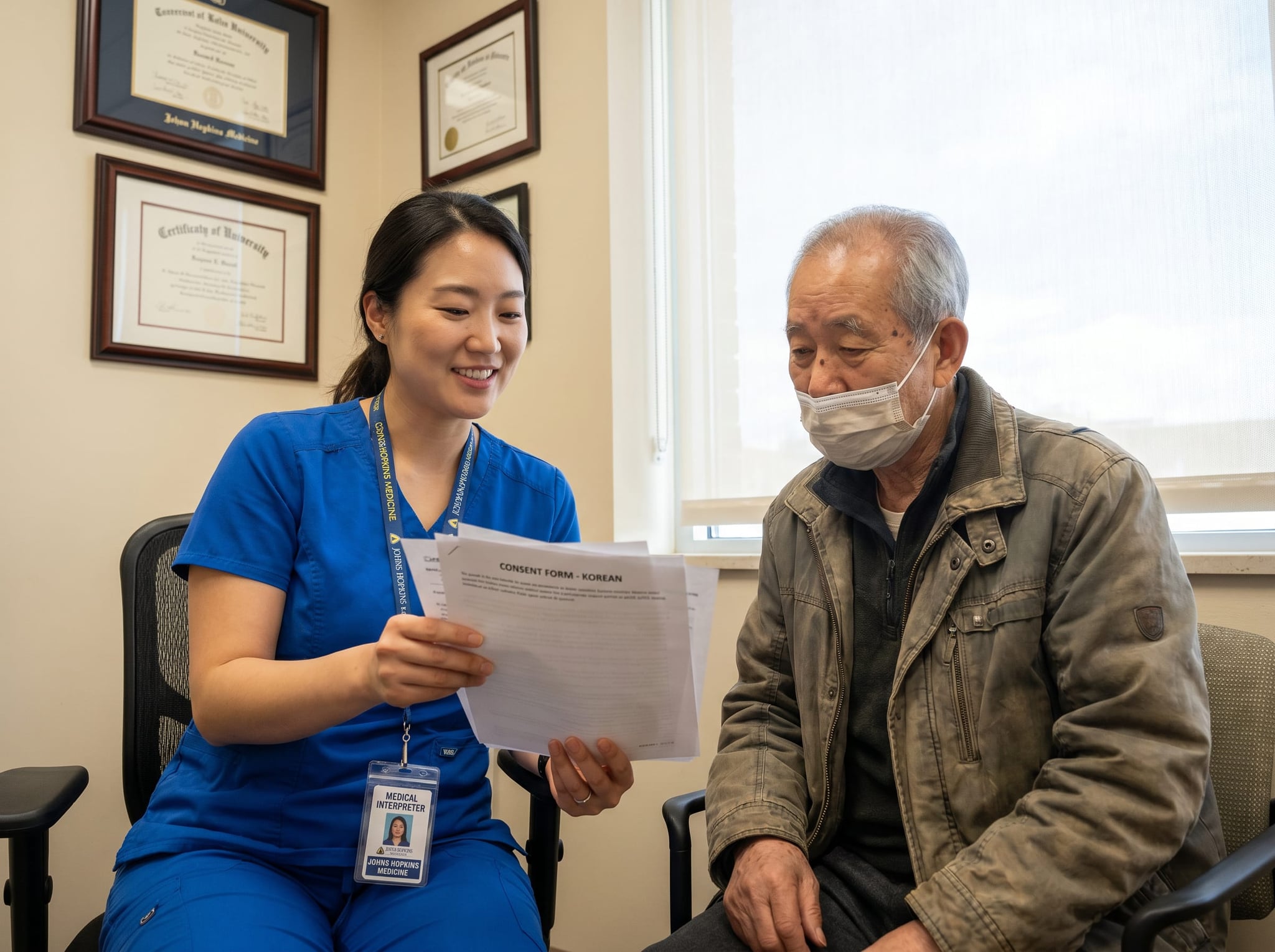
HIPAA-aligned translation of medical records, consent forms, and discharge instructions, plus on-site medical interpreting for international patients arriving from 100+ nations annually.
Translation services for NIH, FDA, NIST, and Baltimore-area federal research clinics — clinical trial protocols, IRB documentation, and multilingual public-health materials.
ISO 17100-certified translation for Fort Meade-area contractors, NSA and U.S. Cyber Command vendors, defense equipment manuals, and multinational cybersecurity protocols.
USCIS-accepted certified translations and interpreting for Baltimore's growing East African (Amharic, Yoruba) and Latino communities — asylum applications, court interpreting, and resettlement support.
Translation and interpreting for Highlandtown, Patterson Park, and Southeast Baltimore community organizations, schools, and businesses serving Spanish, French, Korean, Chinese, and Arabic populations.
Why Day Translations
Since 2007 we’ve been the linguistic operations layer for the Helen Delich Bentley Port of Baltimore, Johns Hopkins Medicine and Johns Hopkins University, the University of Maryland Medical Center, NSA Fort Meade-area defense contractors, the U.S. District Court of Maryland, and the Maryland state court system. Court-certified Spanish, Mandarin, and Korean interpreters dispatched within hours; ISO 17100 technical translators paired with maritime and clinical-trial glossaries; HIPAA-aligned PHI workflows for Hopkins IRB consent packets and multi-site clinical trials.
That same Baltimore operations layer runs on ISO 17100 quality and ISO 27001 security with HIPAA-aligned protocols and a SOC-2 Type II certification — calibrated to the city’s actual working day. A Sparrows Point customs clearance for an inbound roll-on/roll-off vessel at 6:00 a.m., a Hopkins IRB-consent back-translation by midday, an unclassified federal-contractor proposal review for a Fort Meade-area vendor that afternoon, and a Greektown community-health interpretation that evening all route through the same audit-ready vendor without you switching providers mid-week.
Why Baltimore
When a cargo ship can't clear customs without translated paperwork and a Hopkins surgical briefing can't proceed without a certified interpreter — these are the operational realities Baltimore demands, and what we set up our Maryland work around.
On-site interpreters dispatched across the Helen Delich Bentley Port of Baltimore, Johns Hopkins Hospital, the Baltimore-Washington corridor, and Highlandtown community sites.
Certified translations formatted for USCIS packets, Baltimore City and U.S. federal court submissions — with signed Statements of Accuracy.
Multi-hundred-page medical record translation for Hopkins International, plus HIPAA-aligned interpreting for consultations, surgical briefings, and post-op care.
Overnight, weekend, and holiday coverage for shipping deadlines, clinical communications, and federal work that doesn't respect office hours.
Defense, intelligence, and medical material routed through secure, role-based workflows with signed NDAs, audit logs, and clearance-vetted linguists.
Amharic, Yoruba, Tigrinya, Spanish, and French interpreting and translation for Baltimore's growing African and Latin American communities.
How we work
Files received over encrypted transfer; mapped against Port of Baltimore vessel arrival windows and U.S. Customs and Border Protection clearance deadlines, Johns Hopkins IRB submission cycles, federal contracting proposal windows for NSA Fort Meade-area vendors, and Maryland state and U.S. District Court of Maryland calendars. Glossary aligned with Day's Baltimore domain bank — HS-code and hazmat customs terminology, Hopkins clinical-trial and IRB-consent vocabulary, Greek and Highlandtown-Spanish community lexicons.
ISO 17100 maritime and customs translators assigned to bills of lading, hazmat SDS, and HS-code declarations for Sparrows Point and Dundalk Marine Terminal; HIPAA-aligned medical linguists paired with Hopkins IRB protocols for back-translation of Spanish, Mandarin, Russian, and Arabic informed-consent packets; cleared linguists routed to unclassified federal contractor work for Fort Meade-area vendors; court-certified Spanish, Mandarin, Korean, and Greek interpreters dispatched to Maryland state and U.S. District Court of Maryland hearings.
Signed Statement of Accuracy, CBP-formatted customs and HS-code translation packs for shipping agents, IRB-ready bilingual informed-consent forms with documented back-translation for Hopkins multi-site trials, federal-contractor proposal-translation deliverables under documented chain-of-custody, USCIS-accepted certified packets for asylum and family-petition filings, and on-site interpreter dispatch when a hearing or surgical briefing demands it. Apostille and notarization handled in-house when the receiving authority requires it.
Dedicated linguist pools
Brand-voice memory across years
Encrypted file transfer
Role-based access · signed NDAs
99.9% accuracy rate
Across 100,000+ clients served
Services
USCIS, court, academic, and corporate certified translation in Baltimore. ATA-certified, accepted nationwide with signed Statements of Accuracy.
Legal, medical, financial, and technical document translation for Baltimore clients — under our ISO 17100 quality system.
HIPAA-aligned medical translation in 50+ languages for international patients — medical records, consent forms, discharge instructions, and on-site interpreting.
Court, conference, medical, and business interpreters available across Baltimore in 500+ languages — including Amharic, Yoruba, Spanish, and Korean.
Maritime, customs, and trade-document translation — bills of lading, customs declarations, hazmat SDS, and commercial invoices for shipping agents.
Translators cleared for sensitive defense and federal work — Fort Meade-area contractors, cybersecurity firms, and intelligence support.
Credentials
Verified · third-party audited
Featured Baltimore Report
How port logistics and Johns Hopkins clinical translation drive the demand for global language solutions in Maryland. The Port of Baltimore handles cargo from over 50 countries while Johns Hopkins Medicine treats patients from more than 100 nations annually.
Baltimore is a city defined by its deep-water port and its world-renowned medical institutions. Often overshadowed by neighboring Washington D.C. in discussions of international diplomacy, Baltimore operates as a critical node in the global supply chain and international healthcare network. The Port of Baltimore handles cargo from over 50 countries, while Johns Hopkins Medicine treats patients originating from more than 100 nations annually. This intersection of heavy maritime trade and elite clinical care creates a highly specialized, high-stakes linguistic ecosystem.
From the multilingual documentation required to clear roll-on/roll-off cargo through customs, to the life-saving necessity of accurate medical interpreting in clinical trials, the demand for professional translation services in Baltimore is both vast and highly technical.
Baltimore’s economy is uniquely bifurcated yet complementary. The Helen Delich Bentley Port of Baltimore stands as one of the busiest and most specialized ports in the United States. According to the Maryland Department of Commerce, the port generates billions in economic value and supports tens of thousands of jobs — the nation’s leading port for handling automobiles, light trucks, and farm machinery. That volume of international trade necessitates a constant flow of cross-border communication and regulatory compliance across dozens of languages.
On the other side of the city lies Johns Hopkins Medicine, a global beacon of medical research and patient care. The institution's international patient program draws individuals from across the globe seeking advanced treatments unavailable in their home countries. Translation services in Baltimore are rarely simple consumer-level requests — they are complex, industry-specific projects that require deep subject-matter expertise.
Maritime logistics is governed by strict international regulations, complex contracts, and precise technical specifications. When a cargo ship arrives at the Port of Baltimore from Bremerhaven, Yokohama, or Santos, it brings a mountain of paperwork that must be processed rapidly to avoid costly delays. Bills of lading, customs declarations, hazardous materials safety data sheets, and commercial invoices must often be translated into English for U.S. Customs and Border Protection and local logistics partners.
Legal frameworks around international shipping disputes require absolute precision. When cargo is damaged or contracts are breached, legal teams rely on ATA-certified translators for accurate renditions of foreign-language contracts, insurance policies, and maritime law documents. A single mistranslated term in a liability clause can alter the outcome of a multi-million-dollar arbitration.
The human element drives demand too. International crews require medical attention, legal assistance, and immigration processing while docked — USCIS-accepted certified translations of crew visas, passports, and medical records are routine necessities for shipping agents.
The velocity of global trade through the Port of Baltimore is entirely dependent on the seamless flow of information. When documentation is delayed by language barriers, cargo sits idle and supply chains fracture.
While the port handles the flow of goods, Johns Hopkins Medicine handles the flow of people seeking world-class healthcare. Johns Hopkins Medicine International is specifically designed to facilitate care for patients traveling from abroad — managing initial medical record review, travel logistics, and cultural accommodation.
The linguistic requirements are staggering. Before a patient even arrives in Baltimore, their complete medical history — often hundreds of pages of physician notes, lab results, and imaging reports — must be translated into English for the Hopkins medical team. This requires highly specialized medical translators who understand complex clinical terminology in both source and target languages.
Once on-site, the need shifts to real-time communication. HIPAA compliant medical interpreting is essential during consultations, surgical briefings, and post-operative care — the accuracy of this communication is literally a matter of life and death. Informed consent documents, discharge instructions, and prescription guidelines must be provided in the patient’s native language to ensure compliance and safety upon return home.
Relative volume index of international patients arriving at Johns Hopkins Medicine. The international patient program coordinates care for individuals from over 100 distinct nations annually, with significant volumes from the Middle East, Latin America, and East Asia.
Relative patient volume index
Beyond the port and the hospital, Baltimore's proximity to Washington D.C. and major military installations like Fort Meade — home to the National Security Agency and U.S. Cyber Command — creates a third pillar of translation demand: federal contracting and defense. The Baltimore-Washington corridor is densely populated with defense contractors, cybersecurity firms, and intelligence analysts.
These organizations frequently require translation services that meet the highest standards of security and quality assurance. When dealing with foreign threat intelligence, international defense contracts, or multinational cybersecurity protocols, there is zero margin for error. Agencies and contractors mandate ISO 17100 certified translation processes to ensure rigorous quality control, multi-step review, and absolute data security.
The translation of technical manuals for exported defense equipment, the localization of cybersecurity training modules for allied nations, and the rapid translation of open-source intelligence all require linguists who possess language fluency, security clearances, and deep technical domain knowledge.
While international trade and global healthcare drive specialized demand, local demographic shifts are reshaping Baltimore’s everyday linguistic landscape. According to the U.S. Census Bureau ACS, Baltimore’s foreign-born population has been steadily increasing, bringing a rich tapestry of languages to the city’s neighborhoods.
Spanish is the most widely spoken non-English language, particularly concentrated in Southeast Baltimore neighborhoods like Highlandtown and Patterson Park. This community drives the need for localized public-health information, bilingual educational resources, and Spanish-language legal services. Baltimore is also home to significant populations speaking French (often from West African nations), Korean, Chinese, and Arabic — alongside growing Amharic, Tigrinya, and Yoruba communities.
Local businesses, from retail to real estate, increasingly recognize the economic imperative of localization. Multilingual services, marketing materials, and customer support are no longer just a community service — they are a vital strategy for capturing market share in a diversifying city.
Get in touch
Multiple ways to reach us. Choose what works best for you.
Baltimore Office
Our online form is the easiest and fastest way to submit your documents.
Email your scanned documents to [email protected]
Fax your documents to 1-800-856-2759
FAQ
Get started
Quote requests return quickly. Standard translation begins the same day. Rush windows confirmed by a project manager as soon as we have your requirements.
Nearby metros, the languages your market speaks, and the industries we know best — all under one roof.