
Albuquerque Office
Day Translations, Inc.
Serving Albuquerque & New MexicoAvailable 24/7 across the SouthwestGet directions
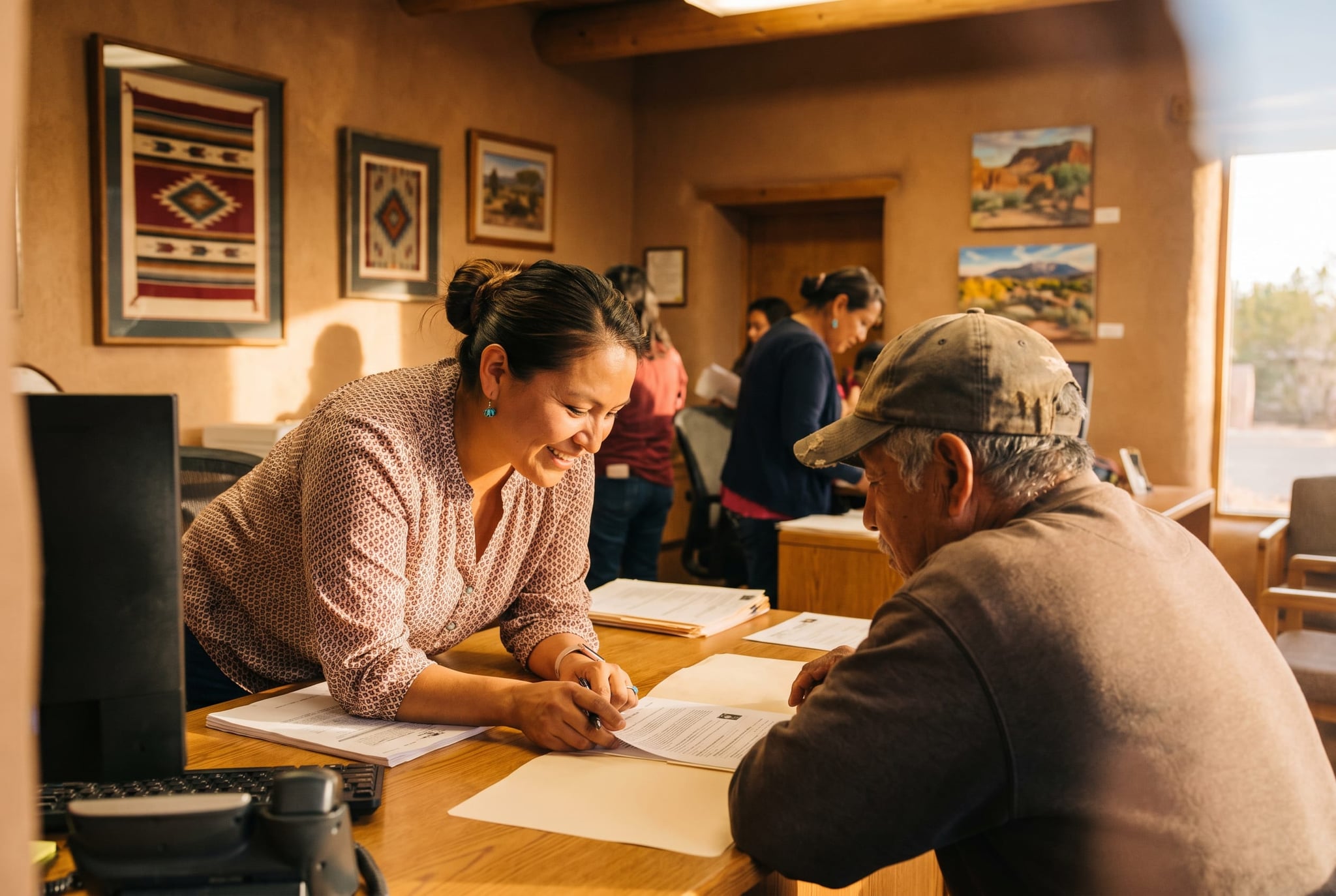
From Sandia National Laboratories and UNM Health to the Navajo Nation and 19 Pueblos — certified translation, on-site interpreting, and New Mexico language services in 500+ languages, including New Mexico Spanish, Navajo (Diné bizaad), and Pueblo languages, on ISO-certified workflows, with same-day rush when tribal courts, federal labs, or hospitals can’t wait.
Trusted across regulated industries
Featured Albuquerque Report
New Mexico is the only U.S. state where three distinct languages — English, Spanish, and Navajo — hold official heritage recognition. Our editorial team interviewed Elena Chavez, an Albuquerque-based linguist, to map how that trilingual foundation shapes daily life from tribal courts to Sandia National Laboratories.
New Mexico stands alone in the United States. It is the only state where three distinct languages — English, Spanish, and Navajo — hold official heritage recognition. This trilingual foundation isn’t a historical footnote; it is a living reality that shapes daily life, commerce, and governance in Albuquerque. From the corridors of Sandia National Laboratories to the proceedings of tribal courts, the demand for precise, culturally nuanced communication is paramount. The intersection of ancient traditions and cutting-edge science creates a linguistic ecosystem unlike any other in the country.
To understand how this environment impacts professional language services, we sat down with Elena Chavez, a senior linguist and cultural consultant based in Albuquerque. Elena has spent over two decades facilitating communication across New Mexico’s communities, ensuring that everything from legal decrees to scientific research is accurately conveyed.
Day Translations: Elena, how does New Mexico’s history shape the translation landscape in Albuquerque today?
Translation in Albuquerque isn't just about converting words; it's about bridging sovereign nations and preserving ancient heritages in modern legal frameworks.
Elena Chavez: You really have to look back to the New Mexico Constitution of 1912. Article XII specifically mandates the training of teachers in both English and Spanish to ensure bilingual education. But it goes beyond that — the state has a profound commitment to its Native American heritage. The Navajo Nation, the Pueblos, and the Apache tribes have a massive presence here. Translation services in Albuquerque aren’t just about business expansion; they are about civil rights, heritage preservation, and legal compliance. The framers understood that language is inextricably linked to identity and justice.
Day Translations: How does that translate into everyday needs?
Elena Chavez: It means we operate in a highly specialized environment. Translating a legal document into Spanish here requires understanding the specific dialect and legal terminology of New Mexico, which differs significantly from Miami or Los Angeles. The Spanish spoken in Northern New Mexico retains archaic elements from the 16th and 17th centuries, mixed with Indigenous loanwords. A standard international Spanish translation might completely miss the mark in a local legal context. You also need USCIS-accepted certified translations for immigration and official documentation, with deep cultural competency layered on top.
New Mexico’s constitution is unique in its explicit protection of language rights. It required that all laws passed by the legislature be published in both English and Spanish for the first twenty years of statehood, establishing a precedent for bilingual governance that still influences state policy today.
That dual-language mandate was a critical compromise that allowed New Mexico to achieve statehood, ensuring that the Spanish-speaking majority at the time retained their political voice — a foundation modern translation work in Albuquerque continues to rest on.
Day Translations: How does the Native American presence impact your work, particularly in legal settings?
Elena Chavez: This is the most fascinating and challenging aspect of our work. New Mexico is home to 23 federally recognized tribes — 19 Pueblos, three Apache tribes, and the Navajo Nation. Tribal courts operate as sovereign entities. When a case crosses state and tribal jurisdictions, precise interpretation and translation are critical. Legal frameworks differ, and terminology doesn’t always have direct equivalents.
Elena Chavez: We frequently work with the Navajo Nation Council and various Pueblo governments. Many Indigenous languages, like Navajo (Diné bizaad), are highly descriptive and context-dependent — direct word-for-word translation often loses legal nuance. You need ATA-certified translators who understand tribal law and custom. Concepts of property ownership or family structure in Navajo law might require extensive explanation rather than a simple translated term.
Day Translations: Are there data points that highlight this need?
Elena Chavez: Absolutely. Per the U.S. Census Bureau and the New Mexico Indian Affairs Department, Navajo is the most spoken Native American language in the United States — over 85,000 people in New Mexico speak Navajo at home. Many elders prefer to conduct official business in their native tongue, which makes certified translation undeniable. The justice system simply cannot function equitably without robust language access programs tailored to these specific communities.
Navajo (Diné bizaad) leads by a wide margin among New Mexico's tribal languages — followed by Keres, Zuni, Tewa, and Tiwa across the 19 Pueblos.
Estimated speakers in New Mexico
Elena Chavez: Albuquerque is home to Sandia National Laboratories, and we sit close to Los Alamos National Laboratory. These institutions attract top scientific talent from across the globe. We are constantly handling highly technical documents — patents, research papers, and international compliance reports.
For this sector, adherence to international standards is non-negotiable. We rely heavily on ISO 17100 certified processes to ensure accuracy in scientific and technical translations. A mistranslated term in a nuclear physics paper or renewable energy patent can have massive repercussions — translators on these projects often hold advanced STEM degrees.
Healthcare is another massive pillar. With a large Spanish speaking population and significant Native American communities, hospitals like UNM Hospital must provide language access under federal regulations. This requires HIPAA-compliant translation and interpretation — medical records, patient consent forms, and telehealth consultations all need secure, accurate language support. In an emergency, an interpreter who understands both medical terminology and the patient’s cultural context can be the difference between life and death.
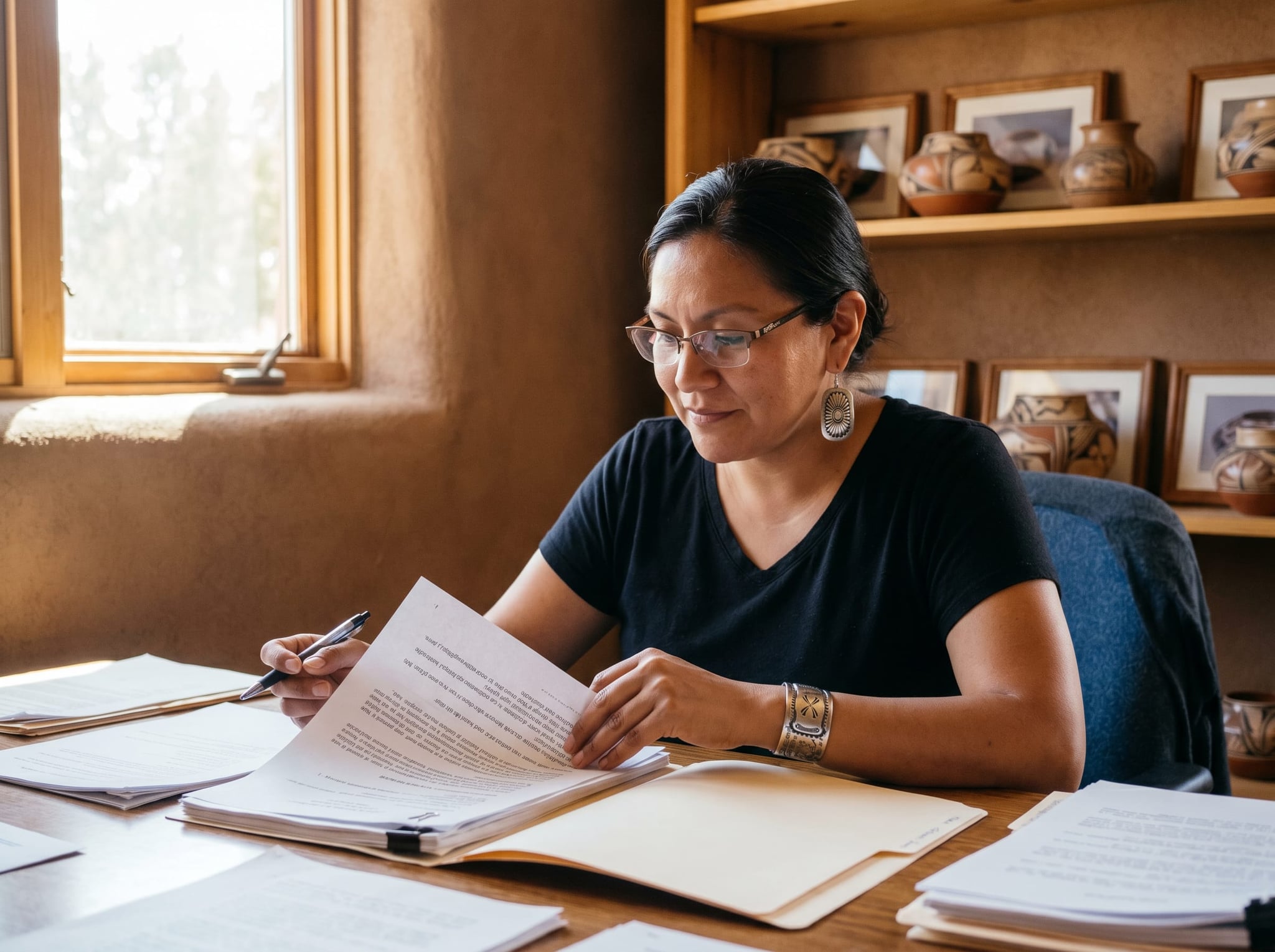
Elena Chavez: Heritage tourism is vital. Visitors come from all over the world for the Pueblos, authentic turquoise jewelry, and the Balloon Fiesta. Museums, galleries, and tour operators need their materials translated into multiple languages — German, Japanese, French, and Spanish. When a museum exhibit about Ancestral Puebloans is accurately translated, it lets international visitors connect with the history on a much deeper level.
Elena Chavez: Looking ahead, demand for specialized language services will only grow. As Albuquerque expands its tech sector while fiercely protecting its cultural roots, the need for nuanced, professional communication will remain at the heart of this city’s success.
Elena Chavez: Technology is a tool, but not a replacement for human expertise — especially here. Machine translation might be fine for the gist of an email, but it fails spectacularly with the nuances of Navajo legal terminology or Northern New Mexican Spanish. Cultural context is everything. A machine doesn’t understand the 1912 Constitution or the sovereign status of the Pueblos. Human translators — especially those who are ATA-certified and embedded in the local culture — will always be essential.
Industries
The work we deliver across Albuquerque is shaped by the city’s biggest engines and the regulated, deadline-bound environments they operate in.
Sandia National Laboratories and Los Alamos-adjacent work — patents, research papers, and international compliance reports translated by linguists with advanced STEM degrees.
Navajo Nation Council, 19 Pueblos, and three Apache tribes — certified interpretation and translation across sovereign jurisdictions, respecting tribal law and custom.
Patient consents, telehealth, and IRB protocols for UNM Hospital and clinics serving New Mexico's Spanish-speaking and tribal patient populations — HIPAA-aligned end to end.
USCIS-accepted certified translations and court-certified interpreters for New Mexico's bilingual state courts, immigration matters, and family law proceedings.
Northern New Mexico Spanish — preserving 16th- and 17th-century archaic elements and Indigenous loanwords that generic LATAM Spanish translators miss entirely.
Multilingual museum exhibits, gallery materials, and Balloon Fiesta-grade event interpretation — from German and Japanese to French — for international visitors to the Southwest.
How we work
Files received over encrypted transfer; mapped against Sandia and Los Alamos federal-lab contractor compliance windows, Pueblo tribal court calendars across the 19 sovereign Pueblos, Navajo Nation hearing dates, the Bernalillo County Metropolitan Court motion docket, and UNM Health LEP patient flow. Glossary aligned with Day’s Albuquerque domain bank — Sandia and Los Alamos technical and patent terminology, Tewa, Tiwa, and Keresan tribal-court vocabulary, New Mexico-register Spanish for historic land-grant matters, and UNM Health clinical lexicons.
Cleared technical translators dispatched for Sandia National Laboratories and Los Alamos National Lab patents, research papers, and international compliance reports; Tewa, Tiwa, Keresan, Towa, Navajo (Diné bizaad), and Apache linguists assigned to Pueblo and Navajo Nation tribal-court hearings under sovereign protocol; New Mexico-register Spanish translators (not generic LATAM Spanish) routed to Bernalillo County Metropolitan Court historic land-grant and family-law matters; HIPAA-aligned medical interpreters supplied to UNM Health for Spanish and Indigenous-language patient communication 24/7.
Signed Statement of Accuracy, bilingual PDF formatted for Pueblo tribal-court submission, Navajo Nation court e-filing, Bernalillo County Metropolitan Court clerk acceptance, USCIS packet submission, or Sandia and Los Alamos federal-contractor compliance — and on-site interpreter dispatch when a tribal-court hearing or federal-lab review demands it. Apostille and notarization handled in-house when the receiving Pueblo, Navajo Nation, or state authority requires it.
Dedicated linguist pools
Brand-voice memory across years
Encrypted file transfer
Role-based access · signed NDAs
99.9% accuracy rate
Across 100,000+ clients served
Why Albuquerque
When tribal courts convene, federal-lab patents file, and a hospital ER receives an elder who prefers Navajo — these are the operational realities the Southwest demands, and what we set up our Albuquerque work around.
On-site interpreters dispatched across Bernalillo County, the Pueblos, and Sandia for hearings, hospital escalations, and federal-lab meetings.
Certified translations formatted for USCIS packets and New Mexico state, tribal, and U.S. federal court submissions — with signed Statements of Accuracy.
Navajo (Diné bizaad), Apache, Keres, Tewa, Tiwa, and Zuni linguists — culturally fluent and respectful of sovereign protocols.
Overnight, weekend, and holiday coverage for filings, lab deadlines, and clinical communications that don't respect office hours.
Legal, medical, scientific, and federal-lab documents routed through secure, role-based workflows with signed NDAs and audit logs.
ISO 17100-certified scientific and technical translation for national labs — patents, research papers, and international compliance reports.
Services
Certified translations formatted for USCIS packets and New Mexico state, tribal, and U.S. federal court submissions — with signed Statements of Accuracy.
Northern New Mexico Spanish dialect — not generic LATAM Spanish — for legal, medical, and government documents that demand local accuracy.
Diné bizaad and Pueblo language specialists for tribal court, government work, and community interpreting — with deep cultural and legal context.
Patient consents, telehealth interpreting, and IRB protocols for UNM Hospital and Albuquerque clinics — under HIPAA-aligned PHI workflows.
ISO 17100 certified scientific and technical translation for Sandia National Laboratories and partners — patents, research papers, and compliance reports.
Legal, medical, financial, and technical document translation for Albuquerque clients — including museum exhibits, tourism materials, and Balloon Fiesta events.
Credentials
Verified · third-party audited
Get in touch
Multiple ways to reach us. Choose what works best for you.
Albuquerque Office
Our online form is the easiest and fastest way to submit your documents.
Email your scanned documents to [email protected]
Fax your documents to 1-800-856-2759
Mail or courier to Day Translations, Inc., Serving Albuquerque & New Mexico, Available 24/7 across the Southwest.
FAQ
Why Day Translations
Since 2007 we’ve been the linguistic operations layer for Sandia National Laboratories and Los Alamos National Lab work routed through Albuquerque, Kirtland Air Force Base contractors, University of New Mexico Health, the 19 sovereign Pueblos and the Navajo Nation tribal courts, the Bernalillo County Metropolitan Court, and the New Mexico-register Spanish communities whose presence pre-dates the 1912 Constitution’s explicit trilingual recognition. Cleared linguists for Sandia and Los Alamos federal-lab documentation; Tewa, Tiwa, Keresan, Towa, Navajo (Diné bizaad), and Apache specialists for Pueblo and Navajo Nation tribal court matters; HIPAA-aligned medical interpreters for UNM Health Spanish and Indigenous-language patient flow.
That same Albuquerque operations layer runs on ISO 17100 quality and ISO 27001 security with HIPAA-aligned protocols and a SOC-2 Type II certification — and a tribal-language roster that respects sovereign Pueblo and Navajo Nation protocols rather than treating them as a vendor afterthought. A Sandia federal-lab cleared-linguist patent in the morning, a Bernalillo County Metropolitan Court historic land-grant matter in New Mexico-register Spanish in the afternoon, and a Pueblo tribal court hearing in Tewa or Keresan that evening all route through the same audit-ready vendor without you switching providers between Kirtland, the courthouse, and the Pueblo.
Get started
Quote requests return quickly. Standard translation begins the same day. Rush windows confirmed by a project manager as soon as we have your requirements.
Nearby metros, the languages your market speaks, and the industries we know best — all under one roof.