
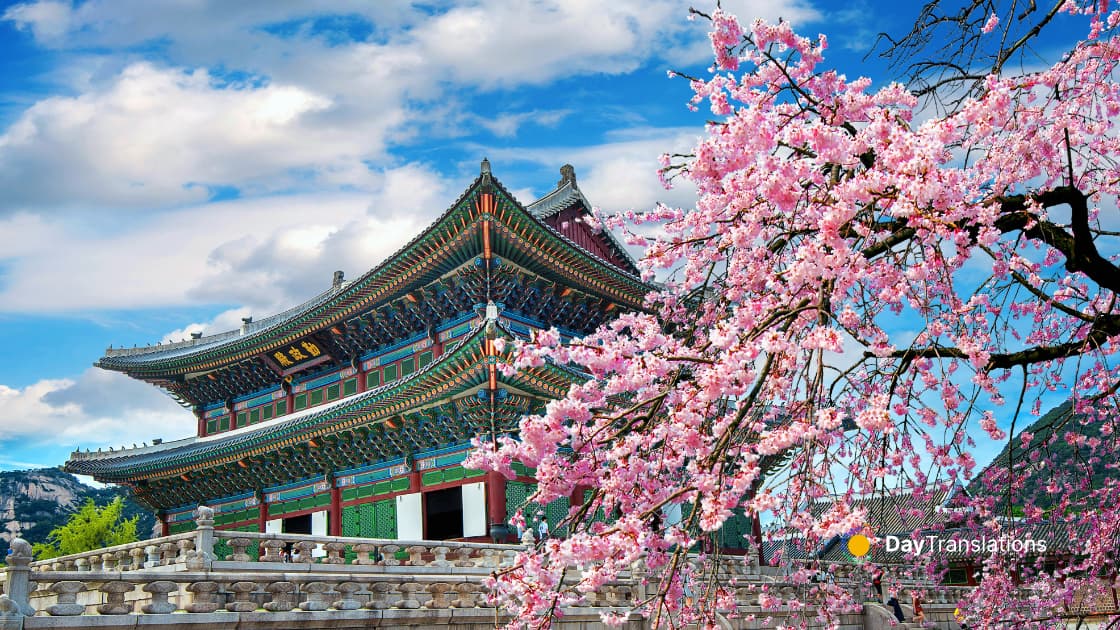
The Republic of Korea, commonly known as South Korea, is located on the southern portion of the Korean Peninsula. It is neighbored by the People’s Republic of China to the west, Japan to the east, and North Korea to the north. Its capital is Seoul, which is also its largest city. Since the partition of the Korean Peninsula in 1948, South Korea has developed into one of Asia’s most affluent countries.
South Korea has a market economy which ranks 14th in the world by nominal GDP and 12th by purchasing power parity (PPP), identifying it as one of the G-20 major economies. It is a high-income developed country and is a member of OECD. South Korea is one of the Asian Tigers, and is the only developed country so far to have been included in the group of Next Eleven countries.
:: Background of South Korea ::
An independent Korean state or collection of states has existed almost continuously for several millennia. Between its initial unification in the 7th century – from three predecessor Korean states – until the 20th century, Korea existed as a single independent country. In 1905, following the Russo-Japanese War, Korea became a protectorate of imperial Japan, and in 1910 it was annexed as a colony. Korea regained its independence following Japan’s surrender to the United States in 1945. After World War II, a Republic of Korea (ROK) was set up in the southern half of the Korean Peninsula while a Communist-style government was installed in the north (the DPRK). During the Korean War (1950-53), US troops and UN forces fought alongside soldiers from the ROK to defend South Korea from DPRK attacks supported by China and the Soviet Union. An armistice was signed in 1953, splitting the peninsula along a demilitarized zone at about the 38th parallel. Thereafter, South Korea achieved rapid economic growth with per capita income rising to roughly 17 times the level of North Korea. In 1993, KIM Young-sam became South Korea’s first civilian president following 32 years of military rule. South Korea today is a fully functioning modern democracy. President LEE Myung-bak has pursued a policy of global engagement since taking office in February 2008, highlighted by Seoul’s hosting of the G-20 summit in November 2010. Serious tensions with North Korea have punctuated inter-Korean relations in recent years, including the North’s sinking of the South Korean warship Cheonan in March 2010 and its artillery attack on South Korean soldiers and citizens in November 2010.
In this Country Profile
:: Geography of South Korea ::
Location: Eastern Asia, southern half of the Korean Peninsula bordering the Sea of Japan and the Yellow Sea
Geographic coordinates: 37 00 N, 127 30 E
Area:
total: 99,720 sq km
land: 96,920 sq km
water: 2,800 sq km
Area – comparative: slightly larger than Indiana
Land boundaries: 238 km
Coastline: 2,413 km
Maritime claims:
territorial sea: 12 nm; between 3 nm and 12 nm in the Korea Strait
contiguous zone: 24 nm
exclusive economic zone: 200 nm
continental shelf: not specified
Climate: temperate, with rainfall heavier in summer than winter
Terrain: mostly hills and mountains; wide coastal plains in west and south
Elevation extremes:
lowest point: Sea of Japan 0 m
highest point: Halla-san 1,950 m
Natural resources: coal, tungsten, graphite, molybdenum, lead, hydropower potential
Land use:
arable land: 16.58%
permanent crops: 2.01%
other: 81.41% (2005)
Irrigated land: 8,780 sq km (2003)
Total renewable water resources: 69.7 cu km (1999)
Freshwater withdrawal (domestic/industrial/agricultural):
total: 18.59 cu km/yr (36%/16%/48%)
per capita: 3,89 cu m/yr (2000)
Natural hazards: occasional typhoons bring high winds and floods; low-level seismic activity common in southwest; volcanism: Halla (elev. 1,950 m, 6,398 ft) is considered historically active although it has not erupted in many centuries
Environment – current issues: air pollution in large cities; acid rain; water pollution from the discharge of sewage and industrial effluents; drift net fishing
Environment – international agreements: party to: Antarctic-Environmental Protocol, Antarctic-Marine Living Resources, Antarctic Treaty, Biodiversity, Climate Change, Climate Change-Kyoto Protocol, Desertification, Endangered Species, Environmental Modification, Hazardous Wastes, Law of the Sea, Marine Dumping, Ozone Layer Protection, Ship Pollution, Tropical Timber 83, Tropical Timber 94, Wetlands, Whaling; signed, but not ratified: none of the selected agreements
Geography – note: strategic location on Korea Strait
:: People of South Korea ::
Population: 48,636,068 (July 2010 est.)
Age structure:
0-14 years: 16.8% (male 4,278,581/female 3,887,516)
15-64 years: 72.3% (male 17,897,053/female 17,196,840)
65 years and over: 10.8% (male 2,104,589/female 3,144,393) (2010 est.)
Median age:
total: 37.9 years
male: 36.5 years
female: 39.1 years (2010 est.)
Population growth rate: 0.258% (2010 est.)
Birth rate: 8.72 births/1,000 population (2010 est.)
Death rate: 6.15 deaths/1,000 population (July 2010 est.)
Net migration rate: 0 migrant(s)/1,000 population (2010 est.)
Urbanization:
urban population: 81% of total population (2008)
rate of urbanization: 0.6% annual rate of change (2005-10 est.)
Sex ratio:
at birth: 1.07 male(s)/female
under 15 years: 1.1 male(s)/female
15-64 years: 1.04 male(s)/female
65 years and over: 0.67 male(s)/female
total population: 1 male(s)/female (2010 est.)
Infant mortality rate:
total: 4.24 deaths/1,000 live births
male: 4.46 deaths/1,000 live births
female: 4 deaths/1,000 live births (2010 est.)
Life expectancy at birth:
total population: 78.81 years
male: 75.56 years
female: 82.28 years (2010 est.)
Total fertility rate: 1.22 children born/woman (2010 est.)
HIV/AIDS – adult prevalence rate: less than 0.1% (2007 est.)
HIV/AIDS – people living with HIV/AIDS: 13,000 (2007 est.)
HIV/AIDS – deaths: fewer than 500 (2007 est.)
Nationality: noun: Korean(s) adjective: Korean
Ethnic groups: homogeneous (except for about 20,000 Chinese)
Religions: Christian 26.3% (Protestant 19.7%, Roman Catholic 6.6%), Buddhist 23.2%, other or unknown 1.3%, none 49.3% (1995 census)
Languages: Korean, English widely taught in junior high and high school
Literacy:
definition: age 15 and over can read and write
total population: 97.9%
male: 99.2%
female: 96.6% (2002 est.)
School life expectancy (primary to tertiary education):
total: 17 years
male: 18 years
female: 16 years (2008)
Education expenditures: 4.2% of GDP (2007)
Geography of South Korea: Important Geographical Information about South Korea
In this Country Profile
South Korea occupies the southern portion of the Korean Peninsula, which extends some 680 miles (1,100 km) from the Asian mainland. This mountainous peninsula is flanked by the Yellow Sea to the west and Sea of Japan (East Sea) to the east. Its southern tip lies on the Korea Strait and the East China Sea.
The country, including all its islands, lies between latitudes 33° and 39°N, and longitudes 124° and130°E. Its total area is 38,622.57 square miles (100,032.00 km2).
South Korea can be divided into four general regions: an eastern region of high mountain ranges and narrow coastal plains; a western region of broad coastal plains, river basins, and rolling hills; a southwestern region of mountains and valleys; and a southeastern region dominated by the broad basin of the Nakdong River. South Korea’s terrain is mostly mountainous, most of which is not arable. Lowlands, located primarily in the west and southeast, make up only 30% of the total land area.
About three thousand islands, mostly small and uninhabited, lie off the western and southern coasts of South Korea. Jeju-do is located about 100 kilometers (about 60 mi) off the southern coast of South Korea. It is the country’s largest island, with an area of 1,845 square kilometers (712 sq mi). Jeju is also the site of South Korea’s highest point: Halla-san, an extinct volcano, reaches 1,950 meters (6,398 ft) above sea level. The most eastern islands of South Korea include Ulleungdo and Liancourt Rocks (Dokdo), while Marado and Socotra Rock are the southernmost islands of South Korea. South Korea has 20 national parks and popular nature places like the Boseong Tea Fields, Suncheon Bay Ecological Park, and the first national park of Jiri-san.
Professional Translation Organizations & Associations in South Korea
In this Country Profile
Below is a list of the major translation organizations and associations of South Korea.
:: List of Organizations ::
Korean Society of Translators
Pusan Interpreters’ Association
Information about the South Korean Flag: Colors and Meaning of the Flag of South Korea
In this Country Profile
The national flag of South Korea is white with a red (top) and blue yin-yang symbol in the center; there is a different black trigram from the ancient I Ching (Book of Changes) in each corner of the white field; the Korean national flag is called Taegukki. The general design of the flag also derives from traditional use of the tricolour symbol (red, blue and yellow) by Koreans starting from the early era of Korean history.
White is a traditional Korean color and represents peace and purity; the blue section represents the negative cosmic forces of the yin, while the red symbolizes the opposite positive forces of the yang; each trigram (kwae) denotes one of the four universal elements, which together express the principle of movement and harmony.
Extensive List of Languages of South Korea: Spoken and Extinct Languages
In this Country Profile
:: List of Languages ::
Korean [kor] 42,000,000 in Korea, South (1986). Population total all countries: 66,305,890. Also in American Samoa, Australia, Bahrain, Belize, Brazil, Brunei, Canada, China, Germany, Guam, Japan, Kazakhstan, North Korea, Kyrgyzstan, Libya, Mauritania, Mongolia, Mozambique, New Zealand, Northern Mariana Islands, Panama, Paraguay, Philippines, Russian Federation (Asia), Saudi Arabia, Singapore, Suriname, Tajikistan, Thailand, Turkmenistan, United States, Uzbekistan. Alternate names: Hanguk Mal, Hanguohua. Dialects: Seoul (Kangwondo, Kyonggido), Ch’ungch’ongdo (North Ch’ungch’ong, South Ch’ungch’ong), Kyongsangdo (North Kyongsangdo, South Kyongsangdo), Chollado (North Chollado, South Chollado), Cheju Island. Scholars differ as to whether or not Korean is related to Japanese. Some suggest that both languages are possibly distantly related to the Altaic group. Dialect boundaries generally correspond to provincial boundaries. Some dialects are not easily intelligible with others (Voegelin and Voegelin 1977). The suffix ‘-do’ on dialect names means ‘Province’. Comprehension of Standard Korean may be lower on Cheju Island. Classification: Language isolate
More information.
Korean Sign Language [kvk] Dialects: Related to Japanese and Taiwanese sign languages. Classification: Deaf sign language
:: Reference ::
Gordon, Raymond G., Jr. (ed.), 2005. Ethnologue: Languages of the World, Fifteenth edition. Dallas, Tex.: SIL International. Online version: http://www.ethnologue.com/
Famous South Korean People: South Korean Artists, Scientists, Leaders, Musicians, Politicians and Athletes
In this Country Profile
South Korea is a melting pot of cultures, ethnicities and religions with outstanding individuals who made a difference with their remarkable achievements.
:: List of Famous People from South Korea ::
Lee Myung-bak
Lee Myung-bak was sworn in as the 17th President of the Republic of Korea on February 25, 2008. Prior to his presidency, he was the CEO of Hyundai and the mayor of Seoul.
Ban Ki-moon
Ban Ki-moon became the eighth Secretary-General of the United Nations after succeeding Kofi Annan in 2007. At the time of his election as Secretary-General, Mr. Ban was the Republic of Korea’s Minister of Foreign Affairs and Trade.
Lee Dong-gun
Lee Dong Gun is a South Korean actor who debuted as a singer in 1998. He released two albums, namely, “Time to Fly” (1998) and “Much More” (2000). Although he was given the much needed attention when he debuted, his popularity as a singer did not make quite a long lasting impression. His acting career began when he guested in the Korean sitcom “Three Friends”. Though his stint here was just short, it shed new lights for his career. His performance in the hit SBS Drama “Lovers in Paris” particularly paved way for his success as an actor.
Choi Min-sik
Choi Min-sik started his career as a theatrical actor before adding film roles, first with parts in Park Jong-won’s films Kuro Arirang and Our Twisted Hero and later in the 1990s by appearing as a police investigator in No. 3 and as a North Korean agent in Korea’s most successful film ever at that point, Shiri. In the 2000s, aided by the success of Shiri, Choi continued to get versatile lead roles first as a gangster in Failan and then as a 19th-century painter in Chihwaseon. In 2003, he took on the role that brought him international attention as revenge-seeking Oh Dae-su in Oldboy.
Jang Dong-gun
Prominent South Korean actor and musician Jang Dong-gun made his debut in the MBC drama Our Heaven. In 2000, he starred in the film Friend, which at the time was the highest grossing Korean film of all time. Jang gained widespread critical acclaim for his portrayal of a troubled high school student who joins the mafia, paving the way for him to star in the 2004 Taegukgi: The Brotherhood of War, about the Korean War, which again shattered box office records. His portrayal of one of two brothers drafted into the war earned him a third Blue dragon award.
Ahn Sung-ki
Ahn Sung-ki is known to the public as the “National Best Actor of Korea”. A Roman Catholic, he was born in Daegu and grew up as a child actor, appearing in director Kim Ki-young’s celebrated film The Housemaid (1960). Starting from the 1980s, he appeared in nearly 100 movies. Due to his ability to speak several foreign languages, Ahn was appointed as UNICEF representative, and his image is often seen in advertisements on planes travelling to Korea.
Yoo Ji-tae
South Korean model, actor and director Yoo Ji-tae became well known nationally early in his career by managing to secure roles in a string of successful films, such as Attack the Gas Station and Ditto. Internationally, he is probably best known for his role as the antagonist in Park Chan-wook’s Oldboy.
Cha Seung Won
Cha Seung Won attracted attention in 2000 for his performance as an arsonist in the firefighting film Libera Me. The following summer, the runaway success of Kim Sang-jin’s comedy Kick the Moon (over 4.3 million tickets sold) secured his place in the industry as a leading actor with strong star appeal. All of his films since then have been box-office successes.
Song Seung-heon
South Korean model and actor Song Seung-heon started his career as a model in 1995 and began acting in sit-coms and TV dramas in 1996. In 1999 he made his film debut in Calla and has since then gathered a prominent fan base throughout Asia. Song is noted for his roles in Korean dramas like Autumn Fairy Tale (2000) and Summer Scent.
Son Ye-jin
Son Ye-jin’s big-screen debut came in Secret Tears (2000). In 2002 she won the 22nd Korean Federation of Film Critics “Best New Actress Award” for her role as Soo-In in Lovers’ Concerto (2002). Her moving acting in the movie The Classic (2003) earned her several other awards as well as international recognition (see Awards). In 2008 she won “Best Leading Actress” for her role in My Wife Got Married at the Blue Dragon Film Awards.
Kang Dong-won
Film and television actor Kang Dong-won began his acting career with two dramas, and then filmed his first movie, Too Beautiful to Lie. However, his first real breakthrough was in Temptation of the Wolves, after which he became one of the top actors in South Korea.
Rain (Jeong Ji-hoon)
Rain is a famous South Korean pop singer, dancer, model, actor, businessman, and designer. His musical career includes seven albums (six Korean, one Japanese), 19 singles and numerous concert tours around the world. His acting career began in 2003, when he won the KBS Best New Actor award for his role in the drama Sang Doo! Let’s Go To School. In 2004, Rain won the KBS Excellence in Acting award for his role in the drama Full House. After starring in A Love To Kill, he acted in his first Korean film, I’m a Cyborg, But That’s OK (2006), which won the Alfred Bauer Prize at the Berlin International Film Festival. Rain has acted in the American films Speed Racer (2008) and Ninja Assassin (2009), the latter of which made him the first Korean to win an MTV award.
Shim Eun-ha
Shim Eun-ha started her acting career in 1993 with the huge hit TV series “The Last Match”, and during her acting career, she became one of the most popular and beloved actress in South Korea.
Han Suk-kyu
After a debut in the 1990 MBC campus drama Our Paradise, South Korean actor Han Suk-kyu rose to stardom as “Hong-shik” in The Moon of Seoul (1994). Before the end of the 20th century, Han headlined films that were critically acclaimed (Green Fish, No. 3) and commercially successful (The Contact, Christmas in August, Shiri — the latter two making particular impact in Japan.)
Park Shin-yang
Park Shin-yang became famous as a cast member in the well-loved Korean television series, Lovers in Paris, joined by Kim Jung Eun and Lee Dong-gun. His film The Big Swindle also became a big hit in Korea.
Kwon Sang-woo
Kwon Sang-woo was made known to Asian countries through his popular movie, My Tutor Friend (2003), and Sad Love Story (2005) but it was his character as Cha Song Joo in Stairway to Heaven alongside Choi Ji Woo that boosted his popularity, especially in Asian countries, as Stairway to Heaven was amongst the most popular Korean dramas in the Asian region. Another popular role was in Once Upon a Time in High School, set in the 1970s, highlighting the authoritarian nature of Korean society at the time.
Won Bin
Won Bin made his big breakthrough in 2000 with drama Kkokji and Autumn Fairy Tale. His role as a rebellious youngest son in Kkokji proved his acting potential and his role in the widely successful drama Autumn Fairy Tale landed him on the A-list for Korean performers. Autumn Fairy Tale gained wide popularity in Asia and he became one of the most popular Korean actors in Korea and Asia as well. In 2002, Won became the first Korean actor to get wide popularity in Japan through the first Japan and Korea joint production drama Friends.
Lee Byung-hun
Lee Byung-hun is most famous for his roles in Park Chan-wook’s Joint Security Area, Kim Ji-woon’s A Bittersweet Life, and Korean TV Series IRIS, All In and Beautiful Days. He made his Hollywood debut in G.I. Joe: The Rise of Cobra as Storm Shadow.
Jun Ji-hyun
After appearing in a number of TV sitcoms, Jun Ji-hyun’s movie debut came in White Valentine (1999). This was followed by a role in Il Mare (2000), which proved to be a success. An American remake of Il Mare, The Lake House, was released 14 June 2006. However, her biggest breakthrough was in My Sassy Girl (2001), a romantic comedy which bought her international recognition, and won her a Best Actress award at the Daejong Film Festival in 2002. In 2004, she starred in the film Windstruck, a South Korean fantasy-romantic comedy which was directed by Kwak Jae-yong. The film was also another major success and was the 8th-highest grossing Korean film of 2004.
Famous People from South Korea: Famous South Korean Footballers/Soccer Players
In this Country Profile
The following South Korean athletes dedicated themselves in promoting and inspiring people about football, one of the most well-loved sports in the world.
Park Ji-sung
Park Ji-sung currently plays as a midfielder for Manchester United. Until his retirement in 2011, he was the captain of the South Korean national team. Park Ji-sung is the most decorated footballer in Asian history, as the only South Korean player to have won the UEFA Champions League and the first Asian to have played in a final of the tournament.
Ahn Jung-hwan
Ahn Jung-hwan currently plays for Dalian Shide. He made world headlines by scoring the winning golden goal for South Korea against Italy in the 2002 World Cup second round, sending South Korea into the quarterfinals.