
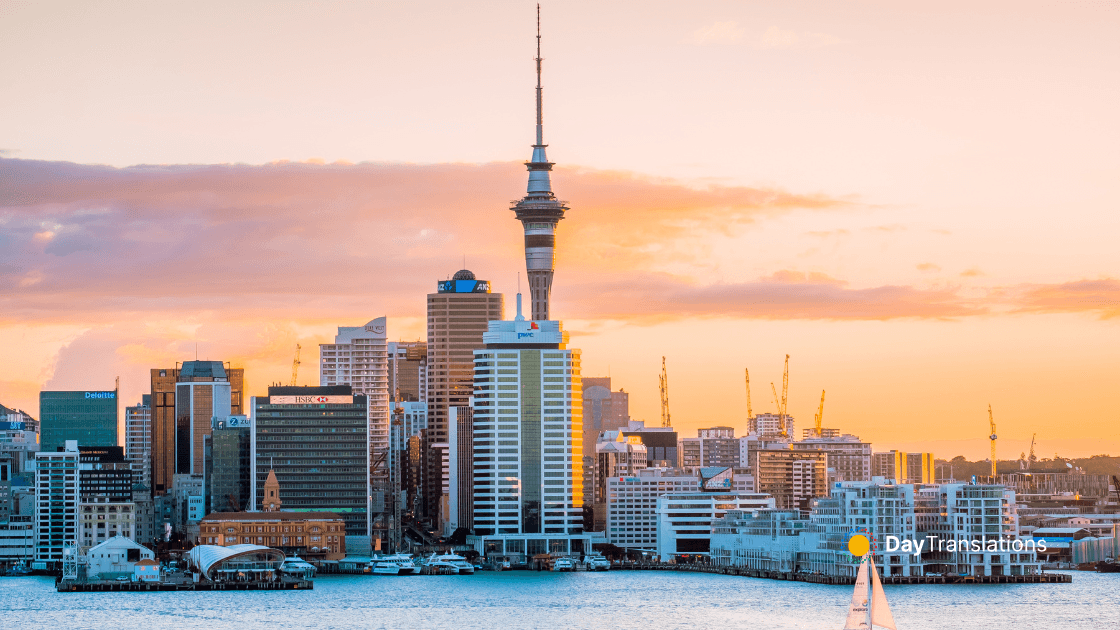
Located in the Southern hemisphere, New Zealand is one of the easternmost islands in the world. Even if Japan is called the Land of the Rising Sun, New Zealand is actually the second place where you can observe the first glimpse of the sunrise, next to Suva in Fiji. In the new millennium, the sun first shone on the peak of Mount Hakepa, located on the Pitt Island, one of the islands in the group comprising Chatham Islands in New Zealand.
New Zealand is one of the greenest and cleanest countries in the world, where its indigenous people, the Maoris, are recognized and celebrated. The Maoris call New Zealand Aotearoa, which roughly translates to “land of the long white cloud.” Despite being small in land size, New Zealand makes up for it with its breathtaking landscape, its extreme temperatures and at times, very comfortable climate. Traveling to New Zealand can be very exciting and extremely fascinating, where you can enjoy fantastic local festivals, experience the wonderful Maori culture, sample great food and wine and delight in outlandish outdoor experiences you may not find in other travel destinations in the world. Travel to Middle Earth and explore it like Frodo and his buddies Merry, Pippin and Sam – of the Lord of the Rings trilogy fame, all shot in the one of the lands down under, New Zealand.
:: Background of New Zealand ::
New Zealand, one of the youngest countries in the world, being the last to be discovered by the Europeans due to its distance, is also considered one of the most beautiful. It remains basically unspoiled, with breathtaking sceneries and wild countryside that bore witness to numerous battles between the different Maori tribes and well as battles with European explorers and conquerors.
In this Country Profile
The first explorer to see the land now known as New Zealand was Abel Tasman but the two islands, the South Island and the North Island were discovered by the Dutch in 1642 and gave it the name Nieuw Zeeland in reference to a Dutch province with the same name. However the indigenous Maoris have already inhabited the islands around 1000 and 1300 AD but some artifacts discovered suggest that the natives were there earlier than recorded. The Maoris are seafarers, and they gave the islands the name Aotearoa or the Land of the Long White Cloud. They were skilled hunters, farmers and fishermen. They have the tradition of throwing the first fish they caught, a tradition that is still practiced today, back to the sea to thank the sea god for a bountiful catch. They also hunted the Moa, the largest bird in the world to near extinction. Aside from fishing and hunting, they also survived by eating potatoes and vegetables. The Maoris were very fierce people, fighting with wooden clubs of different sizes and there were records of foes being eaten by them during the numerous battles they were engaged in. They look fiercer because of their facial and body markings, called ta moko, seen on men and women as a symbol of high social status.. These markings are different because they are carved with chisels called “uhi” rather than punctured with needles.
A century passed before Captain James Cook, a British explorer arrived in New Zealand around the 18th century. Captain Cook circumnavigated the two islands and made maps of the region after he was able to befriend a local tribesman. Despite their battles with the Maoris they were able to persist and established settlements on the island and trade between the Maoris and the British was started. Goods were exchanged, including muskets, traded for pigs and fruits. The availability of the muskets led to more fighting between the tribes, which led to the Musket Wars, a very bloody period in the history of New Zealand.
After several in-fighting, the British were able to unite the tribes through the Treaty of Waitangi created in 1840 through William Hobson, who succeeded in persuading the Maori chief to accept annexation of the land to Britain and the Maoris became British subjects, with a guarantee that they will still have possession of their land. Auckland was named the capital of New Zealand. In 1865, Wellington replaced Auckland as the capital of New Zealand.
The Europeans introduced sheep and later cattle to the region and the industry flourished. But livestock was not all that the Europeans introduced to New Zealand. They also introduced diseases that nearly decimated the number of Maoris in the country. From about a population of 100,000 Maoris living in New Zealand when Captain Cook first arrived on the island, their number dwindled to about 42,000 in 1896. Their numbers lessened not only because of their non-resistance to introduced diseases but also because they fought for Britain during WWI.
Gold was discovered around 1860 and the white population of New Zealand swelled. The country’s economy enjoyed a boom and reforms were introduced, such as compulsory education for all children and old-age pension. All men were allowed to vote in 1877 and in 1893 New Zealand also became the first country in the world to give women the right to vote in national elections.
Wool, meat, dairy became staple exports for New Zealand, which stabilized its economy for many years and still continue to do so to this day. However, tourism to this land of striking contrasts and pristine beauty is also making a contribution to the wealth of island nation today.
:: Geography of New Zealand ::
Majority of the land area in New Zealand is rugged that is why almost 90% of the country’s population lives in cities like Auckland, Wellington, Hamilton and Napier-Hastings in the North Island and Christchurch, Dunedin and Nelson in the South Island. Wellington, the capital of New Zealand is the southernmost national capital in the world, located on the North Island and situated in latitude 41° 17’ south and longitude 174° 47’ east. Wellington is also called Windy Wellington, being the only capital in the world located in the region where the “Roaring Forties,” the strong westerly winds displaced from the Equator and moving to the South Pole, combined with the earth’s rotation cause wind to blow from west to east at a much faster speed because there is very little land below to break the air currents.
Location
New Zealand is located in the southwestern part of the Pacific Ocean. It is about 1,500 kilometers away from its closest neighbor in the east, Australia and about 1,000 kilometers south of Fiji, Tonga and New Caledonia. Its geographic coordinates are 41° 00’ south and 174° 00’ east.
Area
The total land mass area of New Zealand including the other islands is 268,680 square kilometers. New Zealand comprise of several groups of islands, including Auckland Islands, Chatham Islands, Bounty Islands, Campbell Islands, Kermadec Islands and Antipodes Islands. Collectively the total land area of New Zealand gives it a size that is just about the size of Colorado in the United States.
Land Boundaries
New Zealand does not have any land boundaries being a group of islands located in the Pacific Ocean but it does have quite a long coastline that measures 15,134 kilometers in length.
Maritime Claims
The territorial sea claim of New Zealand extends for 12 nautical miles, with a contiguous zone of 24 nautical miles. Its exclusive economic zone reaches up to 200 nautical miles with a continental shelf of 200 nautical miles or to the edge of the islands’ continental margin.
Climate
The climate in New Zealand is very complex. It ranges from cool temperate climate in the far south section of the country while the climate is warm subtropical in the northern parts. Mountain ranges divide the country that is why climate and temperatures in New Zealand are vastly different. The mountain ranges act as barriers for the westerly winds, rendering the western coast of the South island into the wettest region of the country while the areas located east of the mountain ranges are the driest. In the north the mean annual temperature ranges from 50°F to 60.8°F. Seasons are different in the Southern Hemisphere therefore the highest temperatures can be experienced during January and February while July can be the coldest month. While the temperatures vary slightly between summer and winter, it can be warmer inland to about 57.2 °F. It is also normal for temperatures to drop to about 33°F for every altitude change of about 100 meters.
Terrain
Much of New Zealand is steep hill country, due to the mountain range along its length. There are also large coastal plains along the western side of South Island.
Elevation Extremes
The highest point in New Zealand is Aoraki//Mount Cook, located at the South Island on the Southern Alps that ran along its length. The Aoraki/Mount Cook mountain rises to a height of 3,754 meters. Long before the English explorers saw Mount Cook, the Maoris had been calling it Aoraki, which roughly translates to Cloud Piercer. It was renamed Mount Cook, given in 1851 by Captain John Lort Stokes in honor of Captain James Cook, who, in 1770 became the first person to survey and circumnavigate New Zealand, even if he did not see the mountain. It was officially renamed Aoraki/Mount Cook in 1998 to incorporate its Maori name. While Aoraki/Mount Cook is the highest point in New Zealand, its lowest point is the Pacific Ocean at zero meters.
Natural Resources
New Zealand is very rich in natural resources that contribute greatly to the island nation’s economic stability. Gold, coal and natural gas are dominant resources. Timber, hydropower, iron ore, sand and limestone are also abundant and some are yet to be explored.
Land Use
While plains are scarce in New Zealand due to its rugged and hilly terrain, the arable land, representing about 5.54% of the total land area is very fertile. Permanent crops are planted in 6.92% of the total land area while the major portion of the land or 87.54% is designated for other industrial and residential use.
Natural Hazards
New Zealand has one of the most active volcanoes in the world so volcanic activities are common. New Zealand also experiences earthquakes, which although common are usually not the severe. New Zealand has three types of volcanoes, cone, caldera and volcanic field. Volcanism occurs on the North Island because the Ruapehu Volcano is located there. It rises to a height of 2,797 meters and had last erupted in 2007. Ruapehu normally has large eruptions. Other active volcanoes are Tongariro, Ngauruhoe, Mount Tarawera and White Island. Classified as dormant volcanoes are Taranaki, also called Mount Egmont and Rangitoto, although they can still be hazardous due to lahar flow and avalanches.
Current Environmental Issues
Timber is one of the natural resources of New Zealand but as demand grows, the country is facing problems on deforestation and the eventual soil erosion. The country’s native flora and fauna are slowly dwindling, as invasive species introduced or inadvertently brought into the country affected their native habitat, food source and existence.
International Environmental Agreements
New Zealand has entered into several international environmental agreements and had signed, although had not yet ratified the agreement on marine life conservation and the agreement regarding Antarctic seals. Other agreements it had entered into include tropical timber 83 and 84, wetlands, whaling, endangered species, biodiversity, Antarctic-environmental protocol, Antarctic-marine living resources, climate change, Antarctic treaty and climate change-Kyoto protocol. It also entered into agreements regarding desertification, hazardous wastes, environmental modification, ship pollution, marine dumping, ozone layer protection and law of the sea.
:: People of New Zealand ::
Citizens of New Zealand indicate their nationality as New Zealander (s) as a noun while New Zealand is used as an adjective. An indigenous native of New Zealand is usually called a Maori. Internationally, a New Zealander is more commonly called a Kiwi, derived from the national symbol of the country, the flightless kiwi bird. A resident of New Zealand who does not have a Maori bloodline is usually called a Pakeha.
Population
According to the New Zealand Statistics office, the estimated number of resident population in the country is 4,403,000 as of March 31, 2011. The scheduled census for 2011 was postponed to 2013 due to the devastating effect of the earthquake that hit Christchurch on February 22, 2011.
Age Structure
Residents of New Zealand are quite young with 66.4% of the population belonging to the 15 to 64 age group, with 10,426,595 males and 1,420,643 females. Those belonging to the zero to age 14 group comprise 20.4% of the population, segregated into 448,106 males and 426,348 females. The older population, belonging to the 65 years and over age bracket comprise 13.3%, estimated to be 260,454 males and 308,201 females, showing that the females outlive the males in this age group.
Median Age
Out of the total population, the median age is 37 years. When broken into males and females, the median age for males in 36.2 years while it is 37.8 years for females, based on 2011 estimates.
Population Growth Rate
Based on the estimates done in 2011, the population growth in New Zealand is placed at 0.880%. Net migration is quite high, with 2.28 migrants per 1,000 inhabitants as of 2011 estimates. Total fertility rate, as of 2011 estimates is 2.08 children born for every woman of child-bearing age in New Zealand.
Birth and Death Rates
It is estimated in 2011 that there are 13.68 births for every 1,000 inhabitants in New Zealand. The death rate on the other hand is 7.15 for every 1,000 members of the population.
Sex Ratio
Based on the total population, the average gender distribution slightly favors the males. It is estimated in 2011 that there is about 0.99 male for every female. In the 16 to 64 age group, the ratio is even, with one male for every female. At birth the ratio varies slightly with 1.048 males for every female and almost the same ratio continues for those under 15 years of age, with about 1.05 males for every female. The ratio goes down in the older age, as there is only 0.84 male for every female aged 65 years and over.
Infant Mortality Rate
Infant mortality rate in New Zealand is quite low, with only an average of 4.78 deaths for every 1,000 live births. Based on gender breakdown, the average is higher for the males, with about 5.37 deaths occurring for every 1,000 live births while for the female, the data only shows about 4.16 deaths for every 1,000 live births in the nation.
Life Expectancy at Birth
People living in New Zealand enjoy a long life, with the average for the total population placed at 80.59 years. The females outlive the males, with their average life expectancy reaching 82.67 years, according to 2011 estimates while it is only 78.61 years for the males.
HIV/AIDS
The prevalence of HIV/AIDS in New Zealand is very low. According to the data from the New Zealand Ministry of health, there are 149 people diagnosed with HIV in 2010, with most of them males who had sex with male partners. Some acquired the infection from heterosexual relationship and while some cases reported unknown causes. There was one reported case of mother-to-child transmission. AIDS occurrence is also low with a total of 39 cases reported, 25 of which where males infected through male to male sexual relationship, while 11 cases reported to have acquired the infection from heterosexual relations. One case reported that the AIDS infection was acquired through injecting drug use and 2 cases did not report where they acquired the infection. Less than 100 people have died from HIV/AIDS, according to estimates done in 2009.
Ethnic Groups
Europeans dominate the presence of ethnic groups in New Zealand. Based on the 2006 census, there are 56.8% Europeans out of the total population of the country, and the rest are broken down into 8% Asians, 7.4% Maoris and 4.6% Pacific Islanders. There are also inhabitants of mixed heritage which numbers about 9.7% while other ethnic groups comprise 13.5% of New Zealand’s total population.
Religions
Several religions are practiced by people living in New Zealand. According to the 2006 census, the Anglicans dominate with 13.8%. Roman Catholics follow closely with 12.6% while the combined Presbyterian, Congregational and Reformed followers comprise 10%. Christians with no specific denomination total 4.6%, the Methodist number about 3% while those that follow the Pentecostal faith comprise 2%. The Baptist faith is also represented in New Zealand with 1.4% while there those practicing the Christian religion comprise about 3.8%. On the other hand, the Maori Christian faith is followed by 1.6% of the population, so does the Hindu faith. Buddhism is also practiced by 1.3% following and other religions are practiced by 2.2% of the people. Still there are others at 32.2% who said they do not follow any religion while others or 9.9% of the population did not identify the religion they practice.
Language
Due to the dominance of Europeans, most of them coming from Britain, English is the official language in New Zealand, with 91.2% speakers. However, the country also honors its indigenous population and Maori, spoken by 3.9% of the population is also an official language in the island nation. The New Zealand Sign Language is also an official language in the country. Other languages spoken in New Zealand are Samoan at 2.1% due to the presence of Pacific Islanders in the country. French is spoken by 1.3% of the population while 1.1% speaks Hindi. The same percentage applies to speakers of Yue. Northern Chinese language is spoken by 1% of the population, with others, or 12.9% speak unspecified languages.
Literacy
New Zealanders are highly literate, with 99% of the population age 15 and over able to read and write. The average stay in school of students in New Zealand is 19 years, although the females stay a year longer on the average.
:: References ::
http://en.wikipedia.org/wiki/New_Zealand
www.newzealand.com/us
www.newzealand.com
www.lonelyplanet.com/new-zealand
https://www.cia.gov/library/publications/the-world-factbook/geos/nz.html
Geography of New Zealand: Important Geographical Information about New Zealand
In this Country Profile
One of the first countries to see the sunrise because of its easternmost location, New Zealand lies in the South Pacific Ocean, near the center of the water hemisphere, the region of the earth where water occupies a larger area than land. New Zealand comprises several groups of islands the largest of which are the two main ones, the North Island and the South Island. The North Island is named in Maori as Te-Ika-a-Maui, and the South Island Te Wai Pounamu. The two major islands are separated by the Cook Strait. New Zealand’s geography is very diverse and travel to this island nation in the Southern Hemisphere will keep you amazed and awed. New Zealand has several volcanoes, the Southern Alps, geologic formations and unique and diverse topography and people. Outside of industrialization and commercialization, New Zealand is still a country that is among the cleanest and greenest in the world, with pristine waters that yield abundant marine products. Although flat lands are precious, and much of the countryside is rugged, majority of the land is suitable for sheep and cattle farming, making New Zealand among the world’s biggest suppliers of meat, wool, milk and dairy products, as well as succulent fruits like the kiwi fruits and vegetables.
Almost occupying a very lonely position in the Pacific Ocean, the nearest neighbors of New Zealand are Australia located at its northwest, separated by the Tasman Sea and Fiji and Tonga, two islands that are located to its north.
Aside from the two main islands, New Zealand is also composed of several groups of smaller islands including the islands of Antipodes, Bounty, Campbell, Auckland, Kermadec and Chatham. Overall, the total land area of New Zealand, at 268,680 square kilometers make is slightly larger than the United Kingdom or slightly smaller in size compared to Japan or Italy.
Having no land boundaries, New Zealand boasts of a long coastline that extends to 15,134 kilometers and the seventh largest exclusive economic zone in the world, which covers 4 million square kilometers, giving New Zealand access to a very extensive marine resource.
The Southern Alps divides the South Island, the largest island in New Zealand and where the majority of the population is located. This is where Aoraki/Mount Cook, the highest peak in New Zealand can be found. Rising to a height of 3,754 meters, it is surrounded by 18 other peaks with an average height of more than 3,000 meters. The eastern side of South Island has the Canterbury Plains while a traveler can find rough coastlines on the western side of the island, where most of the area is covered by the Franz Josef and Fox glaciers as well as native bush.
Although less mountainous the North Island is prone to volcanism. Here Mount Ruapehu, a very active cone volcano stands tall at 2,797 meters. The largest lake in New Zealand, Lake Taupo is located almost at the center of the island, on a caldera that was formed after the largest volcanic eruption in the world in 70,000 years occurred when Mount Taupo’s Oruanui eruption occurred some 26,500 years ago. This massive eruption still showed traces up to now, with about 18 centimeters of ash layer that can still be seen on Chatham Islands. The longest river in New Zealand is Waikato, situated on the North Island and runs for 425 kilometers. Lake Taupo on the other hand covers an area of 607 square kilometers.
Straddling the boundaries of two tectonic plates, New Zealand has vast geothermal energy resources that the country utilize for several hydrothermal power plants while some volcanic plates created awesome geologic formations, which are wonderful travel destinations like the Rotorua geysers, the Waitomo Caves, a favorite for travelers because of its unique glow worms that light up the caves with a myriad of tiny lights and the many cave decorations made of brown, white and pink limestone formations. The Pancake Rocks on Punakaiki, a series of heavily-eroded limestone rocks contain several vertical blowholes where the waters burst through when the tides are high.
Politically, New Zealand is composed of 16 regions with 9 located in the North Island and 7 located in the South Island. Most of the islands in the outlying areas are not included in the regional boundaries. For example Chatham Islands is not a region but its own council operates as a region, although it is under the Resource Management Act, an act that governs the access to the physical and natural resources in the air, land and water of a place, with the goal of sustainable management of these resources. The sub-Antarctic islands and the Kermadecs are part of the RMA and only inhabited by a few staff members from the Department of Conservation of New Zealand. The Kermadecs have been declared a nature and marine conservation area so travel to the islands are regulated and limited to those conducting research and studies. Actually parts of the island group are tops of active volcanoes that have risen above the ocean.
New Zealand’s Climate
While generally enjoying cool temperate to warm temperate climate, New Zealand also experience subtropical weather conditions, with varied rainfall prevails in the North Island. The weather changes very quickly in New Zealand and at times, unexpectedly. Average annual rainfall is between 600 millimeters to 1,600 millimeters of rainfall annually, occurring mostly on the west coast of South Island and making Auckland the wettest region in the country. The east coast of South Island receives the least rain and tends to be very dry, with Christchurch receiving only about 25 millimeters of rainfall annually. The average temperature in the South Island is in the 46°F range while it can be up to 61°F range. The UV index in New Zealand is very high due mainly to the very minimal air pollution in the country. Furthermore New Zealand’s climate is influenced by the Southern Alps, the ocean surrounding the islands and its latitude location where the westerly winds prevail.
:: References ::
http://www.innz.co.nz/about/geography.html
http://english.turkcebilgi.com/Geography+of+New+Zealand
Information about the New Zealander Flag: Colors and Meaning of the Flag of New Zealand
In this Country Profile
:: Meaning of the New Zealander Flag ::
New Zealand flew the British flag or the Union Jack until 1865. In 1867 a flag similar to the current design was introduced to the country, with the letters N and Z added to the flag. There were no stars on the flag in that design. In 1869 the four stars replaced the letters in the flag. The current national flag was adopted by New Zealand on June 12, 1902 while September 26, 1907 marked the day New Zealand was granted independence by Britain.
At first glance, the flag of New Zealand resembles the Australian flag, but the New Zealand flag is still distinct from the flag of its nearest neighbor. The field of the New Zealand flag is dark or navy blue in color. On the upper section of the canton, near the hoisting side, a Union Jack, United Kingdom’s flag is placed. On its outer half or its flying side, four five-pointed stars colored red with white outline are positioned to form the shape of the Southern Cross or the constellation of Crux, which is visible any time of the year in the Southern Hemisphere. The proportion of the national flag of New Zealand is 1:2.
Britain was a major influence on what New Zealand is today and the inclusion of the Union Jack in their national flag symbolizes their heritage from the British Commonwealth.
The deep blue color of the background of the flag represents that color of the Pacific Ocean as well as the blue sky over New Zealand. The four stars of the Southern Cross marks the position of New Zealand in relation to the rest of the world, with the stars representing Alpha or Acrux, the brightest star in the constellation. It is also called the Magellan’s Star, honoring the Portuguese navigator. Beta stands for the star called Mimosa. Gamma is for the Gacrux star and Delta for the fourth brightest star, given the name of Pale. These are the four outside stars of the constellation of the Southern Cross (Crux).
:: References ::
http://www.mapsofworld.com/flags/newzealand-flag.html
http://www.worldflags101.com/n/new-zealand-flag.aspx
Extensive List of Languages of New Zealand: Spoken and Extinct Languages
In this Country Profile
English
[eng] 3,210,000 in New Zealand (1987). Classification: Indo-European, Germanic, West, English
Maori
[mri] 60,000 in New Zealand (Fishman 1991). 100,000 understand it but do not speak it (1995 Maori Language Commission). Population total all countries: 60,260. Ethnic population: 530,000 (2002 Honolulu Advertiser). Far north, North Island, east coast. Also in United States. Alternate names: New Zealand Maori. Dialects: North Auckland, South Island, Taranaki, Wanganui, Bay of Plenty, Rotorua-Taupo, Moriori. Formerly fragmented into regional dialects, some of which diverged quite radically from what became the standard dialect. Lexical similarity: 71% with Hawaiian [haw], 57% with Samoan [smo]. Classification: Austronesian, Malayo-Polynesian, Central-Eastern, Eastern Malayo-Polynesian, Oceanic, Central-Eastern Oceanic, Remote Oceanic, Central Pacific, East Fijian-Polynesian, Polynesian, Nuclear, East, Central, Tahitic
New Zealand Sign Language
[nzs] Alternate names: NZSL. Classification: Deaf sign language
Pitcairn-Norfolk
[pih] Alternate names: Pitcairn English. Classification: Creole, English based, Pacific
:: Reference ::
Gordon, Raymond G., Jr. (ed.), 2005. Ethnologue: Languages of the World, Fifteenth edition. Dallas, Tex.: SIL International. Online version: http://www.ethnologue.com/
Famous New Zealander People: New Zealander Artists, Scientists, Leaders, Musicians, Politicians and Athletes
In this Country Profile
Even if the country is almost isolated due to its geographic location, New Zealand is home to breakthrough scientists, brilliant mathematicians, great literary figures and award-winning writers, artists, musicians and composers and world-renown sports personalities. Their contributions in different fields have helped New Zealand and the rest of the world reach new heights in every field of endeavor and provided inspiration for others to emulate. Their innate strength of mind, body and spirit, perhaps a legacy from the fierce and freedom-loving Maoris became a benchmark for them to continue to excel. Here is a list of some of the famous people from New Zealand that will you realize their contribution and be inspired by them, too as well as help you learn about these wonderful people from an island nation that is located almost in the middle of the water hemisphere.
:: List of Famous People from New Zealand ::
Alexander Craig Aitken
Alexander Aitken, dubbed the Human Computer was born in Dunedin on April 1, 1895. He was not that good in mathematics while he was in grade school. It was his determination to conquer it, using his skills in mental computations that surfaced when he was fourteen years of age that made him do amazing things in mathematics. He could multiply mentally together two 9-digit numbers and give the answer in half a minute. He could also convert awkward fractions to decimals until 26 places in less than five seconds. Aitken can also recall the first 1,000 decimal places of pi.
His power of mental calculations contributed to providing solutions for econometrics in applying matrix algebra to problems in numerical analysis. He had papers published on polynominal equations, computational algorithms, invariant theory and eigenvalue problems. The standard vector/matrix notation for Linear Regression model and its extension came from Aitken’s applied statistical method to the theory of linear models. Another work of his that is still used today in econometrics is the Generalized Least Squares estimator.
Aitken spent his years after the war as a lecturer in Statistics and Mathematical Economics at Edinburgh University in Scotland. He died on November 3, 1967 after a long illness.
Harold Williams
Harold Williams was born in Auckland, New Zealand on April 6, 1876. He was a journalist and the foreign editor of The Times, a British daily newspaper. He had the distinction of being listed in the Guinness Book of World Records as the greatest linguist in the world, fluently speaking 58 languages and other dialects. His father was a Methodist minister and he started learning the classics in Latin. It was when he was seven years old that he started getting interested in learning languages and began constructing grammar and vocabulary using the Bible and the Gospels. He entered the Methodist Ministry when he was 20 and his travels and contact with people of different nationalities increased his knowledge, as he quickly absorbed and learned their language. He learned most of the languages that the spoke by himself, including Old Irish, Tagalog, Czech, Egyptian, Albanian, Hittite, Japanese, Chinese, Basque, Hungarian and Coptic and mastered the Cuneiform inscriptions as well as the book containing 12,000 characters in Chinese Mandarin. He became advisor to statesmen in 1916 and was able to converse and foreign editor of The Times in 1922. His facility to learn a new language is truly incredible. At one time he had to escape to Serbia while working as foreign correspondent and was able to speak the language fluently in two days to the amazement of the local Serbs. He died unexpectedly on November 18, 1928 while preparing for a trip to Egypt.
Robert Burchfield
Robert William Burchfield was born in Wanganui on January 27, 1923. He was a writer, as scholar and a Chicago Tribune-hailed lexicographer. He was responsible for the 4-volume second supplement to the Oxford English Dictionary, which he did from 1957 to 1986, and had several works published in the study of the sources and development of English as a language. He worked on an edition of Ormulum (Orrmulum), a biblical work written in the 12th century by a monk. It consisted of unique phonetic orthography that preserved a lot of details of the English pronunciation that was invaluable to philologists for tracing the development of the English language. His work on the Ormulum was supervised by J. J. Tolkien. He substantially edited a book in 2004, A Dictionary of Modern English Usage, a style guide written by Martin Fowler. Burchfield died on July 5, 2004 at the age of 81.
Nancy Wake
Nancy Grace Augusta Wake was born on August 30, 1912 in Wellington. She was a top-notch British agent in WWII. She was so good at her job that the Gestapo made her their most wanted person and labeled her White Mouse. She was the most decorated of all the servicewomen of the Allies during WWII, and was the leader of an army of 7,000 maquis (rural guerilla units) troops of the French Resistance. She was a very brave lady from the beginning. Her family moved to Sydney, Australia and her father eventually left them. She wan away from home at age 16 and worked as a nurse before running off to London with £200 in her pocket and trained herself to be a journalist. Nancy worked in Paris and the Hearst newspaper and saw Adolf Hitler’s rise to power. She married a wealthy Frenchman in 1939 and lived in France. When France lost to the Germans Nancy became a courier and part Captain Ian Garrow’s escape network. Her ability to elude capture earned her the nickname White Mouse. Her bravery led her to be more active in the resistance movement. She helped recruit more members, distributed arms, ammunition and communication and led attacks on German installations. She even killed a German sentry who spotted her with her bare hands. Her husband was captured, tortured and killed by the Germans and she only learned of her husband’s death after the war. Nancy Wake received the George Medal, the Medal of Freedom from the United States and the Médaille de la Résistance. She was awarded the Croix de Guerre three times. She worked at the British Air Ministry Intelligence Department after the war.
She tried her hands at politics in Australia twice but was unsuccessful and decided to retire with her husband, John Forward, an RAF officer. They had no children. Nancy Wake died in England on August 11, 2011 and her ashes were strewn on Montluçon in France at her request.
Keith Park
Sir Keith Rodney Park, born in Thames, New Zealand on June 15, 1892 was a soldier, a WWI flying ace and a Royal Airforce Commander in WWII. He was part of the tactical command during the Battle of Britain and Battle of Malta and became known as the Defender of London, for his leadership, skills and judgment that led to winning air battles for Britain.
Keith Park showed keen interest in guns and riding as a schoolboy and joined the New Zealand Army Field Artillery unit before boarding a ship to work as a purser in 1911 at the age of 19. When WWI broke out he left the ship to join the NZ artillery battalion and saw action in Galipoli as a non-commissioned officer where his achievements were first recognized. He was later commissioned as a second lieutenant and commanded an artillery battalion. In 1915 he transferred to the British Army and joined the Royal Horse and Field Artillery until his evacuation from Galipoli in 1916. He met Sir William Birdwood, ANZAC commander while he was in Galipoli and Park’s leadership style and attention to detail was patterned after him.
He was blown off his horse by a German shell in October 21, 1916 while in France. He was able to recuperate but was declared unfit to ride a horse again and he decided to join the Royal Flying Corps where he learned to fly and later got the post to join the 48 Squadron until he became a temporary captain on September 11, 1917 and later as a major. During WWII he was already promoted as air vice marshal and commanded the No. 11 Group RAF, flying his personalized Hawker Hurricane plane. He showed what kind of masterful tactician he was when he was commanding the RAF forces on the ground and in the air. Receiving many honors and medals during his years of active service with the Royal Air Force of Britain, Park retired with the rank of Air Chief Marshall on December 20, 1946. He returned to New Zealand and performed civic roles including being a member of the city council of Auckland. He died on February 6, 1975.
Kate Sheppard
Katherine Wilson Sheppard was born on March 10, 1847. Although not a natural-born Kiwi as she was from Liverpool, England, she made Christchurch, New Zealand her home since her mother brought her in 1869 to the country after her father’s death. She was 22 at that time. Kate married Walter Allen Sheppard when she was 25 and had one son, Douglas, who was born on December 8, 1880. She established the Women’s Christian Temperance Union in 1885, due mainly to the religious beliefs she inherited from her mother. Soon she actively advocated women’s suffrage. She was a skilled organizer and an enigmatic speaker, submitting petitions to the Parliament for women’s suffrage in 1891, 1892 and 1893 with each petition getting larger each year. By 1893 the suffrage bill was passed and women were able to vote that same year. New Zealand became the first country to allow women to vote through the efforts of Kate Sheppard. She continued to be very active in promoting the rights of women and was elected as president of the national Council of Women of New Zealand. She traveled and met with fellow suffragettes in the United States, England and Canada. She spent the rest of her life writing until her death on July 13, 1934.
John Britten
John Kenton Britten was a mechanical engineer who designed from scratch a motorbike that is considered the fastest in the world. Britten was born almost at midnight of August 1, 1950 and his twin sister on August 2. He was a dyslexic and had to have his tests read to him and his answers recorded. But that did not mar his brilliance as an architectural designer and mechanical engineer. His childhood heroes were all people related to machines and racing, all of them from New Zealand, Bill Hamilton, Richard Pearse, Burt Munro and Bruce McLaren. He joined ICI after graduation as a draftsman that gave him opportunities to learn about pattern, mechanical engineering and mold designs as well as metal spinning. He also worked under Sir Alexander Gibb and Partners in England for four months where he helped in the creation of the highway design to link M1 to M4.
Back in New Zealand he joined Rowe Engineering as a design engineer for heavy machinery and off-road equipment. He also tried his hand as a fine artist designing and hand making glass lighting before he concentrated on designing motorcycles. He pioneered the use of space age Kevlar and carbon fiber for the body of the motorcycle he built in his backyard and designed the complete engine using his new fabrication system. The end result was the Britten motorcycle, the fastest in the world that surpassed the performance of even the top-line motorbikes manufactured in Japan and Italy. Britten however only had a short life, leaving this world at age 45 on September 5, 1995 due to complications from skin cancer.
Richard Pearse
Richard William Pearse, born on December 3 1877 was the son of Cornish immigrants. He was born in Temuka, New Zealand where he spent his time as a farmer and as an inventor. He was known for his pioneering experiments in the world of aviation. According to statements from witnesses, Pearse flew his first aircraft on March 31, 1903, 9 months before the Wright Brothers made their first flight. However, unlike the Wright Brothers who had sponsors that funded their inventions, Pearse made his aircraft on his own. According to witnesses’ accounts and evidences that were uncovered after Pearse’s death, his innovative designs for an aircraft were more related to modern-day aircraft designs than the aircraft designed by the Wright Brothers. It was just unfortunate that there was very little documentation on the inventions of Pearse. Aviation pioneer George Bolt did research on the works of Pearse and was able to see the last flying plane of Pearse, excavated from a South Canterbury dump site in 1958. He was able to bring Pearse’s aeronautical achievements to wider attention and proved that the flying machine with a 15-horsepower engine can indeed take flight. Pearse died in Sunnymede Mental Hospital where he was committed due to paranoia on July 29, 1953.
Ernest Rutherford
Ernest Rutherford was considered the father of nuclear physics. A British physicist and chemist, he was born in Brightwater, Nelson, New Zealand on August 30, 1871. He had dual masteral degrees in Mathematics and Physical Science. His first works that made him popular was his discovery of the chemistry of radioactive substances and his investigations on the disintegration of chemical elements. He also found the difference and gave names to the radiation emitted by thorium and uranium the names alpha ray and beta ray. He was also that one that gave a name to the gamma ray. His early discoveries were the basis for his Nobel Prize for Chemistry in 1908.
He was also credited as the first person to split the atom in his experiments in nuclear reaction in 1917 where he worked with nitrogen and alpha particles. It was also during this time that he discovered and gave the name to proton. He was knighted in 1914 and received the Order of Merit in 1925, and was given the title Baron Ernest Rutherford of Nelson. Due to his title, protocol dictated that he had to be operated on by a titled doctor, a delay that caused him his life for an umbilical hernia operation on October 19, 1937. He was interred in the Westminster Abbey, near Sir Isaac Newton and beside J. J. Thomson, a Nobel laureate and British physicist. Streets, buildings, institutions, awards and foundations, including the element 104, rutherfordium were named in his honor.
Edmund Hillary
Sir Edmund Hillary, born in Auckland, New Zealand on July 20, 1919 was the first man to conquer Mount Everest together with Sherpa mountaineer Tenzing Norgay. He achieved this feat on May 29 1953 at the age of 33. Hillary was an explorer, a mountaineer and a philanthropist who founded the Himalayan Trust to help the Sherpa people after his successful ascent of Mount Everest. His foundation helped built several hospitals and schools in the remote areas of Nepal.
Bill Hamilton
Sir Charles William Feilden Hamilton, born on July 26, 1899 in Ashwick Station, Faerlie in the South Island of New Zealand was an engineer credited with the development of the modern jet boat. Developed in 1954, the jet boat was designed to be used on the shallow and fast-flowing rivers in New Zealand so that the propellers from standard outboard motors will not strike the rocks under water. His invention paved the way for the founding of CWF Hamilton Ltd., the leading water jet manufacturing company in the world. Bill Hamilton had several other inventions aside from the jet boat. He developed an excavator with an earth scoop so he can build a dam and provide hydropower for his sheep farm and his engineering workshop. He also designed and built the first ski tow used on Coronet Peak Ski Field, the first commercial skifield in New Zealand located in Queenstown. His company also manufactured heavy machinery, particularly those used in the hydroelectric projects at the Waitaki River in Christchurch.
Lloyd Allan Trigg
Born in Houhora, New Zealand on May 5, 1914, Lloyd Allan Trigg was a flying officer with the Royal New Zealand Air Force. He fought for Britain with the British and Commonwealth armed forces. He received the Victoria Cross, the highest award for gallantry posthumously. The award was very unique in the history of the Victoria Cross because the evidence of Trigg’s gallantry was actually provided by the enemy, as there were no Allied forces survivors to corroborate the gallantry shown by Trigg.
Trigg received his pilot wings in January 16, 1942 after attending pilot training school in Canada. He was posted to West Africa in December 1942 and was with the No. 200 Squadron the following month and joined in reconnaissance patrols, anti-submarine patrols and convoy escort flights. He was on his first operational flight aboard a Liberator V aircraft over the Atlantic on August 11, 1943 when he engaged the U-468 German submarine that had Oberleutnant Klemens Schamong as commander. His plane received several hits but he was still able to launch his final attack, flying at just 50 feet over the U-boat and dropping bombs on and around the U-boat before he crashed 300 yards away from it. The crash killed Trigg and his crew and the only witnesses were the U-boat crew. Trigg’s last assault however badly damaged the U-boat and it eventually sank after 20 minutes, killing 42 crew hands and leaving only 7 survivors including the commander who were rescued by the Royal Navy. Oberleutnant Klemens Schamong reported the incident the following day and recommended the decoration of Trigg for the bravery he showed in the face of the enemy.
Harold Gillies
Harold Delf Gillies, born in Dunedin on June 17, 1882 was an otolaryngologist who was considered the father of plastic surgery, a branch of medicine he became interested in while working with the Royal Army Medical Corps during World War I. He saw Valadier, a French-American dentist, experiment on emerging skin graft techniques. He went to Paris to learn from Hippolyte Morestin and later went back to England to persuade the army chief to have a facial surgery ward at Aldershot, the Cambridge Military Hospital. The facial ward became very popular due to the war and he and his colleagues performed 11,000 plus operations on more than 5,000 soldiers who had facial injuries while perfecting their techniques. He continued his work through World War II, mainly as a trainor and consultant. Gillies also did pioneering work with a colleague when they performed the first sex reassignment surgery from female to male (phaloplasty) on Michael Dillon in 1946. Using the flap technique he and his colleagues also performed the first male to female sex reassignment surgery (vaginoplasty) on Roberta Cowell in 1951. The work they did became a 40-year standard in surgeries of that type.
Maurice Wilkins
Maurice Hugh Frederick Wilkins was born in Pongaroa, Wairarapa, New Zealand on December 15, 1916. His father was a medical doctor from Dublin. They moved to England when Wilkins was six and he received his bachelor’s degree in physics from St. John’s College in Cambridge. His body of scientific work included researches that led to the scientific understanding of optical microscopy, X-ray diffraction, phosphorescence and isotope separation. He received a Nobel Prize for Physiology or Medicine in 1962 for his contribution to the discovery of the molecular structure of DNA.
Kiri Te Kanawa
Dame Kiri Jeanette Te Kanawa was named Claire Mary Teresa Rawstron when she was born in Gisborne, North Island, New Zealand on March 6, 1944. She was of European and Maori ancestry. Thomas Te Kanawa and his wife adopted her as an infant. She was trained by Sister Mary Leo, RSM in operatic singing. She started as a mezzo-soprano in her singing career. She then became a soprano of international acclaim since 1968. Kiri Te Kanawa a multi-awarded operatic singer performs a wide selection of works in different languages, and is associated particularly to the works of Puccini, Handel, Mozart, Strauss and Verdi. She had performed around the world, usually portraying nobility that suits her very nicely as she has the physical beauty and natural stage presence for such roles. Dame Kiri Te Kanawa sang at the wedding of Prince Charles and Lady Diana Spencer in 1981.
Jonah Lomu
Jonah Tali Lomu was born on May 12, 1975 in Auckland is one of New Zealand’s greatest rugby union players as an All Blacks with 63 caps. All Blacks is the national rugby union team of New Zealand. He has such an imposing presence in the field not only because of his height (6 feet 5 inches) but also because of his body size. He holds the record as the all-time top try scorer with 15 tries in the Rugby World Cup. He was inducted to the International Rugby Hall of Fame on October 9, 2007. Jonah Lomu’s career as a rugby union player was put on hold in 1995 when he was diagnosed with a serious kidney disorder that required him to received dialysis treatment three times a week. The dialysis treatment however had serious side effects that caused serious damage to the nerves on his legs and arms and he required kidney transplant or else live the rest of his life on a wheelchair. He received a kidney transplant in July 2004 and the operation was successful. He was able to play rugby again in June 2005 in an invitational rugby match in Twickenham, England but badly injured his shoulder in the first half and he failed to come out for the second half. He continued to play on and off until he announced his retirement in 2007. He then began to join amateur bodybuilding competitions in 2009. Lomu however went back to rugby and currently plays for Marseille Vitrolles Rugby wearing the number 8.
Richard Hadlee
Cricket is one of the most popular sports in New Zealand, a legacy from Britain. As such there were many great cricketers from the country. One of them is Sir Richard John Hadlee. He was born on July 3, 1951 in St. Albans, Christchurch. His father, his two brothers and his ex-wife are all cricket players. For his services to cricket he was given the Most Excellent Order of the British Empire (MBE) appointment in 1990. Hadlee used to be the chairman of the New Zealand board of selectors and is regarded as one of the greatest fast bowlers and all rounders in the history of cricket. He was commemorated as one of the Twelve Local Heores and a bronze bust was created for him and placed outside the Christchurch Arts Centre in 2009. He was inducted to the ICC Cricket Hall of Fame on April 3, 2009. He had an 86-test career, and is now retired from professional cricket. During his career, he took 431 wickets, which was considered a world record at that time. He was also the first bowler who passed 400 wickets and made 3,124 test runs.
Bruce McLaren
For fans of Formula One, the name Bruce McLaren is a byword and his name lives on as the McLaren team is one of the most successful Formula One teams in the history of championship car racing. Bruce Leslie Mclaren was born on August 30, 1937 in Auckland, New Zealand. He was an inventor, engineer, race car designer and driver. His Formula One racing team had won 20 world championships, 56 wins in CanAm sports car racing, where he was behind the steering wheel for a considerable number of times, 24 Hours of Le Mans and 12 Hours of Sebring and there Indianapolis 500 wins. Bruce McLaren died very young, He was only 32 n June 2, 1970 when his car crashed on the Lavant Straight at the Goodwood Circuit in England while testing the new M8D. The rear bodywork of his car came adrift causing the loss of aerodynamic downforce. This cause instability to the car and it spun and hit the bunker.
Peter Arnett
Viewers of CNN will remember Peter Gregg Arnett, born on November 13, 1934 in Riverton, New Zealand. He started his journalism career in Bangkok around 1960 running a small English language newspaper and became a reporter for the Associated Press during the Vietnam War and later became the writer for “Vietnam: The Ten Thousand Day War,” a mini-series documentary done in 1980. He was able to cover the Soviet invasion of Afghanistan. He was working for CNN when the Gulf War broke out and he became the only reporter to relay live reports direct from Baghdad. He received a Pulitzer Prize in International Reporting 1966. Arnett was able to interview Osama Bin Laden in March 1997.
Lucy Lawless
Lucille Frances Ryan was born on March 29, 1968. She is well known as Lucy Lawless, a singer and actress who hails from Mt. Albert, Auckland. She is best remembered for her playing the title role in Xena: Warrior Princess, a TV series that successfully run from 6 seasons starting 1995. Prior to her own TV series, Lucy had recurring guest appearances in Hercules: The Legendary Journeys as a man-hating Amazon named Lysia. She also appeared as Xena in some episodes of Hercules, playing a villainess and a good character. She was also part of Battlestar Galactica, playing the role of D’anna Biers (Number Three). Lucy’s recent works on TV were for the series Spartacus: Gods of the Arena and Spartacus: Blood and Sand where she played Lucretia, one of the major characters in the series.
Peter Jackson
Sir Peter Robert Jackson of the Lord of the Rings trilogy fame was born on October 31, 1961 in Pukerua Bay, New Zealand. He is a multi awarded film director, actor, screenwriter and producer. He gained international recognition for hi splatstick horror comedies before he shifted to mainstream movies such as Heavenly Characters where he got an Academy Award for Best Screenplay nomination with Fran Walsh, his wife. He received an Academy Award for Best Director in 2003 as well as awards for Best Picture and Best Adapted Screenplay for The Lord of the Rings: The Return of the King. Jackson produced District 9 and was the producer, co-writer as well as the director of King Kong. Jackson had also made several movie appearances as part of the crowd, while his son had appeared in almost all his films just like his daughter, although she was not in the movie The Frighteners. Jackson began filming the much-delayed The Hobbit on March 20, 2011 and had formed a games development studio called Wingnut Interactive.
Russell Crowe
Although he is now an Australian, Russell Ira Crowe was born in Wellington, New Zealand. His maternal grandmother had Maori blood. Crowe was born on April 7, 1964 and he was already four years old when his family moved to Australia as his parents wanted to pursue a career in providing catering services for film sets. Crowe started his career as a musician in mid-1980s and also managed a music venue in Auckland. His first professional role was in The Rocky Horror Show and then had appearances in TV series such as “Neighbours” and “Living with the Law.” His first movie role was in 1990 film “The Crossing.” He moved on to star in other films in Australia and won several awards. He made his first Hollywood movies in 1995, co-starring with Denzel Washington in “Virtuosity” and in “The Quick and the Dead” with Sharon Stone. He starred in the “Gladiator” in 2001 and won an Oscar for Best Actor. He also received Oscar nominations for his films “The Insider,” and “A Beautiful Mind.” Crowe had made several memorable films that showed his versatility and strength as an actor. Crowe is an avid rugby league follower and co-owns South Sydney Rabbitohs, a team that plays in the National Rugby League in Australia.
:: References ::
http://www.localhistories.org/famousnewzealanders.html
http://www.virtualoceania.net/newzealand/culture/people.shtml
http://www.knowledgerush.com/kr/encyclopedia/List_of_famous_New_Zealand_people/
http://en.wikipedia.org