
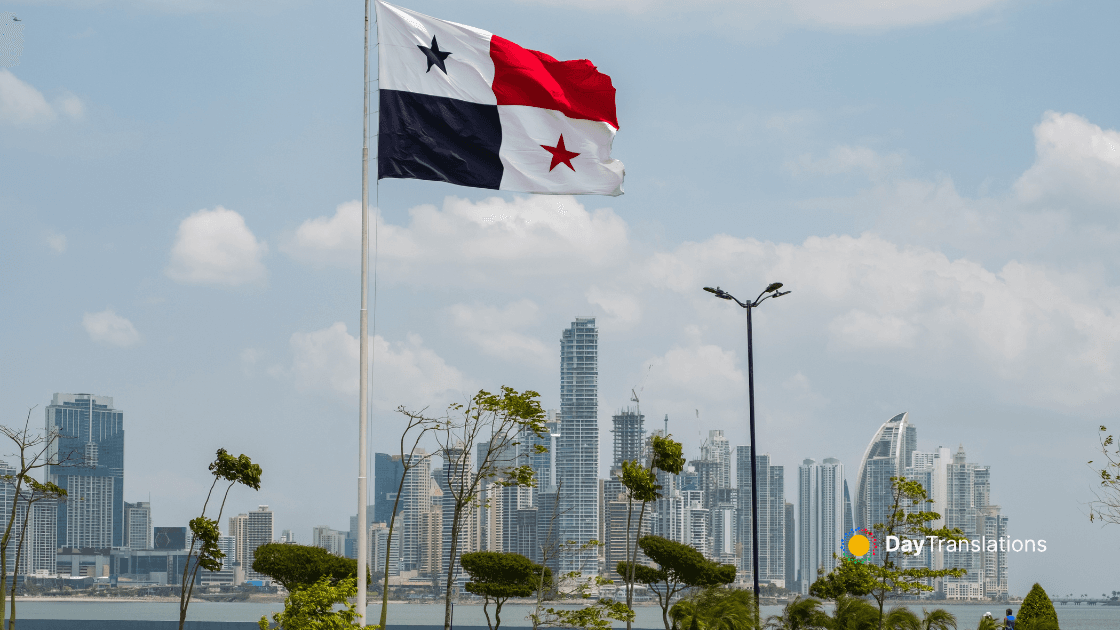
The largest consumer in central America, Panama, is bordered by Costa Rica to the north-west, Colombia to the south-east, the Caribbean Sea to the north and the Pacific Ocean to the south. It is an international commercial business center. Panama is a global offshore banking center and its sectors continue to bloom by attracting many investors. Panama is a leader in integration with today’s global community.
:: Background of Panama ::
Explored and settled by the Spanish in the 16th century, Panama broke with Spain in 1821 and joined a union of Colombia, Ecuador, and Venezuela – named the Republic of Gran Colombia. When the latter dissolved in 1830, Panama remained part of Colombia. With US backing, Panama seceded from Colombia in 1903 and promptly signed a treaty with the US allowing for the construction of a canal and US sovereignty over a strip of land on either side of the structure (the Panama Canal Zone). The Panama Canal was built by the US Army Corps of Engineers between 1904 and 1914. In 1977, an agreement was signed for the complete transfer of the Canal from the US to Panama by the end of the century. Certain portions of the Zone and increasing responsibility over the Canal were turned over in the subsequent decades. With US help, dictator Manuel NORIEGA was deposed in 1989. The entire Panama Canal, the area supporting the Canal, and remaining US military bases were transferred to Panama by the end of 1999. In October 2006, Panamanians approved an ambitious plan to expand the Canal. The project, which began in 2007 and could double the Canal’s capacity, is expected to be completed in 2014-15.
In this Country Profile
:: Geography of Panama ::
Location: Central America, bordering both the Caribbean Sea and the North Pacific Ocean, between Colombia and Costa Rica.
Geographic coordinates: 9 00 N, 80 00 W
Area:
total: 78,200 sq km
land: 75,990 sq km
water: 2,210 sq km
Area – comparative: slightly smaller than South Carolina
Land boundaries: total: 555 km border countries: Colombia 225 km, Costa Rica 330 km
Maritime claims:
territorial sea: 12 nm
contiguous zone: 24 nm
exclusive economic zone: 200 nm or edge of continental margin
Climate: tropical maritime; hot, humid, cloudy; prolonged rainy season (May to January), short dry season (January to May)
Terrain: interior mostly steep, rugged mountains and dissected, upland plains; coastal areas largely plains and rolling hills.
Elevation extremes:
lowest point: Pacific Ocean 0 m
highest point: Volcan Baru 3,475 m
Natural resources: copper, mahogany forests, shrimp, hydropower
Land use:
arable land: 7.26%
permanent crops: 1.95%
other: 90.79% (2005)
Natural hazards: occasional severe storms and forest fires in the Darien area
Environment – current issues: water pollution from agricultural runoff threatens fishery resources; deforestation of tropical rain forest; land degradation and soil erosion threatens siltation of Panama Canal; air pollution in urban areas; mining threatens natural resources.
Environment – international agreements: party to: Biodiversity, Climate Change, Climate Change-Kyoto Protocol, Desertification, Endangered Species, Hazardous Wastes, Law of the Sea, Marine Dumping, Ozone Layer Protection, Ship Pollution, Tropical Timber 83, Tropical Timber 94, Wetlands, Whaling. Signed, but not ratified: Marine Life Conservation.
:: People of Panama ::
Population: 3,309,679 (July 2008 est.)
Age structure:
0-14 years: 29.6% (male 499,254/female 479,242)
15-64 years: 63.8% (male 1,066,915/female 1,043,499)
65 years and over: 6.7% (male 102,937/female 117,832) (2008 est.)
Median age:
total: 26.7 years
male: 26.3 years
female: 27.1 years (2008 est.)
Population growth rate: 1.544% (2008 est.)
Birth rate: 20.68 births/1,000 population (2008 est.)
Death rate: 4.71 deaths/1,000 population (2008 est.)
Net migration rate: -0.53 migrant(s)/1,000 population (2008 est.)
Sex ratio:
at birth: 1.04 male(s)/female
under 15 years: 1.04 male(s)/female
15-64 years: 1.02 male(s)/female
65 years and over: 0.87 male(s)/female
total population: 1.02 male(s)/female (2008 est.)
Infant mortality rate:
total: 13.4 deaths/1,000 live births
male: 14.35 deaths/1,000 live births
female: 12.42 deaths/1,000 live births (2008 est.)
Life expectancy at birth:
total population: 76.88 years
male: 74.08 years
female: 79.81 years (2008 est.)
Total fertility rate: 2.57 children born/woman (2008 est.)
HIV/AIDS – adult prévalence rate: 0.9% (2003 est.)
HIV/AIDS – people living with HIV/AIDS: 16,000 (2003 est.)
HIV/AIDS – deaths: fewer than 500 (2003 est.)
Nationality: noun: Panamanian(s) adjective: Panamanian
Ethnic groups: mestizo (mixed Amerindian and white) 70%, Amerindian and mixed (West Indian) 14%, white 10%, Amerindian 6%
Religions: Roman Catholic 85%, Protestant 15%
Languages: Spanish (official), English 14%; note – many Panamanians bilingual
Literacy:
definition: age 15 and over can read and write
total population: 91.9%
male: 92.5%
female: 91.2% (2000 census)
Geography of Panama: Important Geographical Information about Panama
In this Country Profile
The landscape of Panama is surely among the world’s most beautiful and diverse. Here, you find mountains, tropical rain forest and dozens of idyllic, offshore islands. Moreover, the wildlife is the same diverse as the landscape. The blend of nature is spectacular. The abundance of natural beauty with two oceans, miles of beaches, cool fresh highlands promise an unique experience.
The dominant feature of the Panamanian landscape are the mountains and hills that form the continental divide between North and South America. Called the Cordillera de Talamanca near the Costa Rican border, the range becomes known as the Serranìa de Tabasará as you move further east. The highest point in Panama is the only volcano in Panama Volcán Barú, which used to be called the Volcán de Chiriquí. It reaches nearly 3,500 meters with a highly valuable geological and ecological scenic landscape. The apex of the volcano contains some of Panama’s richest soil.
A land of tropical and insular beauty, Panama has more than 500 rivers, but many are not navigable. However, the Ríos Chepo and Chagres provide hydroelectric power. In fact, the Chagres is one of the longest and most vital of the 150 rivers that flow into the Caribbean Ocean. Panama’s two coastlines are the Caribbean (or Atlantic) and Pacific Coastline. Panama’s Caribbean coastline has several good natural harbors such as Cristóbal and the major port on the Pacific coastline is Balboa. The Panama Canal, which joins the Pacific and Atlantic oceans is one of the greatest works of engineering and modern achievements of mankind.
Information about the Panamanian Flag: Colors and Meaning of the Flag of Panama
In this Country Profile
The flag of the Republic of Panama is sectioned into four, equal rectangles; the top quadrants are white (hoist side) with a blue five-pointed star in the center and red. The bottom quadrants are plain blue (hoist side) and white with a red five-pointed star in the center. The flag ratio of the Panama flag is described as 2:3 ( length 1½ times the height ). The flag of Panama was adopted on December 20, 1903.
The design of the Panamanian flag reflects the political situation: the two political parties of Panama, the Liberals (red) and the Conservatives (blue). The white sections of the flag stand for both purity and peace. The blue represents the Pacific Ocean and Caribbean Sea and red stands for the blood spilt for Panama’s independence. The blue star represents the civic virtues of purity and honesty and the red star symbolizes the authority of the law. Together they represent loyalty and resilience.
Extensive List of Languages of Panama: Spoken and Extinct Languages
In this Country Profile
:: List of Languages ::
Buglere [sab] 2,500 (1986 SIL). Mountains of western Panama. Alternate names: Bokota, Bogota, Bofota, Bobota, Bocota, Bukueta, Nortenyo, Murire, Veraguas Sabanero. Dialects: Sabanero, Bokotá. Classification: Chibchan, Guaymi
Chinese, Hakka [hak] 6,000 in Panama (1981 MARC). Ethnic population: 30,000 to 60,000 including Cantonese (1981 MARC). Panama City, Colón, larger towns of interior. Classification: Sino-Tibetan, Chinese
Chinese, Yue [yue] Panama City, Colón, larger towns of interior. Alternate names: Yue, Yueh, Cantonese. Classification: Sino-Tibetan, Chinese
Emberá, Northern [emp] 10,480 in Panama (2000 WCD). Population total all countries: 23,480. Southeastern Panama, Darién area, lowland jungle. Also spoken in Colombia. Alternate names: Empera, Ebera Bedea, Atrato, Darien, Dariena, Panama Embera, Cholo, Eerã. Dialects: Related languages in order of closeness: Emberá-Catío, Emberá-Baudó, Emberá-Tadó, Epena, Emberá-Chamí, and Wounmeu. Panama and Colombia dialects are inherently intelligible. Northern Embera of the Upper Baudó area and downriver Emberá-Baudó are inherently intelligible. Classification: Choco, Embera, Northern
Emberá-Catío [cto] 40 in Panama (1982 SIL). Alternate names: Catío, Katio, Embena, Epera. Classification: Choco, Embera, Northern
Epena [sja] Southeastern Panama. Alternate names: Emberá-Saija, Saija, Epena Saija, Epéna Pedée, Southern Embera, Southern Empera, Cholo. Dialects: Basurudo. Classification: Choco, Embera, Southern
Kuna, Border [kvn] 700 in Panama (1991 SIL). Southeastern Panama, villages of Paya and Pucuro. Alternate names: Paya-Pucuro Kuna, Kuna de la Frontera, Colombia Cuna, Caiman Nuevo, Long Hair Cuna, Cuna. Classification: Chibchan, Kuna
Kuna, San Blas [cuk] 57,114 (2000 WCD). Population includes 10,000 in Panama City, Colón, and on banana plantations (1991 SIL). San Blas Islands and on the mainland. Alternate names: San Blas Cuna. Dialects: Chuana, Cueva, Bayano (Alto Bayano, Maje). Classification: Chibchan, Kuna
Ngäbere [gym] 128,000 in Panama (1990 census). Population total all countries: 133,092. Northeastern Chiriqui, Bocas del Toro, western Veraguas, western provinces. Also spoken in Costa Rica. Alternate names: Valiente, Chiriqui, Ngobere, Guaymí. Dialects: Valiente, Eastern Guaymí (Tolé, Chiriquí). Classification: Chibchan, Guaymi
Panamanian Creole English [jam] 268,435 in Panama (2000 WCD). Bocas del Toro, Colón, and Rio Abajo in Panama City. Alternate names: Southwestern Caribbean Creole English. Classification: Creole, English based, Atlantic, Western
San Miguel Creole French [scf] 3 (1999 SIL). Classification: Creole, French based Nearly extinct.
Spanish [spa] 2,100,000 in Panama (1995). Enclaves of speakers. Alternate names: Español, Castellano. Classification: Indo-European, Italic, Romance, Italo-Western, Western, Gallo-Iberian, Ibero-Romance, West Iberian, Castilian
Teribe [tfr] 3,000 in Panama (1996 SIL). Population total all countries: 3,005. Northwestern area, Changuinola, Teribe River. Also spoken in Costa Rica. Alternate names: Terraba, Tiribi, Tirribi, Nortenyo, Quequexque, Naso. Classification: Chibchan, Talamanca
Woun Meu [noa] 3,000 in Panama. Population total all countries: 6,000. Southeastern Panama, lowlands. Also spoken in Colombia. Alternate names: Waun Meo, Waunana, Waumeo, Wounmeu, Wounaan, Noanama, Noenama, Nonama, Chocama, Chanco. Classification: Choco
:: Reference ::
Gordon, Raymond G., Jr. (ed.), 2005. Ethnologue: Languages of the World, Fifteenth edition. Dallas, Tex.: SIL International. Online version: http://www.ethnologue.com/
Famous Panamanian People: Panamanian Artists, Scientists, Leaders, Musicians, Politicians and Athletes
In this Country Profile
There is a category of people who shaped in a significant way the Panamanian culture and history. They are simply remarkable individuals who have one thing in common: are not easy to stereotype.
:: List of Famous People from Panama ::
Ruben Blades
Is a Panamanian salsa singer, songwriter, lawyer, actor, Latin jazz musician, and politician, performing musically most often in the Afro-Cuban and Latin jazz genres. Ruben Blades is often called the Renaissance man of Salsa. “As songwriter, Blades brought the lyrical sophistication of Central American nueva canción and Cuban nueva trova as well as experimental tempos and political inspired Nuyorican salsa to his music, creating thinking persons’ (salsa) dance music”. An innovative thinker who has worked also as a poet, philosopher and politician, Ruben Blades is the most recognized Panamanian in the world.
Justine Pasek
Panama is famous not only for its breathtaking scenery and idyllic islands, but also for the beautiful women. Justine Pasek is a Panamanian model, goodwill ambassador, and former Miss Universe in 2002. Justine championed the cause of HIV/AIDS and established the first HIV/AIDS prevention center in Panma. She worked with the Global Health Council, the Harvard AIDS Institute, AmFAR, and the Center for Disease Control’s “Act Now” campaign. Pasek has since modeled for Christian Dior, among other fashion campaigns.
Daphne Rubin Vega
Is a famous Panamanian dance music singer and Broadway actress. Daphne Rubin-Vega first lit up on Broadway with her debut as Mimi in “Rent” with Wilson Jermaine Heredia, with whom she also starred in the 1999 film Flawless. It earned her a Theater World Award, a Tony nomination as Best Actress in a musical and one for the Drama Desk Award.
Luis Russell
Luis Russell is the first international Panamanian jazz musician. Russell’s band became one of the top jazz groups after he moved to the United States. His band was borrowed for gigs and recording dates by such jazz notables as Red Allen, Jelly Roll Morton, and Louis Armstrong; Armstrong wound up taking over the band as front man in 1929 although Russell remained the music director.
Camilo A. Alleyne
Alleyene is a prominent Panamanian gynecologist. He performed in 1990 the first successful in vitro fertilization in Panama. The baby, Kicia Karen Smith, was born on December 18, 1990.
Hilario Zapata
Is a former Panamanian boxer who was a two time world Jr. Flyweight champion and a one time world flyweight champion. Zapata had a record of 43 wins and 10 losses, with 1 draw, and 15 wins by knockout.
Roberto Lewis
Roberto Lewis was an outstanding painter and sculptor. He was an educator and influenced the first generation of Panamanian artists, among them Humberto Ivaldi, Juan Manuel Cedeño and Eudoro Silvera. e was an accomplished portraitist and numbered among his sitters many political figures, including numerous Panamanian governors and all the presidents of Panama from 1904 to 1948.
Roberto Durán
Duran is a retired professional boxer who is widely acclaimed as one of the greatest boxers of all-time. “Manos de Piedra,” which translates to “Hands of Stone” was how people characterized him. He held world titles at four different weights – lightweight (1972-79), welterweight (1980), junior middleweight (1983-84) and middleweight (1989). He was the second boxer to have fought in five different decades.