
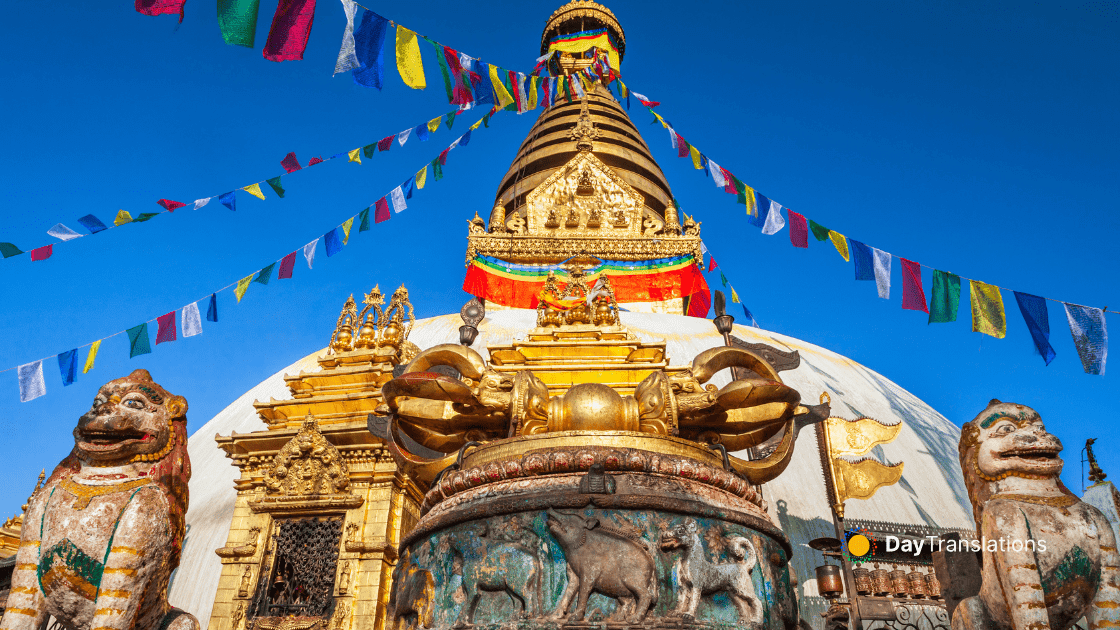
Nepal or officially the Federal Democratic Republic of Nepal is located in the Himalayas, the mountain range the separates the Tibetan Plateau from the Indian subcontinent. The Himalayan mountain range is the highest in the world and the portion along the northern part of Nepal includes Mount Everest, the highest peak in the world.
Although Nepal is the birthplace of Siddharta Gautama who later became Buddha Gautama and the one that started the Buddhist religion, Hinduism is the religion of the majority of the population in Nepal. While Buddhism is only second to Hinduism, many of the Nepalese do not distinguish between the two religions and even follow both and share temples and traditions. However, three different Buddhist traditions exist in Nepal – Theravada Buddhism, Buddhism of Kathmandu (Mahayana and Vajrayana) and Himalayan Buddhism. Nepal used to be a monarchy ruled by the Shah dynasty in the 17th century before it became a republic on May 28, 2008.
:: Background of Nepal ::
It is believed that the first settlers of Nepal were the Kirata people and they were also the rulers of the area from almost 2,500 years before its southern regions came under the influence of the Mauryan Empire of Northern India in 250 B.C.E. Siddharta Gautama, born on 563 B.C.E. and lived until 483 B.C.E. was a prince from the Shakya clan. In the 4th century C.E. Nepal was a nominal vassal of the Gupta Empire and the Kathmandu Valley and central Nepal were ruled by the Licchavis until late in the 8th century before being followed by either the Thakuri or the Newari era.
In this Country Profile
The medieval period of the history of Nepal began in the early 12th century when leaders came from the far western part of Nepal. The kings who came from this dynasty whose last names ended with malla ruled for 200 years. The kingdom was later divided into two dozen small states before another Malla dynasty led by Jayasthiti started in Kathmadu during the latter part of the 14th century. After again being under a untified rule, Nepal was divided into Bhaktapur, Kathmandu and Patan in 1482.
Rivalry ensued among the three kingdoms until a Gorkha king, Prithvi Narayan Shah set out to unify Nepal into one kingdom with the aid of India and succeeded in his mission in 1768. It has to be noted that there was no battle in Kathmandu because it was taken while the citizens of Kathmandu were celebrating Indra Jatra, a festival of the Newars.
There were battles fought during this time, as Nepal seeks to enlarge its territory, including the rivalry with the British East India Company, which led to the Anglo-Nepalese War in 1515 to 1816. This war showed the bravery and competence of the Nepalese soldiers, the Gurkhas, which exacted serious losses to the British army. The Treaty of Sugauli ended with the war with the British.
There was also factionalism inside the royal family and in 1846 the reigning queen hatched a plot to overthrow Jung Bahadur Rana, a popular military leader. This led to the Kot Massacre were hundred of princes and chieftains were executed. The Rana dynasty was born during this period after Jung Bahadur Rana won the siege.
The Ranas were pro-British and assisted the kingdom in its war with India during the Sepoy Rebellion of 1857. The Nepalese also aided the British during the first and second world wars, and Britain rewarded Nepal with the return of some parts of the Terai Region. A formal agreement of friendship between Britain and Nepal was signed in 1923 and the Britain recognized the independence of Nepal.
By the 1940s the dissatisfaction with the Rana dynasty had escalated. While neighboring country China invaded Tibet, India used the opportunity to gain more influence in Nepal by sponsoring King Tribhuvan who ruled from 1911 to 1955 to become the new ruler and to form a new government to overthrow the Rana dynasty. King Tribhuvan was succeeded by King Mahendra who ruled Nepal until 1972. He instituted the partyless panchayat system that was in effect until 1989 until his successor, King Birendra who ruled from 1972 to 2001 was forced to accept constitutional reforms and established a multiparty parliament by May 1991 because of the People’s Movement or Jan Andolan.
Power struggle continued in Nepal, with the Communist Party of Nepal becoming active in 1996, trying to establish a people’s socialist republic by force. This started the Nepal Civil War resulting in 12,000 deaths including the massacre of King Birendra, Queen Aiswarya, Crown Prince Dipendra and others.
King Birendra’s brother, Gyanendra assumed the throne and in 2005 removed the entire government force to assume full executive powers in a bid to nullify the Maoists. Although it was difficult since the Maoist were entrenched in the countryside, they did declare a 3-month ceasefire to negotiate by September 2005. The previous actions of the King when he fired all of the government staff and the newly-acquired sovereign authority of the House of Representatives voted to restrict the powers of the King by declaring Nepal as a secular state. On December 28, 2007Article 159 of the constitution was amended, replacing the “Provisions regarding the King” with the “Provisions of the Head of State”. Nepal became a federal republic thus abolishing the monarchy when the bill took effect on May 28, 2008.
The largest number of seats went to the Communist Party of Nepal during the Constituent Assembly election on April 10, 2008. On May 28, 2008 Nepal became a secular democratic republic and the King was requested to vacate the palace in 15 days, which was to be re-opened as a museum for the public. A year after the Maoist-led government was overthrown and a new coalition government with major political parties except the Maoists was created, with Madhav Kumar Nepal becoming Prime Minister. He was with the Unified Marxist-Leninist Communist Party of Nepal. He served as Prime Minister from May7 25, 2009 up to February 3 2011, succeeded by Jhala Nath Khanal who assumed office on February 3, 2011.
:: Geography of Nepal ::
Location
Nepal is located in South Asia along the Himalayas. It has a rich and ancient culture influenced by its closest neighbors, India and China. It is a landlocked country, bordered on the north by the People’s Republic of China and on the east, west and south by the Republic of India. Geographically, Nepal is 28° 00’ North of he Equator and 84° 00’ East of the Equator.
Area
Nepal has a total landmass of 147,181 square kilometers, making it 93rd largest country in the world in terms of landmass. Out of the total landmass, 97% or 143,351 square kilometers is land and the remaining 3% or 3,830 square kilometers are inland water system. In comparative area size, Nepal is only slightly larger than Arkansas, in the United States.
Land Boundaries
The north of Nepal is bordered by the People’s Republic of China for 1.236 kilometers and on the south, east and west by India for 1,690 kilometers. Nepal does not have a coastline so it has no maritime claims.
Climate
Different regions of Nepal have different climatic conditions, where some areas experience extreme weather patterns. The Tarai land or the wetland plains in the south are covered with forests and rich agricultural fields. For about 500 meters, the area enjoys full tropical climate while a subtropical climate extends for 1,200 meters. Snow occasionally falls and warm temperate climate prevail from 1,200 to 2,400 meters along the slopes of the mountains. Going upwards toward the treeline, about 3,600 meters, the area falls under the cold zone. Upwards to 4,400 meters, the climate changes to sub-artic or alpine zone and full arctic climate prevails beyond that.
Summer monsoon comes from the Bay of Bengal and the rain decreases as it travels to the west from the east. Eastern Nepal gets the highest precipitation with about 98.4 inches of rain annually, while Kathmandu receives about 55.1 inches of rain a year. Western Nepal gets about 39.4 inches of rain annually. On the windward slopes of Annapurna Himalaya, annual precipitation can reach as high as 216.5 inches while in the rainshadows beyond the high mountains rainfall can drop to as low as 6.3 inches a year.
Generally there are two seasons in Nepal. The wet season is from June to September and the dry season is from October to June. In between, the country can experience drought during the hot months of April and May. The terrain has adapted to the weather extremes as most of Nepal’s native vegetation covering the hillsides are drought-resilient. While the monsoon rains are welcome by the farmers to irrigate the fertile agricultural lands, above-normal rainfall can also occur, causing flooding and landslides. There are times too when monsoon rains fail, so drought also part of the landscape.
Terrain
Nepal has a combination of different terrain. There is the Tarai of the flat river plain of the Ganges located in the south. There is also the central hill region and the rugged Himalayas located in the north. The Great Himalayas run from the northwest to the southeast, along the border with China. In this region alone, nine of the ten highest mountains in the world are found. Mount Everest, which stands at 8,846 meters, is the highest point in Nepal. The lowest region is the Kanchan Kalan, which is about 70 meters above sea level.
Natural Resources
Nepal is not rich in mineral resources but there are still small deposits of quartz, lignite, copper, cobalt and iron ore. Water and hydropower is available. Forests are covered with timber although this is getting depleted. One of the major attractions of Nepal is its numerous mountains and its beautiful sceneries.
Land Use
The Tarai plains are very fertile and comprise 16.07% of arable land. Areas planted with permanent crops comprise about 0.85% and about 83.08% used for non-agricultural endeavors.
Natural Hazards
The effects of the summer monsoon coming from the east from the Bay of Bengal to the west create low pressure areas in Nepal, which can bring torrential rains and severe thunderstorms, flooding and landslides. However when the monsoon fails, Nepal can also experience sever drought and famine.
Environment
Some of the current environmental issues Nepal face are deforestation, as people depend on wood for fuel due to lack of alternative fuel sources, being one of the poorest countries in the world. It is also facing contaminated water due to human and animal wastes, agricultural runoff and effluents from various industries. There is also the issue of wildlife conservation and like other nations, Nepal also has to contend with increasing vehicular emissions.
International Agreements
Nepal is party to climate change, climate change-Kyoto Protocol, biodiversity, endangered species, desertification, laws of the sea, ozone layer protection, hazardous wastes, wetlands, tropical timber 83 and tropical timber 94 issues. It has signed but has not yet ratified marine life conservation.
:: People of Nepal ::
Population
According to July 2011 estimates, the population of Nepal is 29,391,883, a very big jump from the 9 million inhabitants in Nepal in the 1950s. Majority of the population is living in Kathmandu, the largest city and the capital of Nepal. The annual population growth based on 2011 estimate is 1.59%, with 0.61 migrants/1,000 population. The 2011 estimated birth rate is 22.17 births/1,000 people and 6.81 deaths/1,000 people. The fertility rate for 2011 (estimate) is 2.47 children for every woman.
Age Structure
People aged 15-64 comprise 31.1% of the total population of Nepal, with 8,607,338 males and 9,344,537 females. The younger population aged 0-14 has 5,177,264 males and 4,983,864 females. There are 597,628 males and 681,252 females aged 65 years and over in Nepal, according to 2011 estimates.
Median Age
The median age of the population of Nepal is quite young. Of the total population, the median age is 21.6 years; 20.7 for the males while it is estimated that the 2011 median age for women is 22.5 years.
Sex Ratio
Sex distribution in Nepal is more male-dominated, with 0.96 male for every female in the total population based on the 2011 estimate. At birth there are 1.04 male for every female, that same for those under 15 years of age. There are 0.92 males for every female aged 15 to 64 and 0.88 males for every female in the 65 years and over range.
Mortality Rate
For every 1,000 live births, mortality rate is about half with 44.54 deaths, basically the same for males and females.
Life Expectancy at Birth
Life expectancy at birth is just above fifty. For the total population the life expectancy at birth is just 66.16 years with 64.94 for the makes and slightly higher for the females, which according to 2011 estimates is about 67.44 years.
HIV/AIDS
HIV/AIDS is becoming a problem in Nepal According to estimates done in 2009 there is 0.4% prevalence among adults. There are 64,000 people living with HIV/AIDS in Nepal and have seen 4,700 deaths due to the disease.
Nationality (noun) (adjective)
People born in Nepal are Nepalese by birth. It is both a noun and an adjective; singular or plural.
Ethnic Groups
There are quite a few ethnic groups in Nepal with the Chhettri being dominant at 15.5% followed by the Brahman-Hill at 12.5%. The Magar group is at 7%, Tharu at 6.6% and Tamang and Newar at 5.5% and 5.4%, respectively. There are also Muslims which comprise 4.2% of the ethnic population; Kami and Yadav each comprise 3.9%. Other ethnic tribes comprise 32.7% and there are also an unspecified group representing 2.8% based on the census done in 2001.
Religions
Based on the 2001 census, Hinduism is practiced by 80.6% of the population of Nepal. Buddhism is a far second with 10.7%. Muslim is practiced by 4.2%, Kirant by 3.6% and other religions like Mundhum, Christianity and Jainism are followed by 0.9% of the population. Shiva is the considered the guardian god of Nepal and this is were the Lord Shiva temple, the Pashupatinath Temple can be found. The Buddha Gautama was born in Lumbini but was raised in Kapilavastu in India. That is also the place where he attained all his achievements in philosophy.
Languages
The official language, Nepali is spoken by 47.8% of the population while 12.1% speak Maithali. Bhojpuri is spoken by 7.4% of the population, while 5.8% speak Tharu (Dagaura/Rama). Other languages spoken are Tamang (5.1%), Newar (3.6%), Magar (3.3%) and Awadi (2.4%). Some other languages are spoken represent about 12.5%. Many government and business people speak English.
Literacy
People aged 15 and over can read and write with literacy placed at 48.6% of the total population. Males are more literate that the women with 48.6% versus only 34.9% of women, also based on the census done in 2001. Children stay in school for an average of 9 years with the males studying for 10 years and the females staying for 8 years, according to 2003 data.
:: References ::
http://en.wikipedia.org/wiki/Nepal
https://www.cia.gov/library/publications/the-world-factbook/geos/np.html
http://news.bbc.co.uk/2/hi/americas/country_profiles/1166502.stm
http://www.lonelyplanet.com/nepal
Geography of Nepal: Important Geographical Information about Nepal
In this Country Profile
Nepal is a beautiful landlocked country with the north side bounded by the Xizang Autonomous Region or Tibet and the Himalayan mountain range, while the east, west and south are bordered by India. Its rectangular shape, around 200 km wide and 650 km long is just a bit larger than Arkansas and Bangladesh. As such, Nepal largely relies on India for access out of country to reach the Bay of Bengal, which is also where the goods from China are transported.
Nepal is divided into three regions, the Tarai plains on the southern section from the Indian border and going inward to the hill and mountain regions, with each region going higher in elevation toward the Himalayan border. All regions are parallel across the length of Nepal from east to west, making a continuous ecological belt, with some parts divided by Nepal’s river systems. The division was made by the Nepali government to assist in regional planning for development, as there are ecological variations and different weather conditions within each region that greatly affects the sources of livelihood of the population.
Mountain Region
The Parbat or the mountain region is located over 4,000 meters above sea level, situated to the northern side of the hill region. The mountain region comprises the central section of the Himalayan mountain range where Mount Everest is located as well as some of the highest (over 8,000 meters) peaks in the world. According to local legends, this is the area where the Yeti (abominable snowman) lived. The section that is about 5,000 to 5,500 meters high is where the snow line begins and where extreme climatic and topographic conditions occur. The mountain region is thinly populated because living in the area is arduous and not economically viable. Farming activities are confined to river basins and low valleys. There was trading and animal raising and herding around the 1990s and the traders migrated between the lowlands and the highlands in a seasonal cycle to sell their goods and buy commodities. Most dwellers in this region became guides for trekkers and mountain climbers.
Hill Region
To the southern side of the mountain region is the second division, hill region or pahar. The altitude of the region is between 1,000 to 4,000 meters. This is where the valley of Kathmandu, the richest and highly urbanized section of Nepal is located. The valley is still mountainous with the Siwalik or Churia Range and the Mahabharat Lekh occupying it, with several valleys in between. Despite the valleys, the land is not ideally suited for agriculture due to isolation and the rocky landscape but the region thrived as a cultural and political center, due to migration from India and Tibet. Geologic forces and intervention by people living in the area created a complex series of terraces on the lower hills and farmers adapted to the sparse landscape and seasonality by planting crops whenever they can and engaging in animal husbandry, which is more suitable to the land. Seasonally, rice, millet, barley, maize and potatoes are grown.
Tarai Region
This region is situated in the lowland where humid and sub-humid conditions exist. The section is parallel to the hilly region and stretches along the India-Nepal border. The northern part rises 300 meters above sea level while the section at the base of the Siwalik Range has an elevation of about 1,000 meters. The valleys are richer and multiple crops can be planted here. Notable are the Rapti or Chitwan valley in the center of and the Surkhet and Dang valleys in the west.
Tarai is derived from a Persian word which means damp. Basically the tarai region is wetland, where the climate is hot and humid. This region is irrigated by the Karnali and Kosi rivers of Nepal and the Narayani which is part of the Gandak River from India and several tributaries. The tarai region is the richest region in Nepal because the land is suitable for agriculture and there where forests around that became sources of timber and other forest products.
Climate
Nepal falls under five climatic zones, identified by Sharad Singh Negi, a scholar who conducted a study on the climactic conditions of Nepal according to altitude. The low-lying areas that have an elevation of about 600 to 1,200 meters are in the tropical and sub-tropical zone. Areas that are about 1,200 to less than 2,500 meters above sea level fall under the temperate zone. The cold zone prevails in areas that are from 2,400 to over 3,500 meters high; sub-arctic climate is felt to the sections that have an altitude of up to 4,000 meters. Beyond that is the arctic zone. These climatic zones greatly affect the botanical and the precipitation patterns which have great impact on agriculture and the nation’s food supply.
:: References ::
http://countrystudies.us/nepal/21.htm
http://en.wikipedia.org/wiki/Geography_of_Nepal
Information about the Nepali Flag: Colors and Meaning of the Flag of Nepal
In this Country Profile
:: Meaning of the Nepali Flag ::
The flag of Nepal is very distinct and unique, since it is not the standard square or rectangle like most flags. The flag consists of two triangular flags placed one on top of the other and is believed to originate in late 19th century, from an earlier version of two individual pennants used several centuries ago. It is a simplified combination of two pennants, borrowed from the original design that had been in use for over 2,000 years. The new national flag was adopted on December 12, 1962 when Nepal formed a new constitutional government. Prior to the new simplified design, the sun and the crescent moon on the flag had human faces, which remained on the Royal Standard until the monarchy was abolished in 2008.
Colors
The national flag of Nepal uses crimson red with a blue border, Nepal’s traditional colors. The crescent moon and the sun over the crimson red background are white. It was said that these two celestial bodies signify that Nepal hopes that the nation will last as long as the sun and moon exist, or a symbol of permanence.
Meaning
There are several meanings connected to the colors and design of the flag of Nepal. Crimson red is a traditional color in the country and is also the color of its national flower, the rhododendron as well as a sign of victory in war, symbolizing the bravery of the Nepalese since the Mahabharata and Ramayana. Blue is for peace, symbolizing the peace and harmony of the country since the age of Gautama Buddha.
The two conjoined pennants represent the Himalayan mountains and Buddhism and Hinduism, which are the two main religions in Nepal. While the moon symbolizes the soothing and calm nature of the people while the sun symbolizes their fierce resolve, the crescent moon is also the symbol of the royal house while the Rana dynasty is represented by the sun. The celestial bodies are also interpreted to mean that the shade and cool weather prevailing in the Himalayas is represented by the moon while the sun symbolizes the high temperature and heat over the foothills of the Himalayas in Terai.
Extensive List of Languages of Nepal: Spoken and Extinct Languages
In this Country Profile
:: List of Languages ::
Angika
[anp] 15,900 in Nepal (2001 census). Terai. Alternate names: Anga, Angikar, Chhika-Chhiki. Classification: Indo-European, Indo-Iranian, Indo-Aryan, Eastern zone, Bihari
Athpariya
[aph] 2,000 (1995 K. Ebert), decreasing. 439,312 all Rai languages (1991 census). Kosi zone, Dhankuta District, north of the Tamur, between the Dhankutakhola in the west and the Tangkhuwa in the east; Dhankuta and Bhirgaon panchayats. Alternate names: Arthare, Arthare-Khesang, Ath Paharia Rai, Athapre, Athpare, Athpre, Jamindar Rai. Dialects: Athpare [byw] from Dhankuta and Belhara are very similar, but not mutually inherently intelligible (Bickel 1996). Reportedly similar to Limbu [lif], but not inherently intelligible with it. The term ‘Kiranti’ covers about 21 speech varieties, of which fewer than half are even partially mutually intelligible. Classification: Sino-Tibetan, Tibeto-Burman, Himalayish, Mahakiranti, Kiranti, Eastern
Awadhi
[awa] 561,000 in Nepal (2001 census). Lumbini zone, Kapilbastu District; Bheri zone, Banke and Bardiya districts. Alternate names: Abadhi, Abadi, Abohi, Ambodhi, Avadhi, Baiswari, Kojali, Kosali. Dialects: Degauri Tharu, Gangapari, Mirzapuri, Pardesi, Tharu, Uttari. Classification: Indo-European, Indo-Iranian, Indo-Aryan, East Central zone
Bagheli
[bfy] Ethnic population: 136,953 Kewat (2001 census). Koshi Zone, Morang District. Alternate names: Bagelkhandi, Bhugelkhud, Gangai, Kawathi, Kenat, Kevat Boli, Kevati, Kewani, Kewat, Kewati, Kewot, Mandal, Mannadi, Riwai. Classification: Indo-European, Indo-Iranian, Indo-Aryan, East Central zone
Bahing
[bhj] 10,000 (Lee et al. 2005). Sagarmatha zone, Okhaldunga District, south of Solu River in the Nachedanda ranges, east of Melung River to Thatan River and its tributaries west; south Solukhumbu District, Necha Batase and Sallyan VDCs. Alternate names: Bahing Lo, Baing, Bainge Rai, Baying, Bayung Lo, Pai Lo, Radi Lo, Rai, Kiranti-Bayung. Dialects: Rumdali, Tolocha, Nechali. 85% or above intelligibility between all dialects. Rumdali is best understood among all Bahing dialects (Lee et al 2005); Bahing is more homogeneous than most Kiranti languages. Related to Sunwar [suz]. Lexical similarity: 83%–95% between dialects, 44%–48% with Sunwar. Classification: Sino-Tibetan, Tibeto-Burman, Himalayish, Mahakiranti, Kham-Magar-Chepang-Sunwari, Sunwari
Bantawa
[bap] 371,000 in Nepal (2001 census). Less than 5% monolinguals. Population total all countries: 390,200. Koshi zone, Morang, Dhankuta, Bhojpur, Sunsari, Sankhuwasawa districts; Sagarmatha zone, Khotang, Udayapur districts; Mechi zone, Jhapa, Panchthar districts. Amchoke is in Limbuwan, especially Ilam District. Homeland is the Eastern hills but many migrated to the Terai. Also in Bhutan. Alternate names: Bantaba, Bantawa Dum, Bantawa Rai, Bantawa Yong, Bantawa Yüng, Bontawa, Kiranti. Dialects: Northern Bantawa (Dilpali), Southern Bantawa (Hatuwali, Hangkhim), Eastern Bantawa (Dhankuta), Western Bantawa (Amchoke, Amchauke). Southern and Northern Bantawa dialects are most similar and could be united as ‘Intermediate Bantawa’. Dialects are reportedly mutually inherently intelligible. Sorung and Saharaja are subvarieties of Western Bantawa. Rungchenbung and Yangma are subvarieties of Northern Bantawa. Eastern dialect is most divergent. Most closely related to Dungmali [raa]. Also related to Puma [pum], Sampang [rav], and Chhintange [ctn]. Classification: Sino-Tibetan, Tibeto-Burman, Himalayish, Mahakiranti, Kiranti, Eastern
Baraamu
[brd] 2,000 (1998), decreasing. Ethnic population: 7,383 (2001 census). Gandaki zone, North Gorkha District, Takhu village up the Doraundi Khola, east side above Chorgate, near Kumhali, about 7 villages. May be in Dhading District. Alternate names: Baram, Barhamu, Bhramu, Brahmu, Bramu. Dialects: Related to Thangmi [thf] (Grierson-Konow). Classification: Sino-Tibetan, Tibeto-Burman, Himalayish, Tibeto-Kanauri, Western Himalayish, Eastern
Belhariya
[byw] 500 (1995 K. Ebert), decreasing. Koshi zone, Dhankuta District, Belhara village and hill west of Dhankuta Bajar. Alternate names: Belhare, Athpariya, Athpahariya, Athpare, Athpagari. Dialects: Different from Athpariya [aph], although also called that, and closely related to it (Winter 1991). Not intelligible with Athpariya (Bickel 1996:21). Appears to be between Athpariya, Yakkha [ybh], and Chhilling [cur] linguistically. Classification: Sino-Tibetan, Tibeto-Burman, Himalayish, Mahakiranti, Kiranti, Eastern
Bengali
[ben] 23,600 in Nepal (2001 census). Mechi zone, Jhapa District; Koshi zone, Morang and Sunsari districts; Sagarmatha zone, Saptari District. Alternate names: Bangala, Bangla, Bangla-Bhasa. Dialects: Barik, Bhatiari, Chirmar, Kachari-Bengali, Lohari-Malpaharia, Musselmani, Rajshahi, Samaria, Saraki, Siripuria. Classification: Indo-European, Indo-Iranian, Indo-Aryan, Eastern zone, Bengali-Assamese
Bhojpuri
[bho] 1,710,000 in Nepal (2001 census). Narayani zone, Rautahat, Bara, and Parsa districts; near India border, Lumbini zone, Nawalparasi District; Janakpur zone, Sarlahi District; Koshi zone, Morang District; Mechi zone, Jhapa District. Alternate names: Bajpuri, Bhojapuri, Bhozpuri. Dialects: Bhojpuri Tharu, Teli. Classification: Indo-European, Indo-Iranian, Indo-Aryan, Eastern zone, Bihari
Bhujel
[byh] 3,900 (2005 D. Regmi). Ethnic population: 7,200 (2005 D. Regmi). Gandaki zone, East Tanahun District, south side of Chimkesori Peak, behind Yangchok, near the Magar. Separated from the Chepang by Trisuli (Narayani) River. Alternate names: Bujal, Bujhel, Bujheli, Bujhyal, “Gharti” , Pukhgyal Ngur, Western Chepang. Dialects: Pronominal affix differences hinder intelligibility with Chepang. More like the East Himalayish languages. Lexical similarity: 98% with Chepang [cdm]. Classification: Sino-Tibetan, Tibeto-Burman, Himalayish, Mahakiranti, Kham-Magar-Chepang-Sunwari, Chepang
Bodo
[brx] 3,300 in Nepal (2001 census). Ethnic population: 3,763 (2001 census). Mechi zone, Jhapa District. Alternate names: Bara, Bodi, Boro, Boroni, Mache, Mech, Meche, Mechi, Meci. Classification: Sino-Tibetan, Tibeto-Burman, Jingpho-Konyak-Bodo, Konyak-Bodo-Garo, Bodo-Garo, Bodo
Bote-Majhi
[bmj] 11,000 (1991 census), decreasing. Narayani River banks and tributaries; Narayani zone, Chitwan, Parsa districts; Lumbini zone, Nawalparasi, Palpa, Gulmi districts; Gandaki zone, Tanahun, Gorkha, Kaski, Gulmi, Syangja districts. Alternate names: Kushar, Pakhe-Bote. Classification: Indo-European, Indo-Iranian, Indo-Aryan, Eastern zone, Unclassified
Byangsi
[bee] 1,730 in Nepal (2001 census). Ethnic population: 2,103. Mahakali zone, Darchula District, Byas Valley. 9 villages. Alternate names: Byangkho Lwo, Byanshi, Byansi, Byasi, Sauka, Shauka. Classification: Sino-Tibetan, Tibeto-Burman, Himalayish, Tibeto-Kanauri, Western Himalayish, Almora
Camling
[rab] 12,100 (2006). East, Sagarmatha zone, Khotang District, west Khotang, Durchhim east across Diktel to Bhojpur border District; then south to Sawa Khola valley, scattered in Udayapur District. Sikkim and Darjeeling and Bhutan. Alternate names: Chamling, Chamlinge Rai, Rodong. Dialects: Most similar to Bantawa [bap] and Puma [pum] linguistically. Many people speak a variety mixed with Nepali [nep]. Classification: Sino-Tibetan, Tibeto-Burman, Himalayish, Mahakiranti, Kiranti, Eastern
Chantyal
[chx] 2,000 (Noonan 1997), decreasing. Ethnic population: 9,814 (2001 census). Dhaulagiri zone, Myagdi District, Kali Gandaki River valley. Ethnic Chantel also in Baglung District. Alternate names: Chantel, Chantel Kham, Chentel, Chhantel, Khamkura. Dialects: Related to Gurung [ggn], Manangba [nmm], Tamang [tdg], Thakali [ths] (Noonan 1997). Classification: Sino-Tibetan, Tibeto-Burman, Himalayish, Tibeto-Kanauri, Tibetic, Tamangic
Chaudangsi
[cdn] 1,200 in Nepal (2000). Mahakali zone, Darchula District, Chaudas Valley. 10 villages. Alternate names: Bangba Lwo, Sauka, Shauka, Tsaudangsi. Classification: Sino-Tibetan, Tibeto-Burman, Himalayish, Tibeto-Kanauri, Western Himalayish, Almora
Chepang
[cdm] 36,800 (2001 census), increasing. Ethnic population: 52,237. Inner Terai; Narayani zone, Makwanpur, Chitawan, and South Dhading districts; Gandaki zone, South Gorkha District. Alternate names: Tsepang. Dialects: Eastern Chepang, Western Chepang. Bhujel [byj] could be considered a dialect similar to Western Chepang, but has difficult intelligibility with Chepang due to different pronominal affix morphology. Dialects differ in verb forms. Similar in morphology to Kiranti languages. Lexical similarity: 98% with Bhujel [byh]. Classification: Sino-Tibetan, Tibeto-Burman, Himalayish, Mahakiranti, Kham-Magar-Chepang-Sunwari, Chepang
Chhintange
[ctn] 1,500 (2003). Koshi zone, Lower Arun region, Dhankuta District, Chhintang Panchayat, Sambhung and Pokhare, and Ankhisalla Panchayat, Dandagaon. Alternate names: Chhintang, Chintang, Chintang Rûng, Teli. Dialects: Probably not intelligible with Bantawa [bap], although sometimes considered a dialect of it because of ethnic similarities. Classification: Sino-Tibetan, Tibeto-Burman, Himalayish, Mahakiranti, Kiranti, Eastern
Chhulung
[cur] 1,310 (2001 census). Koshi zone, Ankhisalla Panchayat, Dhankuta District, end of Chhintang Panchayat. Alternate names: Chhilling, Chholung, Chhûlûng Rûng, Chulung, Chülüng. Classification: Sino-Tibetan, Tibeto-Burman, Himalayish, Mahakiranti, Kiranti, Eastern
Chukwa
[cuw] 100 (Winter 1991). Koshi zone, Bhojpur District, Kulung Panchayat. Alternate names: Cukwa Ring, Pohing, Pohing Kha. Classification: Sino-Tibetan, Tibeto-Burman, Himalayish, Mahakiranti, Kiranti, Eastern Nearly extinct.
Darai
[dry] 10,200 (2001 census). Ethnic population: 14,859. Inner Terai, Narayani zone, Chitawan District; Gandaki zone, Tanahu District; Lumbini zone, Nawalparasi, Palpa districts; Gandaki zone, Gorkha District. Classification: Indo-European, Indo-Iranian, Indo-Aryan, Unclassified
Darmiya
[drd] 1,200 in Nepal (2000). Mahakali zone, Darchula District, Dhauli or Darma Valley, 16 villages. Alternate names: Darimiya, Sauka, Shauka. Classification: Sino-Tibetan, Tibeto-Burman, Himalayish, Tibeto-Kanauri, Western Himalayish, Almora
Dhanwar
[dhw] 31,800 (2001 census), decreasing. No monolinguals (Toba, Toba and Rai 2005). Ethnic population: 53,229. Narayani zone, Makwanpur, Rautahat districts; Janakpur zone, Sindhuli District; Eastern hills and plain, inner Terai and Terai south of Kathmandu. Alternate names: Danuwar, Danuwar Rai, Denwar, Dhanvar. Dialects: Danuwar Done [dha] in Makwanpur and India and Danuwar Kachariya in Rautahat and elsewhere are probably distinct languages from Dhanwar [dhw]. Typological affinities with Northwestern zone, Dardic group. Classification: Indo-European, Indo-Iranian, Indo-Aryan, Unclassified
Dhimal
[dhi] 17,300 in Nepal (2001 census). Population total all countries: 17,750. Ethnic population: 19,537. Mechi zone, Jhapa District, 24 villages; Koshi zone, Morang District, 51 villages; East and West dialects are separated by Kankai River in Jhapa. Also in India. Alternate names: Dhemal. Dialects: Eastern Dhimal, Western Dhimal. Toto [txo] in India is a separate language with no inherent intelligibility between them. 75%–80% intelligibility between eastern and western dialect speakers. Lexical similarity: low with Toto [txo], 80%–82% between dialects. Classification: Sino-Tibetan, Tibeto-Burman, Himalayish, Tibeto-Kanauri, Tibetic, Dhimal
Dolpo
[dre] 9,000 (2003). 5,000 monolinguals (2003). Karnali zone, north Dolpa District, villages of Goomatara, Kola, Tachel, Kani, Bajebara, Laun, Chilpara, Bantari, Byas, above Dolpa up to Tibet. Beyond the mountains west of upper Kali Gandaki River Valley. Confined by the Dhaulagire Himal on the south and Tibet on the north. Includes the headwaters of Karnali River. About 24 small villages in Namgang, Panzgang, Tarap, and Chharbung subdistricts. Alternate names: Dolpa Tibetan, Dolpike, Phoke Dolpa. Dialects: Dho Tarap, Phoksumdo Lake, Barbung River, and Charka-Dolpo Chu River areas are slightly different, but inherent intelligibility is very good. Most similar language is Lowa [loy]. Dho Tarap reportedly understood best by all speakers. Reportedly similar to Tichurong [tcn]. Lexical similarity: 78% with Lowa [loy]; 69% with Lhomi [lhm]; 68% with Lhasa Tibetan [bod], Walungge [ola], and Kyerung [kgy]; 67% with Nubri [kte]; 66% with Helambu Sherpa [scp]; 62% with Jirel [jul] and Sherpa [xsr]. Classification: Sino-Tibetan, Tibeto-Burman, Himalayish, Tibeto-Kanauri, Tibetic, Tibetan, Central
Dumi
[dus] 2,000 (2002 UNESCO). Sagarmatha zone, north Khotang District, hills near the middle of the Rawakhola Valley, Baksila, Saptesvara abutting Rava and Tap rivers near the confluence and upriver. May currently be spoken in only the village of Narung in the western part of this region. Alternate names: Dumi Bo’o, Dumi Bro, Lsi Rai, Ro’do Bo’, Sotmali. Dialects: Brasmi, Kharbari, Lamdija, Makpa. Most similar to Khaling [klr], Koi [kkt]. Makpa dialect is markedly divergent. Lexical similarity: 78% with Lowa [loy]; 69% with Lhomi [lhm]; 68% with Lhasa Tibetan [bod], Walungge [ola], and Kyerung [kgy]; 67% with Nubri [kte]; 66% with Helambu Sherpa [scp]; 62% with Jirel [jul] and Sherpa [xsr]. Classification: Sino-Tibetan, Tibeto-Burman, Himalayish, Mahakiranti, Kiranti, Western
Dungmali
[raa] 220 (2001 census). Koshi zone; east Bhojpur District, northeast of the Singtang Lekh, bend of Arun River between its confluence with the Piukhuwa and the first confluence with Piluwa River. Alternate names: Arthare, Arthare-Khesang, Dungmali Pûk, Dungmali-Bantawa. Dialects: Khesang (Khesange). The term ’Kiranti’ covers about 21 dialects, of which fewer than half are even partially intelligible. 82% cognate with Bantawa but morphology and phonology differ (Winter 1991). Classification: Sino-Tibetan, Tibeto-Burman, Himalayish, Mahakiranti, Kiranti, Eastern
Dura
[drq] No known speakers. Ethnic population: 3,397 (2001 census). Gandaki zone, Lamjung District, Dura Danda. Classification: Sino-Tibetan, Tibeto-Burman, West Bodish
Dzongkha
[dzo] 300 in Nepal (2007). Some in Kathmandu. Alternate names: Bhotia of Bhutan, Bhutanese, Drukha, Drukke, Jonkha, Zongkhar. Classification: Sino-Tibetan, Tibeto-Burman, Himalayish, Tibeto-Kanauri, Tibetic, Tibetan, Southern
Ghale, Kutang
[ght] 1,300 (1992). Gandaki zone, North Gorkha District, Buri Gandaki Valley from Nyak, up to and including Prok. Alternate names: Bhotte, Kuke. Dialects: Bihi, Chak, Rana. Varieties spoken in Chhak and Kwak villages are similar to each other and different from all the other villages. Lexical similarity: 62%–76% among dialects, 39%–49% with Southern Ghale [ghe], 45%–61% with Northern Ghale [ghh], 18% with Banspur Gurung [gvr], 16%–23% with Tamang varieties, 13%–31% with Nubri [kte], 23%–27% with Tsum [ttz], 22%–27% with Kyerung [kgy], 19%–24% with Tibetan [bod]. Classification: Sino-Tibetan, Tibeto-Burman, Himalayish, Tibeto-Kanauri, Tibetic, Tamangic
Ghale, Northern
[ghh] 4,440 (2006 SIL). 400 monolinguals. Gandaki zone, Gorkha District, Buri Gandaki Valley. Alternate names: Lila, Ril-Lila. Dialects: Khorla, Uiya, Jagat, Philim, Nyak. Nyak is the most diverse dialect. Philim have 94% intelligibility of Uiya. 75%–79% intelligibility of Barpak in Southern Ghale [ghe]. Dialect chain runs north and south. Lexical similarity: 73%–89% among dialects. Lexical similarity 65%–81% with Southern Ghale, 45%–61% with Kutang Ghale [ght], 29%–37% with Western Tamang [tdg], 21%–27% with Nubri [kte], 22%–25% with Tsum [ttz], 19%–23% with Kyerung [kgy], 19%–21% with Tibetan [bod]. Classification: Sino-Tibetan, Tibeto-Burman, Himalayish, Tibeto-Kanauri, Tibetic, Tamangic
Ghale, Southern
[ghe] 21,500 (2006). 2,000 monolinguals. Gandaki zone, Gorkha District, hills south of Macha Khola. Alternate names: Galle Gurung, Lila, Ril-Lila. Dialects: Barpak, Kyaura, Laprak. Some intelligibility between Northern [ghh] and Southern Ghale. Dialect subgroup. Glover (1974:8–12) identifies a Ghale branch under Bodish intermediate between the Tibetan and Gurung branches. Lexical similarity: 75% –78% among dialects, 65%-81% with Northern Ghale, 39%–49% with Kutang Ghale [ght], 27%–30% with Banspur Gurung [gvr], 31% with Western Tamang [tdg], 20% with Nubri [kte] and Tsum [ttz], 18% with Tibetan [bod]. Classification: Sino-Tibetan, Tibeto-Burman, Himalayish, Tibeto-Kanauri, Tibetic, Tamangic
Gurung, Eastern
[ggn] 227,000 (2007), decreasing. 338,925 all Gurung languages in Nepal (2001 census). Western Dev. region, Gandaki zone, mainly Lamjung, Tanahu, and west Gorkha districts. Possibly Manang District. Alternate names: Daduwa. Dialects: Lamjung Gurung, Gorkha Gurung, Tamu Kyi. Eastern and Western Gurung [gvr] do not have adequate intelligibility to handle complex and abstract discourse. Daduwa town seems central linguistically. Classification: Sino-Tibetan, Tibeto-Burman, Himalayish, Tibeto-Kanauri, Tibetic, Tamangic
Gurung, Western
[gvr] 125,000 in Nepal (2007). Population total all countries: 201,300. Ethnic population: 543,571. Gandaki zone, Kaski, Syangja districts; Dhaulagiri zone, Parbat District. Possibly in Myanmar. Also in Bhutan, India. Alternate names: Gurung, Tamu Kyi. Dialects: Southern Gurung (Syangja Gurung), Northwestern Gurung (Kaski Gurung). Dialect speakers may have enough mutual inherent intelligibility to understand complex and abstract discourse, but not enough with Eastern Gurung [ggn]. Related to Thakali [ths]. Classification: Sino-Tibetan, Tibeto-Burman, Himalayish, Tibeto-Kanauri, Tibetic, Tamangic
Helambu Sherpa
[scp] 7,570 (2000). Bagmati zone, Nuwakot and Sindhupalchok districts, Helambu area. Alternate names: Yholmo, Yohlmu Tam. Dialects: Eastern Helambu Sherpa, Western Helambu Sherpa. Melamchi River divides dialects. Understand other dialects even for abstract and complex subjects, including possibly Tarke Ghyang, Khang-Kharka, Pahndang, but not Kagate [syw]. Lexical similarity: 66% with Dolpo [dre] and Walungge [ola], 65% with Lhasa Tibetan [bod], Jirel [jul], and Kyerung [kgy], 63% with Lowa [loy] and Sherpa [xsr], 61% with Nubri [kte], 60% with Lhomi [lhm]. Classification: Sino-Tibetan, Tibeto-Burman, Himalayish, Tibeto-Kanauri, Tibetic, Tibetan, Central
Hindi
[hin] 106,000 in Nepal (2001 census). South strip of low country. Classification: Indo-European, Indo-Iranian, Indo-Aryan, Central zone, Western Hindi, Hindustani
Humla
[hut] 4,000 (2001 SIL). Seti zone, Bajura District; Karnali zone, Humla District, villages northwest from Simikot towards China border, villages slightly northeast of Simikot. Some in Kathmandu. Alternate names: Dangali, “Humla Bhotia” , Phoke. Dialects: Limi, Upper Humla, La Yakba, Nyinba, Humli Khyampa. Dialects reportedly mutually intelligible. Classification: Sino-Tibetan, Tibeto-Burman, Himalayish, Tibeto-Kanauri, Tibetic, Tibetan, Central
Jerung
[jee] 2,000 (2004 J. Opgenort), decreasing. Janakpur zone, Sindhuli District, villages along west bank of the Bahadur Khola, south of Sunkosi River as far south as Mohantar village; Sagarmatha zone, Okhaldhunga District, around and above Melungkhola River mouth, roughly west of the Bhadare Khola, to south of the Dhad Khola, to north of Sunkosi River, and as far west as Amvot village. Alternate names: Jero Mala, Jerum, Jerunge, Jherung, Zero, Zero Mala, Zerum. Dialects: Madhavpur, Balkhu-Sisneri, Ratnawati (Sindhuli). Linguistically most similar to Wambule [wme]. Alternate dialect analysis: Northern dialect spoken in Okhaldhunga District, Southern dialect in Sindhuli District. (2004 J. Opgenort). Classification: Sino-Tibetan, Tibeto-Burman, Himalayish, Mahakiranti, Kiranti, Western
Jhankot Sign Language
[jhs] Population is 10% of the village population. Midwest region, Karnali zone, Dolpo District, Jhankot village. Classification: Deaf sign language
Jirel
[jul] 7,070 (2000). Janakpur zone, Dolakha District, Jiri and Sikri valleys, eastern hills. Jiri is the main area. Also Chhyatrapa; Lumbini zone, Nawalparasi District; Bagmati zone, Sindhupalchok District; Narayani zone, Parsa District. Alternate names: Jiri, Jirial, Ziral. Dialects: Accent differences, but not real dialects. Some comprehension of Lhasa Tibetan [bod] and some Tibetan dialects. Lexical similarity: 67% with Sherpa [xsr], 65% with Helambu Sherpa [scp], 62% with Dolpo [dre] and Lowa [loy], 60% with Kyerung [kgy], 57% with Nubri [kte], Lhomi [lhm], and Walungge [ola], 54% with Lhasa Tibetan [bod]. Classification: Sino-Tibetan, Tibeto-Burman, Himalayish, Tibeto-Kanauri, Tibetic, Tibetan, Southern
Jumla Sign Language
[jus] 100% monolingual. Midwest region, Chandmnath VDC, Jumla District, Jumla Town. Classification: Deaf sign language
Jumli
[jml] 40,000 (2001 SIL). Karnali zone, Jumla District. Alternate names: Jumeli, Jumla, Jumleli, Khas Nepali, Sijali, Singja. Dialects: Assi, Chaudhabis, Paachsai, Sinja. 73%–89% intelligible with standard Nepali [nep]. Not sufficient to understand complex and abstract discourse. Lexical similarity: 73%–80% with standard Nepali [nep]. Classification: Indo-European, Indo-Iranian, Indo-Aryan, Northern zone, Eastern Pahari
Kagate
[syw] 1,270 (2000). Janakpur zone, Ramechhap District, a ridge of Likhu Khola. Alternate names: Kagate Bhote, Shuba, Shyuba, Syuba. Dialects: Differs from Helambu Sherpa [scp] by less use of the honorific system in verbs. Classification: Sino-Tibetan, Tibeto-Burman, Himalayish, Tibeto-Kanauri, Tibetic, Tibetan, Central
Kaike
[kzq] 790 (2001 census). Karnali zone, Dolpa District; Dhaulagiri zone. Alternate names: Khamkura, Tarali Kham. Classification: Sino-Tibetan, Tibeto-Burman, Himalayish, Tibeto-Kanauri, Western Himalayish, Kanauri
Kayort
[kyv] 22,000 (2002). Koshi zone, Morang District, Dakuwa Danga, near Rajbanshi [rjs]. Dialects: Related to Bengali [ben]. Classification: Indo-European, Indo-Iranian, Indo-Aryan, Eastern zone, Bengali-Assamese
Khaling
[klr] 18,000 in Nepal (2002 UNESCO), increasing. Sagarmatha zone, Solu Khumbu, Khotang districts; Koshi zone, Bhojpur, Sankhuwasawa, Terhathum districts; Mechi zone, Panchtar and Ilam districts. Also in India. Alternate names: Kaling, Khael Baat, Khael Bra, Khalinge Rai. Dialects: Most similar to Dumi [dus], Koi [kkt]. Classification: Sino-Tibetan, Tibeto-Burman, Himalayish, Mahakiranti, Kiranti, Western
Kham, Eastern Parbate
[kif] 7,500 (2003 SIL). Dhaulagiri zone, Baglung District, Nishel in Nisi, Bhalkot, Budhathok. Bhujel is in Kuku, Diza, Kang, Masbang, Musuri, and Sukurdung villages. Alternate names: Eastern Parbate, Nisel, Nishel Kham, Nisi, Nisi Kham. Dialects: Bhujel Kham, Nishel Kham. Partially intelligible with Western Parbate [kjl] dialects. Lexical similarity: 79% between dialects, 71% with Western Parbate, 55% with Gamale [kgj], 44% with Sheshi [kip]. Classification: Sino-Tibetan, Tibeto-Burman, Himalayish, Mahakiranti, Kham-Magar-Chepang-Sunwari, Kham
Kham, Gamale
[kgj] 13,100 (2000). 1,000 monolinguals. Rapti zone, Rolpa District, Gam Khola, western hills, Gam, Huiching, Jhyalgung, Cholbang, Tamali, Harbang, Dangadhara, Sherma, Gaipa, Ghusbang, Phalabang villages. Alternate names: Gamale. Dialects: Tamali, Ghusbanggi. Only 30% intelligibility with Western Parbate [kjl] due to radical differences in verbal morphology. Lexical similarity: 71% with Western Parbate (most similar), 55% with Eastern Parbate [kif] and Sheshi [kip], 45% with Bhujel [kif]. Classification: Sino-Tibetan, Tibeto-Burman, Himalayish, Mahakiranti, Kham-Magar-Chepang-Sunwari, Kham
Kham, Sheshi
[kip] 20,000 (2003). Rapti zone, Rukum District, western hills, Jangkot, Kotgaon (Tapnang), Rimsek, Korcabang, Dangdung, Hwama, Dhangsi, Bhabang, and Ghapa villages. Alternate names: Sheshi. Dialects: Tapnanggi, Jangkoti. 30% intelligibility levels with Gamale Kham [kgj], and even less with Western Parbate [kjl]. Lexical similarity: 55% with Gamale Kham (most similar), 51% with Western Parbate, 46% with Eastern Parbate [kif]. Classification: Sino-Tibetan, Tibeto-Burman, Himalayish, Mahakiranti, Kham-Magar-Chepang-Sunwari, Kham
Kham, Western Parbate
[kjl] 24,500 (2003 SIL), increasing. West central, Rapti Zone, Rukum, Rolpa districts. Taka-Shera is the center. Alternate names: Kham-Magar, Takale, Takale Kham, Western Parbate. Dialects: Takale, Maikoti, Mahatale, Lukumel, Wale, Thabangi. Greatest similarities between Eastern [kif] and Western Parbate [kjl]. The Parbate, Sheshi, and Gamale groups are all inherently unintelligible. Mahatale and Miruli are 2 dialects whose position within the Kham linguistic group has not been decided. Lexical similarity: 71% with Gamale Kham [kgj], Eastern Parbate; 58% with Bhujel Kham, 51% with Sheshi [kip]. 25% with Magar and Gurung, slightly below 25% with the Tibetan group, 15% with the Rai and Limbu groups. Classification: Sino-Tibetan, Tibeto-Burman, Himalayish, Mahakiranti, Kham-Magar-Chepang-Sunwari, Kham
Koi
[kkt] 2,640 (2001 census), decreasing. Sagarmatha zone, northeast Khotang District, Sungdel Panchayat near Rawakhola headwaters. 2 villages. Alternate names: Kohi, Koi Bo’o, Koyi, Koyu, Koyu Bo’. Dialects: Sungdel, Behere. Most similar to Dumi [dus] and Khaling [klr]. Classification: Sino-Tibetan, Tibeto-Burman, Himalayish, Mahakiranti, Kiranti, Western
Kulung
[kle] 18,700 in Nepal (2001 census). Sagarmatha zone, Solu Khumbu District, east hills, Hongu Valley, Mahakulung region, Hongu Khola area, Bumng (Bung), Pilmu, Cheskam Sadhi, Gudel, and Namlu villages; Koshi zone, Sankhuwasawa District, Baliyamnang, Phedi Khola, Wasepla, Mangtewa, Yaphu, Chayeng, Walung, and Sheduwa villages; Terhathum, Panchthar, Ilam districts. Mainly found in drainages of Sangkhuwa and Siswa rivers, which flow into Arun River. Also in some Terai areas. Also in India. Alternate names: Kholung, Khulung, Khulunge Rai, Kulu Ring. Dialects: Sotang (Sotaring, Sottaring), Mahakulung, Tamachhang, Pidisoi, Chhapkoa, Pelmung, Namlung, Khambu. 100% intelligibility between Kulung and Sota Ring because only some words are pronounced differently. Related to Sampang [rav] and Nachering [ncd]. Classification: Sino-Tibetan, Tibeto-Burman, Himalayish, Mahakiranti, Kiranti, Eastern
Kumhali
[kra] 6,530 (2001 census), decreasing. Ethnic population: 99,389. Lumbini zone, Nawalparasi District, south of the Darai [dry]; small pockets in Arghakhanchi and Palpa districts; Narayani zone, Chitawan District; Gandaki zone, Gorkha District. Alternate names: Kumali, Kumbale, Kumhale, Kumkale. Classification: Indo-European, Indo-Iranian, Indo-Aryan, Unclassified
Kurmukar
[kfv] Classification: Indo-European, Indo-Iranian, Indo-Aryan, Eastern zone, Bengali-Assamese
Kurux, Nepali
[kxl] 28,600 (2001 census), decreasing. Ethnic population: 41,764 Dhagar (Jhagar). East Terai, Janakpur zone, Dhanusa District, Nausaya Bigha area; India border area, Sarlahi to Jhapa districts. Alternate names: Dhangar, Jangad, Janghard, Jhanger, Oraon, Orau, Uraon. Dialects: Different from Kurux [kru] of India and Bangladesh. Classification: Dravidian, Northern
Kusunda
[kgg] 7 (2005 SIL). 87 reported in 2001 census, living in Pyuthan, Dang and Tanahun. Ethnic population: 164. Gandaki zone, Tanahu District, west hills, Satto Bhatti west of Chepetar, and possibly the jungle south of Ambhu; Kireni, near Kumhali. Alternate names: Kusanda. Classification: Language isolate Nearly extinct.
Kyerung
[kgy] 4,790 in Nepal (2000). Population total all countries: 4,890. Bagmati zone, Rasuwa District, Langtang region, Rasua Garbi, Birdim, Thangjet, Syabru, and Syabrubensi villages; large concentrations in Kathmandu. Also in China. Alternate names: Gyirong, Kyirong. Dialects: Similar to Lhasa Tibetan [bod]. Lexical similarity: 68% with Dolpo [dre], Walungge [ola], Lhomi [lhm], and Lowa [loy], 65% with Nubri [kte] and Lhasa Tibetan, 63% with Helambu Sherpa [scp], 60% with Jirel [jul], 57% with Sherpa [xsr]. Classification: Sino-Tibetan, Tibeto-Burman, Himalayish, Tibeto-Kanauri, Tibetic, Tibetan, Central
Lambichhong
[lmh] 500 (Winter 1991). Arun River east bank, between Mugakhola and Sinuwakhola; Koshi zone, Dhankuta District, Muga and Pakhribas panchayats. Alternate names: Lambicchong, Lambichong, Lambitshong. Dialects: Ethnically related to the Bantawa. Classification: Sino-Tibetan, Tibeto-Burman, Himalayish, Mahakiranti, Kiranti, Eastern
Lepcha
[lep] 2,830 in Nepal (2001 census). Ethnic population: 3,660. Mechi zone, Ilam District. Alternate names: Lapche, Nünpa, Rong, Rongke, Rongpa. Dialects: Ilammu, Tamsangmu, Rengjongmu. Classification: Sino-Tibetan, Tibeto-Burman, Himalayish, Tibeto-Kanauri, Lepcha
Lhomi
[lhm] 5,660 in Nepal (2002 SIL). Population total all countries: 7,980. Koshi zone, Sankhuwasawa District, Chepuwa VDC, Chepuwa, Chyamtang, Gumba, Chhumusur, Rukuma (or Ridak) villages; Hatiya VDC, Hatiya, Hungung, Pharang, Syaksila, Simbung (or Shembung), Namase (or Namuchhe), Shiprung villages; some in Kathmandu. Also in China, India. Alternate names: Kar Bhote, Kath Bhote, Lhoket, Shing Saapa. Dialects: The dialect may be different across the Tibet border. Lexical similarity: 69% with Dolpo [dre], 68% with Lowa [loy], 66% with Walungge [ola], 65% with Lhasa Tibetan [bod] and Kyerung [kgy], 64% with Nubri [kte], 60% with Helambu Sherpa [scp], 58% with Sherpa [xsr], 57% with Jirel [jul]. Classification: Sino-Tibetan, Tibeto-Burman, Himalayish, Tibeto-Kanauri, Tibetic, Tibetan, Central
Limbu
[lif] 334,000 in Nepal (2001 census). Population total all countries: 421,500. Limbuwan (preferred term for the Limbu area), Eastern hills, east of Arun River; Koshi zone, Dhankuta, Sankhuwasabha, Terhathum, Dhankuta, and Morang districts; Mechi zone, Taplejung, Panchthar, Ilam, and Jhapa districts. Possibly migrant workers in Myanmar. Also in Bhutan, India. Alternate names: Yakthung Pan. Dialects: Taplejunge (Tamorkhole, Taplejung), Panthare (Pantharey, Panchthare, Panchthar, Panthare-Yanggrokke-Chaubise-Charkhole), Phedappe, Chattare (Chhattare, Chhathar, Chatthare, Chatthare Yakthungba Pan, Yakthung Pan). Related to Northern Lorung [lbr] and Yakha [ybh]. Chaubise and Panthare dialects are similar; Phedappe and Taplejunge are similar. Chattare is poorly understood by other dialect speakers. The dialect spoken in Sikkim, India, is same as Panthare. Inherent intelligibility among dialect speakers 80%–90%. Lexical similarity: above 80% among the dialects. Classification: Sino-Tibetan, Tibeto-Burman, Himalayish, Mahakiranti, Kiranti, Eastern
Lingkhim
[lii] 97 (2001 census). Mechi zone, Ilam District, Sumbek Panchayat Yokpi. Original homeland apparently near lower Dudhkosi River. Alternate names: Limkhim, Lingkhim Rai, Linkhim. Classification: Sino-Tibetan, Tibeto-Burman, Himalayish, Mahakiranti, Kiranti, Western Nearly extinct.
Lorung, Northern
[lbr] 3,750 (2007), decreasing. Koshi zone, middle Sankhuwasabha District, between middle Arun Valley and the Sabhakhola. Alternate names: Lohorong, Lohrung, Lohrung Khanawa. Dialects: Biksit (Bikshi). A Rai group. Related to Yamphu [ybi], Yamphe [yma], Southern Lorung [lrr], and Yakha [ybh]. Ethnic subgroups are Kipa and Loke Lorung, but they do not appear to speak different dialects. Classification: Sino-Tibetan, Tibeto-Burman, Himalayish, Mahakiranti, Kiranti, Eastern
Lorung, Southern
[lrr] 1,250 (2007). Koshi zone, Dhankuta District, south of the Tamorkhola, between the Jaruwakhola east and the Raghuwkhola west, Bodhe, Maunabuduke, and Rajarani panchayats. Alternate names: Lohorong, Lohrung, Lohrung Khap, Lohrung Khate, Yakkhaba Lorung. Dialects: Gess. A Rai group. Related to Yamphu [ybi], Yamphe [yma], Northern Lorung [lbr], and Yakha [ybh]. Classification: Sino-Tibetan, Tibeto-Burman, Himalayish, Mahakiranti, Kiranti, Eastern
Lowa
[loy] 7,500 (2001 census). 5,000 Upper Mustang and 2,500 Baragaunle. Dhaulagiri zone, Mustang District, north central upper Kali Gandaki River area; high valleys north of the middle-range Thakali, Gurung and Magar areas. Bahragaun in Kagbeni, Muktinath, Dzong VDCs; Upper Mustang in Ghimi, Tsarang, Lo Monthang, Surkhang, Chhosher, Chunnup VDCs, and Samar village in Chuksang VDC, a few in Karnali zone, Dolpa District. Alternate names: Glo Skad, Lo Montang, Loba, Lopa, Loyu, Mustangi. Dialects: Baragaunle (Baragaun, Baragaon, Bhoti Gurung), Upper Mustang (Lowa). Similar to Dolpo [dre]. High intelligibility between dialects reported. Lexical similarity: 79%–88% between dialects, 59%–71% with Dolpo, 54%–57% with Lhasa Tibetan [bod], 58%–67% with Mugom [muk]. Classification: Sino-Tibetan, Tibeto-Burman, Himalayish, Tibeto-Kanauri, Tibetic, Tibetan, Central
Lumba-Yakkha
[luu] 1,200 (2000). Koshi zone, North Dhankuta District, Arkhaule Jitpur and Marek Katahare panchayats, Lakhshmikhola area. Alternate names: Yakkhaba Cea. Dialects: Related to Yakha [ybh], Chhulung [cur], Chhintange [ctn], Lambichhong [lmh]. Classification: Sino-Tibetan, Tibeto-Burman, Himalayish, Mahakiranti, Kiranti, Eastern
Magar, Eastern
[mgp] 462,000 in Nepal (2001), increasing. Population total all countries: 555,000. Ethnic population: 1,622,421 ethnic Magar (2001 census). Gandaki zone, Tanahu District, east of Bagmati River, central mountains, Okhaldhunga, Taplejung, Bhojpur, Dhankuta, Chainpur, Terhathum, Ilam, and Letang are main centers. Also in Bhutan, India. Alternate names: Magari, Manggar. Classification: Sino-Tibetan, Tibeto-Burman, Himalayish, Mahakiranti, Kham-Magar-Chepang-Sunwari, Magar
Magar, Western
[mrd] 308,000 (2001), increasing. 100,000 monolinguals. Ethnic population: 1,622,421 ethnic Magar (2001 census) which includes both Eastern and Western Magar. Bheri zone, Surkhet, Banke, and Dialekh districts, West of Pokhara, Tansen highway; Gandaki zone, Pokhara (Kaski) and Syangja districts; Koshi zone, Morang and Dhankuta districts; Lumbini zone, Nawalparasi District. Surkhet District is center. Alternate names: Magar, Magar Nuwakot, Magari, Manggar. Classification: Sino-Tibetan, Tibeto-Burman, Himalayish, Mahakiranti, Kham-Magar-Chepang-Sunwari, Magar
Maithili
[mai] 2,800,000 in Nepal (2001 census), increasing. 489 Kisan. Narayani zone, Rautahat District; Janakpur zone, Sarlahi, Mahottari, Dhanusa districts; Sagarmatha zone, Siraha, Saptari districts; Koshi zone, Sunsari District. Alternate names: Apabhramsa, Bihari, Maitili, Maitli, Methli, Tirahutia, Tirhuti, Tirhutia. Dialects: Bajjika, Bantar, Barei, Barmeli, Kawar, Kisan, Kyabrat, Makrana, Musar, Sadri, Tati, Dehati, Bajjika. Classification: Indo-European, Indo-Iranian, Indo-Aryan, Eastern zone, Bihari
Majhi
[mjz] 21,800 in Nepal (2001 census), decreasing. Population total all countries: 42,200. Ethnic population: 72,614. Janakpur zone, Sindhuli and Ramechhap districts; Bagmati zone, Sindhupalchok and Kabhre Palanchok districts; Sagarmatha zone, Okhaldhunga and Khotang districts; Koshi zone, Dhankuta District; Narayani zone; Lumbini zone; along Tama Kosi and Sun Kosi River valley. Also in India. Alternate names: Manjhi. Dialects: Mantali, Sitkha, Rajgaun. Classification: Indo-European, Indo-Iranian, Indo-Aryan, Eastern zone, Bihari
Manangba
[nmm] 3,740 (Pohle 1988). Gandaki zone, Manang District, Nyeshang area, Marsyangdi River, 7 villages; Kathmandu and Pokhara. Alternate names: Manang, Manangbhot, Manangbolt, Manange, Manangi, Northern Gurung, Nyeshang, Nyishang. Dialects: Pisang, Manang. Very high intelligibility of Manang dialect by Pisang residents. Manangba may be distinct from Northern Gurung, which is spoken in Manang District. Very different from Eastern Gurung [ggn]. Lexical similarity 94% or greater between all varieties of Manangi. Classification: Sino-Tibetan, Tibeto-Burman, Himalayish, Tibeto-Kanauri, Tibetic, Tamangic
Marwari
[rwr] 22,600 in Nepal (2001 census). Ethnic population: 43,971. Mechi zone, Jhapa District; Koshi zone, Morang and Sunsari districts; Narayani zone, Parsa District; some in Kathmandu. Alternate names: Marwadi. Classification: Indo-European, Indo-Iranian, Indo-Aryan, Central zone, Rajasthani, Marwari
Meohang, Eastern
[emg] Ethnic population: 3,000. East, Koshi zone, Sankhuwasabha District, upper Arun Valley east of the river. Sunsari in Sunsari District, Bhaludhunga, Bishnupaduka Panchayat; Dibum (Dibung) in Mangtewa Panchayat; Mulgaon-Wangtang in Yaphu Panchayat. Alternate names: Mewahang, Newahang, Newahang Jimi, Newang, Newange Rai. Dialects: Sunsari, Dibum, Mulgaon-Wangtang. Structurally different from Western Meohang [raf]. Classification: Sino-Tibetan, Tibeto-Burman, Himalayish, Mahakiranti, Kiranti, Eastern
Meohang, Western
[raf] Ethnic population: 3,000. East, Koshi zone, Sankhuwasabha District, upper Arun Valley west of Arun River. Bala is in Bala village, Sankhuwasabha Panchayat; Bumdemba in Sishuwakhola Panchayat. 2 villages. Alternate names: Mewahang, Newahang, Newahang Jimi, Newang, Newange Rai. Dialects: Bala (Balali), Bumdemba. Structurally different from Eastern Meohang [emg]. Classification: Sino-Tibetan, Tibeto-Burman, Himalayish, Mahakiranti, Kiranti, Eastern
Mugom
[muk] 6,500 in Nepal (2006 SIL). Population total all countries: 7,000. Karnali zone, Mugu, Jumla districts; some in Kathmandu. Also in India. Alternate names: Mugali, Mugu, Mugum. Dialects: Karani, Mugali. Intelligibility 89%–93% between dialect speakers (possibly even higher). Definitely sufficient to understand complex and abstract discourse. Similar to Humla [hut], Dolpo [dre], Lowa [loy]. Lexical similarity: 85% between dialects, 56%–57% with Tibetan [bod]. Classification: Sino-Tibetan, Tibeto-Burman, Himalayish, Tibeto-Kanauri, Tibetic, Tibetan, Central
Mundari
[unr] 7,780 in Nepal (2006). Ethnic population: 660 Munda. Mechi zone, Jhapa District; Koshi zone, Morang District. Alternate names: Horo, Mandari, Mondari, Munari, Munda. Dialects: Hasada, Latar, Naguri, Kera. Classification: Austro-Asiatic, Munda, North Munda, Kherwari, Mundari
Musasa
[smm] 50,000 (2003). 20,000 Musasa and 30,000 Musasa Bantar. Ethnic population: 172,434 in Nepal. Janakpur zone, Sindhuli, Dolakha, Mahotari, Dhanusa districts; Koshi zone, Morang, Sunsari districts; Sagarmatha zone, Siraha, Saptari districts. Alternate names: Musahar, Rishaidep. Dialects: Bantar. Similar to Saptari [thq]. Classification: Indo-European, Indo-Iranian, Indo-Aryan, Eastern zone, Bihari
Naaba
[nao] 770 (2006). Koshi zone, Sankhuwasabha District, Kimathanka VDC, Kimathanka village, Hatiya VDC, Dangok and Pharang villages; Piibu, Chumusur, Ridak villages; 1 village called Tsanga, across the border in China. Alternate names: Naapa, Naapaa, Naba, Nawa Sherpa. Classification: Sino-Tibetan, Tibeto-Burman, Himalayish, Tibeto-Kanauri, Tibetic, Tibetan, Unclassified
Nachering
[ncd] 3,550 (2001 census). Sagarmatha zone, upper northeast Khotang District near Rawakhola Valley, Lidim Khola River slopes area, headwaters and tributaries to Aiselukharke south. Alternate names: Bangdale, Bangdel Tûm, Bangdile, Mathsereng, Nacchhering, Nacering Ra, Nachering Tûm, Nasring. Dialects: Dimali, Parali, Hedangpa (Sangpang), Bangdale (Hachero, Achero, Hangkula), Kharlali, Rakheli. Related to Kulung [kle] and Sampang [rav]. High comprehension of Kulung among northern Nachering and Sampang among southern Nachering. Classification: Sino-Tibetan, Tibeto-Burman, Himalayish, Mahakiranti, Kiranti, Eastern
Nar Phu
[npa] 800 (2002 M. Noonan). Gandaki zone, Manang District, Nar Valley north of Manang Valley, Nar (Nargaon) and Phu (Phugaon) villages. Alternate names: Nar-Phu. Dialects: Nar (Nar-Mä, Lower Nar), Phu (Nar-Tö, Upper Nar). Related to Chantyal [chx], Gurung, Manangba [nmm], Tamang and Thakali [ths]; part of a dialect continuum with Manangba [nmm] and probably intelligible with it. Classification: Sino-Tibetan, Tibeto-Burman, Himalayish, Tibeto-Kanauri, Tibetic, Tamangic
Nepalese Sign Language
[nsp] 5,743 (2001 census). Dialects: Developed from local and introduced signs. Related to Indian [ins] and Pakistan Sign [pks] Languages. Classification: Deaf sign language
Nepali
[nep] 11,100,000 in Nepal (2001 census). Population total all countries: 13,875,700. East and adjacent south central regions. Also in Bhutan, Brunei, India, United States. Alternate names: Eastern Pahari, Gorkhali, Gurkhali, Khaskura, Nepalese, Parbatiya. Dialects: Baitadi, Bajhangi, Bajurali (Bajura), Doteli (Dotali, Gaunle), Soradi, Acchami, Darjula. Dialects listed may be quite distinct from Standard Nepali. Classification: Indo-European, Indo-Iranian, Indo-Aryan, Northern zone, Eastern Pahari
Newar
[new] 825,000 in Nepal (2001 census). Many women are monolingual. Population total all countries: 839,000. Ethnic population: 1,256,737 including 1,245,232 Newar plus 11,505 Pahari. Widespread. Kathmandu Valley and thoughout Nepal. Fewer far west. Also in India. Alternate names: Nepal Bhasa, Newal Bhaye, “Newari”. Dialects: Dolkhali (Dolakha), Sindhupalchok Pahri (Pahri, Pahari), Totali, Citlang, Kathmandu-Patan-Kirtipur, Bhaktapur, Baglung. Dialects Dolkhali of Dolakha and Pahri of Sindhupalchok may be separate languages (Genetti 1994:2–3), especially Dolakha (Genetti 2006). Dolakha, Totali, and Pahari are conservative linguistically. Kirtipur is similar to Kathmandu. Baktapur people can mostly understand Kathmandu. Some vocabulary differences between Hindus and Buddhists. Classification: Sino-Tibetan, Tibeto-Burman, Himalayish, Mahakiranti, Newari
Nubri
[kte] 2,000 (2001 census). Gandaki zone, North Gorkha District, Buri Gandaki River upper reaches, west of and including Prok village, between Himal Chuli and Manaslu Himal west and Ganesh Himal east. Sama considered regional center. Alternate names: Kutang Bhotia, Larkye. Dialects: Sama, Lho, Namrung, Prok. Only moderately intelligible with Kyirong Tibetan (74%). The most distinct variety reportedly spoken in Samdo village. Sama is somewhat divergent. Tsum reportedly not intelligible with Nubri. Lexical similarity: 78%–93% among dialects. Prok is more distinct. 71%–78% with Tsum, 66% to 74% with Kyirong Tibetan [kgy]; 67% with Dolpo [dre]; 65% with Lowa [loy], 59%–64% with Lhasa Tibetan [bod]; 64% with Olangchung Gola [gol] (Walungge) and Lhomi [lhm]; 61% with Helambu Sherpa [scp]; 57% with Jirel [jul]; 55% with Sherpa [xsr]; 21%–27% with Northern Ghale [ghh], 20% to 23% with Southern Ghale [ghe], 14%–31% with Kutang Ghale [ght], 14% with Eastern Gorkha Tamang [tge], Western Gurung [gvr], and Banspur Tamang. Classification: Sino-Tibetan, Tibeto-Burman, Himalayish, Tibeto-Kanauri, Tibetic, Tibetan, Central
Palpa
[plp] 7,560 (2000). Lumbini zone, Palpa town. Alternate names: Pahari-Palpa. Dialects: This language stands midway between Nepali [nep] (Eastern Pahari) and Kumaoni [kfy] (Central Pahari). Sometimes considered a Kumaoni or Nepali dialect. Classification: Indo-European, Indo-Iranian, Indo-Aryan, Northern zone, Eastern Pahari
Phangduwali
[phw] Directly above Mugakhola headwaters, Koshi Zone, Dhankuta District, Pakhribas Panchayat, Phangduwa village (Winter 1991:79). Alternate names: Phangduvali, Phangduwali Poti. Dialects: Linguistically between Yakha [ybh] and Belhariya [byw]. Classification: Sino-Tibetan, Tibeto-Burman, Himalayish, Mahakiranti, Kiranti, Eastern
Pongyong
[pgy] Mechi zone, Ilam District, Kannyam Panchayat, Ambikau. Alternate names: Kulung Pun, Ponyon Kulung, Samakulung. Dialects: Similar to Kulung [kle], Sampang [rav]. Classification: Sino-Tibetan, Tibeto-Burman, Himalayish, Mahakiranti, Kiranti, Eastern Nearly extinct.
Puma
[pum] 4,310 (2001 census), decreasing. Sagarmatha zone, Khotang District, Diplung, Chisapani, Devisthan, Manwabote, Panwasera, Rila; Udayapur District, Beltar, Basaha, Chandandi, Apraha villages; Rapcha Range northwest slopes, highest peaks to Sawa Khola Valley, directly south of the Khotang Bajar. Alternate names: Puma Kala, Puma La, Puma Pima. Classification: Sino-Tibetan, Tibeto-Burman, Himalayish, Mahakiranti, Kiranti, Eastern
Rajbanshi
[rjs] 130,000 (2001 census). Mechi zone, Jhapa District; Koshi zone, Morang District. Alternate names: Koch, Koche, Rajbangsi, Rajbansi. Dialects: Western Rajbanshi, Eastern Rajbanshi, Central Rajbanshi, Tajpuria. Classification: Indo-European, Indo-Iranian, Indo-Aryan, Eastern zone, Bengali-Assamese
Raji
[rji] 2,410 (2001 census), decreasing. Bheri zone, Surkhet, Banke and Bardiya districts; Seti zone, Kailali, Achham districts; Mahakali zone, Kanchanpur District; Rapti zone, Dang District. Alternate names: Rajibar. Dialects: Similar to Rawat [jnl] and Raute [rau]. Sharma (1990) concludes that Raji in India is a Munda language with borrowing from Tibeto-Burman and Indo-Aryan. Classification: Sino-Tibetan, Tibeto-Burman, Himalayish, Mahakiranti, Kham-Magar-Chepang-Sunwari, Magar
Raute
[rau] 280 (2000), decreasing. 130 nomadic Raute. Ethnic population: 658. Mainly west, Seti zone, Achham, Doti districts; Bheri zone, Surkhet, Jajarkot, Banke districts; Rapti zone, Pyuthan District; Karnali zone, Jumla, Dolpa districts. Since 2001 nomadic movement limited to Surkhet and Jajarkot districts. Alternate names: Harka Gurung, Khamchi, Rautye. Dialects: May be a dialect of Rawat [jnl]. Classification: Sino-Tibetan, Tibeto-Burman, Himalayish, Mahakiranti, Kiranti, Western
Rawat
[jnl] 23,000 in Nepal (2000). Population total all countries: 23,670. Lowlands, Mahakali zone, Darchula, Baitadi, and Dadeldhura districts, mainly 2 or 3 resettlement villages. Also in India. Alternate names: Dzanggali, Jangali, Janggali, Jhangar. Dialects: Very similar to Raute [rau] and Raji [rji]. Related to Rongpo [rnp]. Indo-Aryan but vocabulary includes Tibetan elements (Gurung 1998). Classification: Sino-Tibetan, Tibeto-Burman, Himalayish, Tibeto-Kanauri, Western Himalayish, Janggali
Saam
[raq] 23 (2001 census). Mechi zone, South Ilam District. Alternate names: Saam Rai, Saama Kha, Samakha. Dialects: Bungla, Sambya. Classification: Sino-Tibetan, Tibeto-Burman, Himalayish, Mahakiranti, Kiranti, Eastern Nearly extinct.
Sampang
[rav] 12,000 (2001). Sagarmatha zone, Khotang District, Khartamchha, Baspani, Patekha, Phedi village District councils; Koshi zone, Bhojpur District; Dingla northeast to Kharpa southwest. Upper ridges south and east of Rawakhola Valley and adjoining ridges northeast at middle Arun River headwaters (main tributaries). Scattered in Dharan, Ilam, Kathmandu and the Terai. Alternate names: Sampange Rai, Sangpang, Sangpang Gîn, Sangpang Gun, Sangpang Kha. Dialects: Tana, Halumbung (Wakchali), Samarung, Bhalu, Tongeccha, Phali, Khartamche, Khotang. Classification: Sino-Tibetan, Tibeto-Burman, Himalayish, Mahakiranti, Kiranti, Eastern
Santali
[sat] 40,300 in Nepal (2001 census), decreasing. Ethnic population: 42,698. Koshi zone, Morang and Sunsari districts; Mechi zone, Jhapa District. Alternate names: Har, Hor, Sainti, Sandal, Sangtal, Santal, Santhal, Santhali, Satar, Sentali, Sonthal. Classification: Austro-Asiatic, Munda, North Munda, Kherwari, Santali
Seke
[skj] 700 (2002 SIL). Dhaulagiri zone, Mustang District, Chuksang, Tsaile, Tangbe, Tetang, Gyakar villages; Jomsom and Pokhara. Dialects: Tangbe, Tetang, Chuksang. Related to Gurung. Some similarities with Thakali [ths] and Manangba [nmm]. Very different from Lowa [loy]. Tangbe do not understand the Chuksang dialect very well, but Chuksang understand Tangbe. Reportedly understand Gurung but Gurung do not understand Seke. Classification: Sino-Tibetan, Tibeto-Burman, Himalayish, Tibeto-Kanauri, Tibetic, Tamangic
Sherpa
[xsr] 50,000 in Nepal (2000 SIL), decreasing. Population total all countries: 86,200. Ethnic population: 154,622 (2001 census). Sagarmatha zone, Solu Khumbu District, mountains north. Khumbu is north from Namche Bazaar. Solu is south including Gumdi, Sete, Junbesi, Phaplu, and Sallery villages. Rolwaling area, Janakpur zone north border, Dolakha and Ramechap districts, and Taplejung, Mechi zone. Possibly in Lukla. Also in Bhutan, China, India, South Korea, United States. Alternate names: Serwa, Sharpa, Sharpa Bhotia, Xiaerba. Dialects: Khumbu, Solu, Ramechap (Western). 95% comprehension of Solu dialect by Western and Khumbu. Lexical similarity: 90% between Solu and Khumbu dialects; 67% with Jirel [jul]; 65% with Helambu Sherpa [scp]; 62% with Lowa [loy] and Dolpo [dre]; 58% with Lhomi [lhm] and Lhasa Tibetan [bod]; 57% with Kyerung [kgy]; 55% with Nubri [kte] and Walungge [ola]. Classification: Sino-Tibetan, Tibeto-Burman, Himalayish, Tibeto-Kanauri, Tibetic, Tibetan, Southern
Sonha
[soi] 14,700 (2000). Seti zone, Kailali District, along Karnali River; Bheri zone, Surkhet District along Bheri River; Mahakali zone, along Mahakali River; Kanchanpur District, Mahendranagar tahsil. Alternate names: Sonahaa, Sunha. Dialects: Similar to Dangura Tharu [thl] with 80% intelligibility. Lexical similarity: 69% with Rana Tharu [thr], 73% with Kathoriya Tharu [tkt], 72% with Dangaura Tharu. Sonha and Kathoriya [tkt] form a lexical bridge between Rana and Dangaura varieties of Tharu. Classification: Indo-European, Indo-Iranian, Indo-Aryan, Central zone, Unclassified
Sunwar
[suz] 40,000 (2002 UNESCO). Ethnic population: 95,254. Janakpur zone, Ramechhap and Dolakha districts, east hills; Sagarmatha zone, northwest Okhaldhunga District. Alternate names: Koyktsa, Koynts Lo, Kwoico Lo, Mukhiya, Sonowal, Sonowar, Sunbar, Sunuwar, Sunwari, Kiranti-Koits. Dialects: Surel. Related to Bahing [bhj], and more distantly to Thulung [tdh], Wambule [wme], Jerung [jee]. Most similar to Hayu [vay]. Classification: Sino-Tibetan, Tibeto-Burman, Himalayish, Mahakiranti, Kham-Magar-Chepang-Sunwari, Sunwari
Tamang, Eastern
[taj] 759,000 in Nepal (2000), increasing. Population total all countries: 773,000. Kathmandu and northeast, east, and south. Most districts east, Outer-Eastern in Janakpur zone, east Sindhupalchowk, Ramechhap, Dolakha districts. Central-Eastern in Bagmati zone, Kabhre District, west Sindhupalchowk, Lalitpur, Bhaktapur, Kathmandu, east Nuwakot districts, and districts south of those. Southwestern in Narayani zone, west Makwanpur and Chitawan districts, and districts south and southwest of those. Also in Bhutan, India, Myanmar. Dialects: Outer-Eastern Tamang, Central-Eastern Tamang, Southwestern Tamang. Central-Eastern is most widely understood among all tested to date: 85% by both Trisuli and Rasuwa Western Tamang [tdg], 93%–98% by Outer-Eastern, 87% by Southwestern Tamang [tsf]. Comprehension of Outer-Eastern was 58% by Western Rasuwa Tamang [tdg], 64%–75% by Western Trisuli Tamang [tdg], 67%–54% by Southwestern Tamang [tsf], 88%–93% by Central-Eastern Tamang [taj], and 90%–98% among its own varieties. Southwestern Tamang [tsf] may be a bridge between Eastern and Western Tamang. Lexical similarity: 88%–99% among Outer Eastern varieties; 89%–100% among Central Eastern; 79%–93% between Outer Eastern and Central Eastern, 77%–82% with Southwestern Tamang [tsf], 86%–93% between Southwestern and Central-Eastern, 74%–80% between Eastern and Western Trisuli Tamang [tdg], 69%–81% with Western Rasuwa Tamang [tdg], 72%–80% with Northwestern Dhading Tamang [tmk], 63%–77% with Eastern Gorkha Tamang [tge]. Classification: Sino-Tibetan, Tibeto-Burman, Himalayish, Tibeto-Kanauri, Tibetic, Tamangic
Tamang, Eastern Gorkha
[tge] 3,980 (2000). Gandaki zone, North Gorkha District, south and east of Jagat. Dialects: Kasigaon, Kerounja. Lexical similarity: 89% between dialects, 76%–77% with Northwestern (Dhading) Tamang [tmk], 77%–79% with Western (Trisuli) Tamang [tdg], 72%-73% with Western (Rasuwa) Tamang [tdg], 70%–73% with Southwestern Tamang [tsf], 63%–73% with Eastern Tamang [taj] dialects (Varenkamp 1996), 50% with Banspur Gurung [gvr], 31%–37% with Northern [ghh] and Southern Ghale [ghe], 18%–23% with Kutang Ghale [ght], 14%–16% with Nubri [kte], Tsum [ttz], and Kyerung [kgy], 12%–14% with Tibetan [bod] (1992 J. Webster). Classification: Sino-Tibetan, Tibeto-Burman, Himalayish, Tibeto-Kanauri, Tibetic, Tamangic
Tamang, Northwestern
[tmk] 55,000 (1991 census). Bagmati zone, Nuwakot District, central mountainous strip. Migrations to the Terai. Dialects: Dhading. Lexical similarity: 94% with Western Trisuli Tamang [tdg], 82%–83% with Western Rasuwa Tamang [tdg], 76%–78% with Southwestern Tamang [tsf], 76%–77% with Eastern Gorkha Tamang [tge], 72%–80% with Eastern Tamang [taj]. Classification: Sino-Tibetan, Tibeto-Burman, Himalayish, Tibeto-Kanauri, Tibetic, Tamangic
Tamang, Southwestern
[tsf] 109,000 (1991 census). Narayani zone, west Makwanpur and Chitawan districts, and south and southwest. Possibly in Bagmati zone, west and northwest Kathmandu District area. Migrations to the Terai. Dialects: Preliminary results: 86% intelligibility with Western Trisuli Tamang [tdg], 87% by Central-Eastern Tamang [taj], 54%–67% by Outer-Eastern Tamang [taj]. Relationship within Tamang still needs evaluation. Southwestern Tamang has 80% lexical similarity with Western Trisuli Tamang [tdg], 76%–78% with Western Rasuwa dialect [tdg], 78% with Northwestern Tamang [tmk], 70%–73% with Eastern Gorkha Tamang [tge], 77%–93% with Eastern Tamang [taj]. Classification: Sino-Tibetan, Tibeto-Burman, Himalayish, Tibeto-Kanauri, Tibetic, Tamangic
Tamang, Western
[tdg] 323,000 (2000). Bagmati zone, west Nuwakot, Rasuwa, Dhading; Gandaki zone, parts of Gorkha District; districts west and possibly southwest, central mountainous strip. Migrations to the Terai. Alternate names: Murmi. Dialects: Trisuli (Nuwakot), Rasuwa, Northwestern (Dhading), Southwestern. Preliminary results showed 86% intelligibility with Rasuwa dialect, 81%–88% with Central-Eastern [taj], 78%–88% with Outer-Eastern [taj], 86% with Southwestern [tsf]; 80% of Rasuwa with Trisuli, 13% with Outer-Eastern [taj]. Lexical similarity: 94% between Trisuli dialect and Northwestern Tamang [tmk], 82%–83% with Rasuwa, 80% with Southwestern Tamang [tsf], 77%–79% with Eastern Gorkha Tamang [tge], 82%–83% between Rasuwa and Northwestern [tmk], 78% with Southwestern [tsf], 72% with Eastern Gorkha [tge], 69%–81% between Western varieties and Eastern Tamang varieties. Classification: Sino-Tibetan, Tibeto-Burman, Himalayish, Tibeto-Kanauri, Tibetic, Tamangic
Thakali
[ths] 6,440 (2001 census). Ethnic population: 12,973 (2001 census). Dhaulagiri zone, Mustang District, Thak Khola, mid Kali Gandaki Valley, with Annapurna Himal on one side and Dhaulagiri Himal on the other, Tatopani village south to Jomosom north. Many live outside the area. Tukche is cultural center. Tukche dialect is in Tukche village and villages south to Ghasa; also in Jomsom. Syang in Syang, Thini, Chhairo and Chimang. Alternate names: Panchgaunle, Thaksya. Dialects: Tukche (Thaksatsae, Thaksaatsaye), Marpha, Syang (Yhulkasom). Thakali dialects have 91%–97% inherent intelligibility. The Tukche dialect is most easily understood by others. Lexical similarity: 41%–46% with Gurung, 46%–51% with Tamang (1994 J. Webster). Thakali dialects in 4 villages have 75%–86% mutual lexical similarity. Classification: Sino-Tibetan, Tibeto-Burman, Himalayish, Tibeto-Kanauri, Tibetic, Tamangic
Thangmi
[thf] 24,200 in Nepal (2007 SIL), decreasing. Population total all countries: 25,000. Ethnic population: 35,000. Most in Janakpur zone, Dolakha District; villages in Bagmati zone, Sindhupalchok District, west of the Sun Kosi; a few villages in Ramechhap along the Sailung Khola. Also in China, India. Alternate names: Thami, Thangmi Kham, Thangmi Wakhe, Thani. Dialects: Eastern Thangmi (Dolakha), Western Thangmi (Sindhupalchok). Related to Baraamu [brd] (Grierson-Konow). Some cognates with Dolakha dialect of Newar [new]. Dolakhi and Sindhupalchok dialects mutually incomprehensible. Differ in phonology, nominal and verbal morphology and lexicon. Classification: Sino-Tibetan, Tibeto-Burman, Himalayish, Tibeto-Kanauri, Western Himalayish, Eastern
Tharu, Chitwania
[the] 228,000 in Nepal (2001). 60,121 Chitwan, 92,779 Nawalparasi, 74,888 Rupandehi. Narayani zone, Chitawan District; Lumbini zone, Nawalparasi District. Also in India. Alternate names: Chitawan Tharu, Chituan Tharu, Nawalparasi Tharu. Classification: Indo-European, Indo-Iranian, Indo-Aryan, Eastern zone, Unclassified
Tharu, Dangaura
[thl] 500,000 in Nepal (2003), increasing. 10%–15% monolingual. Population total all countries: 674,000. Rapti zone, Dang-Deokhuri District; areas in the Tarai; Bheri zone, Bardiya, Banke, Surkhet districts; Seti zone, Kailali District; Mahakali zone, Kanchanpur District. Also in India. Alternate names: Chaudary Tharu, Chaudhari Tharu, Dangauli, Dangha, Dangora, Dangura. Dialects: Kailali (Malhoriya), Deokhuri (Deokhar, Deokri), Dang, Banke, Bardiya, Surkhet, Kanchanpur. 68%–91% intelligibility of Rana Tharu [thr], 95% to 97% of Kathoriya [tkt]. Some intelligibility difficulty with speakers from India. Possibly Eastern Hindi Group. Lexical similarity: 74%–79% with Kathoriya, 72%–74% with Sonha [soi], 63%–72% with Rana Tharu, 61%–67% with Chitwania [the], 58%–65% with Hindi. Classification: Indo-European, Indo-Iranian, Indo-Aryan, Central zone, Unclassified
Tharu, Kathoriya
[tkt] 106,000 in Nepal (2006). Seti zone, Kailali District. Also in India. Alternate names: Kathariya, Khatima Tharu. Dialects: Differences in speech between Nepal and India dialects. Possibly Eastern Hindi Group. Lexical similarity: 79% with Dangaura [thl] and Rana [thr], 66% with Hindi, 66%–69% with Buksa [tkb], 63% with Chitwania [the]. Classification: Indo-European, Indo-Iranian, Indo-Aryan, Central zone, Unclassified
Tharu, Kochila
[thq] 258,000 in Nepal (2003). Koshi zone, Morang and Sunsari districts; Sagarmatha zone, Saptari, Udayapur, and Siraha districts; Janakpur zone, Mahottari, Sarlahi, Dhanusa districts. Also in India. Dialects: Saptari, Morangiya, Udayapur, Sunsari, Siraha, Mahottari, Sarlahi, Dhanusa. Each District has a different variety. Classification: Indo-European, Indo-Iranian, Indo-Aryan, Eastern zone, Unclassified
Tharu, Rana
[thr] 336,000 in Nepal (2006). Population total all countries: 486,000. Mahakali zone, Kanchanpur District; Seti zone, Kailali District. Also in India. Alternate names: Rana Thakur. Dialects: 96%-99% intelligibility among dialects, 90% with Kathoriya [tkt], 51%–88% reported with Dangaura [thl]. Differences with India dialects. Lexical similarity: 83%–97% among dialects, 73%–79% with Buksa, 74%–79% with Kathoriya, 70%–73% with Sonha [soi], 63%–71% with Dangaura, 56%–60% with Chitwania [the], 68%–72% with Hindi. Classification: Indo-European, Indo-Iranian, Indo-Aryan, Eastern zone, Unclassified
Thudam
[thw] 1,800 (2000). Koshi zone, Sankhuwasabha District, Chepuwa VDC, Thudam village. Alternate names: Thudam “Bhote”. Dialects: Reportedly very similar to Tibetan [bod]. Classification: Sino-Tibetan, Tibeto-Burman, Himalayish, Tibeto-Kanauri, Tibetic, Tibetan, Unclassified
Thulung
[tdh] 30,000 in Nepal (2003), decreasing. Population total all countries: 33,310. Sagarmatha zone, southeast Solukhumbu District, east hills; Okhaldhunga District, 6 or 7 villages; Koshi zone, Bhojpur District, 1 village; west of the slopes’ highest ridges to Dudhkosi, north of Nechedanda and Halesidanda ranges, east of upper Solu River, and south of the Kakukhola and the confluence of Ingkhukhola and Dudhkosi. Also in India. Alternate names: Tholong Lo, Thulu Luwa, Thululoa, Thulung Jemu, Thulung La, Thulunge Rai, Toaku Lwa. Dialects: Northern Thulung, Southern Thulung, Central Thulung, Eastern Thulung. Related to Lingkhim [lii], Bahing [bhj], Wambule [wme], Jerung [jee]. High number of cognates with Khaling [klr]. Listed dialects are mutually intelligible although the people themselves don’t refer to these dialect names. Classification: Sino-Tibetan, Tibeto-Burman, Himalayish, Mahakiranti, Kiranti, Western
Tibetan
[bod] 5,280 in Nepal (2001 census). Mainly Kathmandu and Pokhara. Scattered refugee communities along China border. Alternate names: Bhotia, Bod Skad, Central Tibetan, Phoke, Poke, Zang Wen. Dialects: Utsang. Classification: Sino-Tibetan, Tibeto-Burman, Himalayish, Tibeto-Kanauri, Tibetic, Tibetan, Central
Tichurong
[tcn] 2,420 (2000). Karnali zone, Dolpa District, Thuli Bheri River basin. Alternate names: Ticherong. Dialects: Similar to Dolpa Tibetan [bod]. Classification: Sino-Tibetan, Tibeto-Burman, Himalayish, Tibeto-Kanauri, Tibetic, Tibetan, Central
Tilung
[tij] 310 (2001 census). Sagarmatha zone, Halesidanda Range, outer west Khotang District, between Dudhkosi and Sunkosi. Alternate names: Tiling, Tilling, Tilung Blama. Dialects: Choskule, Dorunkecha. Choskule and Dorungkecha dialects may be related languages. Classification: Sino-Tibetan, Tibeto-Burman, Himalayish, Mahakiranti, Kiranti, Western
Tseku
[tsk] 4,790 in Nepal (2000). Mechi zone, Panchthar District. Alternate names: Tsuku, Tzuku. Classification: Sino-Tibetan, Tibeto-Burman, Himalayish, Tibeto-Kanauri, Tibetic, Tibetan, Central
Tsum
[ttz] 4,790 (2000). Gandaki zone, north Gorkha District, Tsum area, the region drained by the Shiar Khola north of Ganesh Himal. Chekampar (Chokong) is prestige village. Alternate names: Tsumge. Dialects: 71%–78% intelligibility of Nubri [kte], 66% with Kyerung [kgy]; 60%–66% with Lhasa Tibetan [bod]; 22%–25% with Northern Ghale [ghh], 22% with Southern Ghale, 23%–27% with Kutang Ghale, 14% with Southern Ghale [ghe]; 6% with Eastern Gorkha Tamang [tge], 14% with Western Gurung [gvr], 15% with Banspur Tamang. Divided into upper region, ‘Yarba’, and lower region, ‘Ushug’. Classification: Sino-Tibetan, Tibeto-Burman, Himalayish, Tibeto-Kanauri, Tibetic, Tibetan, Central
Waling
[wly] Extinct. Koshi zone, Bhojpur District, Khairang Panchayat. Alternate names: Walung, Walüng. Dialects: Related to Dungmali [raa]. Classification: Sino-Tibetan, Tibeto-Burman, Himalayish, Mahakiranti, Kiranti, Eastern
Walungge
[ola] 15,600 in Nepal (2000). 3,500 in the original area. Mechi zone, Taplejung District, Tamar valley, Walungchung, Yangma, Gunsa, Lilip, and Lungtung, some smaller villages; Amjilesa, and Kambachen. Also in India. Alternate names: Olangchung Gola, Tokpe Gola, Walung, Walungchung Gola, Walunggi Keccya. Dialects: Similar to Tibetan dialect in Tingay District of Tibet. Lexical similarity: 71% with Lhasa Tibetan [bod], 68% with Dolpo [dre], Lowa [loy], and Kyerung [kgy], 66% with Lhomi [lhm] and Helambu Sherpa [scp], 64% with Nubri [kte], 57% with Jirel [jul], 55% with Sherpa [xsr]. Classification: Sino-Tibetan, Tibeto-Burman, Himalayish, Tibeto-Kanauri, Tibetic, Tibetan, Central
Wambule
[wme] 5,000 (Opgenort 2004), increasing. 1,000 monolinguals. Sagarmatha zone, Udayapur, south Okhaldhunga and west Khotang districts. Dudhkosi tributary sources below Thatan River north and west, by Sworungkola east. Alternate names: Ambule, Chaurasia, Chaurasya, Chourase, Chourasia, Ombule, Tsaurasya, Umbule. Dialects: Bonu, Ubu. Most similar to Jerung [jee]. Dialects appear to have adequate mutually inherent intelligiblity. Jerung [jee] and Umbule are mutually intelligible (Opgenort 2004). Classification: Sino-Tibetan, Tibeto-Burman, Himalayish, Mahakiranti, Kiranti, Western
Wayu
[vay] 1,740 (2001 census), decreasing. Ethnic population: 1,821 (2001 census) to 2,826 (2000). Janakpur zone, Ramechhap District, Mudajor and Sukajor villages; Sindhuli District, Manedihi village. Alternate names: Hayu, Vayu, Wayo. Dialects: Distinct from Chepang [cdm]. Classification: Sino-Tibetan, Tibeto-Burman, Himalayish, Mahakiranti, Kham-Magar-Chepang-Sunwari, Chepang
Yakha
[ybh] 14,600 in Nepal (2001 census). Population total all countries: 15,410. Ethnic population: 17,003. Koshi zone, Terhathum District, Sankhuwasawa District, Dhankuta District. East of middle Arun River between Hinuwankhola north and Leguwakhola south. Northern Yakha is in south Sankhuwasawa District and adjoining strip of land in extreme north Dhankuta District; Southern Yakha in Dhankuta District; Eastern Yakha in Mechi zone, Ilam and Panchthar districts. Also in India. Alternate names: Dewansala, Yakkha, Yakkhaba, Yakkhaba Cea, Yakkhaba Sala, Yakthomba. Dialects: Northern Yakha, Southern Yakha, Eastern Yakha. Dialects have minimum diversity. Related to Lumba-Yakkha [luu], Phangduwali [phw], Chhintange [ctn], Chhulung [cur], Belhariya
[byw], Northern Lorung [lbr], Limbu [lif], and Athpahariya [aph]. Classification: Sino-Tibetan, Tibeto-Burman, Himalayish, Mahakiranti, Kiranti, Eastern
Yamphe
[yma] 1,720 (2001 census). Koshi zone, north Sankhuwasabha District, both sides of upper Arun River, Makalu Panchayat. To the south, the Jaljale Himal east of the Arun and the Apsuwakhola west of the Arun; north as far as Leksuwakhola and Barun rivers. Alternate names: Newahang Yamphe, Yakkhaba, Yamphe Kha, Yamphu. Dialects: Sibao-Yamphe, Pa-O. Related to Yamphu [ybi], but distinct in grammar and phonology. Classification: Sino-Tibetan, Tibeto-Burman, Himalayish, Mahakiranti, Kiranti, Eastern
Yamphu
[ybi] 1,720 (2001 census), decreasing. 20 Tomyang villages in Ibadeviar of Num Village Development Committee (VDC). Koshi zone, Sankhuwasabha District, Pathibhava, Makalu, Num VDCs. Eastern hills, upper Arun Valley, Matsayapokhari Panchayat, extreme north Lorung area, directly southwest of Jaljale Mountains; Mechi zone, Bhojpur District. Alternate names: Yamphe, Yamphu Kha, Yamphu Rai, Yakkhaba Khap, Yanphu. Dialects: Tomyang (Chongka). Related to Yamphe [yma] but different grammatically and phonologically. (2007 M. Pokharel). 82% similarity with Tomyang (2007 M. Pokharel). Classification: Sino-Tibetan, Tibeto-Burman, Himalayish, Mahakiranti, Kiranti, Eastern
:: Reference ::
Gordon, Raymond G., Jr. (ed.), 2005. Ethnologue: Languages of the World, Fifteenth edition. Dallas, Tex.: SIL International. Online version: http://www.ethnologue.com/
Famous Nepali People: Nepali Artists, Scientists, Leaders, Musicians, Politicians and Athletes
In this Country Profile
Nepal is the birthplace of many notable individuals who have contributed or had an influence on either their country or on the world. Famous people from Nepal include religious icons, literary geniuses, mountaineers and political rulers. Among Nepal’s most famous people are the Sherpas, collectively renowned for their great mountaineering skills. Another famous group are the Nepalese Ghurkas, excellent warriors.
:: List of Famous People from Nepal ::
Siddhartha Gautama
Perhaps the best known Nepali person is Siddhartha Gautama, better known around the world as Buddha. Siddhartha was born some time between 624 BC and 563 BC in Lumbini of Nepal. Buddhism is based on the teachings of Gautama who became known as Buddha meaning “the awakened” or “Enlightened One”. Tradition states that at the age of 30 he abandoned a life of opulence and focused many years of his life on self-denial and contemplation. One day, whilst sitting under a tree he gained enlightenment. From then on he became Buddha. For the remainder of his life he taught his beliefs to his disciples along with the goal of reaching Nirvana, the ultimate state of enlightenment. His beliefs are embodied in his Four Noble Truths. Buddha died at Kushinagara sometime between 544 BC and 483 BC, yet his teachings continue to influence the lives of individuals throughout the world.
Tenzing Norgay
He can be considered as one of the most famous and influential people from Nepal. Born in late 1914 as Namgyal Wangdi, Tenzing Norgay was the 11th of the 13 children of Ghang La Mingma and Dokmo Kinzom. Norgay was a Nepali Sherpa mountaineer, holding the honor of being the first two individuals, together with Sir Edmund Hillary to reach the summit of Mount Everest on May 29, 1953. According to some accounts he was born a Sherpa and brought up in Tengboche, Khumbu which was located in the northeastern part of Nepal. Others claimed that he was born in the Kharta Valley in Tibet but he was sold as a bonded servant to a Sherpa family in Thamel, Nepal by his destitute family. Sherpas are traditional mountain guides. His name was changed by the Ngawang Tenzin Norbu, head lama and founder of the Rongbuk Monastery. Tenzing Norgay roughly translated to mean a wealthy-fortunate-follower-of-religion and Tenzing was a Buddhist follower.
He had been a guide to many mountaineers who attempted to climb Mount Everest from the Tibetan and Nepali sides when he was younger, but most of the expeditions were unsuccessful due to extreme weather conditions. In 1952 Norgay was part of two serious Swiss expeditions led by Raymond Lambert who attempted to climb Mount Everest from the Nepali side. They were able to reach a record height of 8,599 meters, short of just 249 meters to reach the summit.
He was part of the John Hunt expedition in March 1953, Tenzing’s 7th climb on the Everest. The team included Edmund Hillary, who was saved by Tenzing from a fall into a crevasse. The whole team comprised 400 people and Tenzing was part of the 20 Sherpa guides. Equipment failure sent some of the climbers down until John Hunt ordered Tenzing and Hillary to continue the climb. On May 29, 1953 at 11:30 in the morning, they reached the 8,848 meter-summit of Mount Everest. Hillary was able to take a picture of Tenzing holding his ice axe but Tenzing, who had not used a camera before was not able to take a picture of Hillary. They did take pictures from the top as proof.
He received the George Medal from Queen Elizabeth II and the Queen Elizabeth II Coronation Medal together with the Mount Everest team in 1953. He was also presented the Order of the Star of Nepal, First Class by King Tribhuvan of Nepal in 1953. He was awarded the Padma Bhushan, the third highest civilian honor by the Government of India in 1959 and was honored by the creation of the Tenzing Norgay Award in 1978 by the Indian Government. He became director of field training for the Himalayan Mountaineering Institute in India and founded his own company, the Tenzing Norgay Adventures which is now run by his son, Jamling Tenzing Norgay.
Tensing Norgay died in 1986 at the age of 71 with cerebral hemorrhage in Darjeeling, India. A small airport in Nepal, the Lukla Airport was renamed in 2008 as the Tenzing-Hillary Airport in their honor.
Jhamak Ghimire
Jhamak Ghimire was born in the Kachide village development in Nepal. She was born with cerebral palsy in July 1980. Despite her debilitating condition, she had the courage to learn to read and write. Writing with her left foot, she is one of the celebrated poets of Nepal and now works as a columnist at the Kantipur, a Nepali-language daily newspaper, the most widely read newspaper in Nepal. It is published simultaneously in Kathmandu, Nepalgunj, Bharatpur and Biratnagar. She had received the Kabita Ram Bal Sahitya Prativa Puraskar 2055 and the Aswikrit Bichar Sahitya Puraskar 2056 awards.
Bhanubhakta Acharya
Bhanubhakta Acharya was Nepal’s first poet who wrote in the Nepali language as previous Nepalese poets wrote in Sanskrit. He was born in 1814 in Chundi Ramgah located in the district of Tanahu. His father Dhananjaya Acharya was a government official. He worked for General Amar Singh Thapa, the governor of Palpa. Young Bhanubhakta was home schooled by Shri Krishna Acharya, his grandfather.
His greatest work was the translation of the epic Ramayana from Sanskrit to Nepali. During that time, Sanskrit was the dominant language and Bhanubhakta was a Brahmin, the caste of teachers, priests and scholars and their education was Sanskrit-oriented, while Nepali was considered a bastardized language and only used for speech after the fall of the Khas empire. The language of the Khas was the origin of the present-day Nepali language. The exploits of the hero of Ramayana deeply impressed Bhanubhakta so he decided to make the epic accessible to the people who spoke Khas. His translation was very lyrical that the epic came out more like a song than the original work, which was a poem.
Man Mohan Adhikari
He was a Prime Minister of Nepal from 1994 to 1995, the first democratically-elected Prime Minister from the Unified Marxist-Leninist Communist Party of Nepal. He was born in Lazimpat, Kathmandu in June 1920. He received his education in India in 1938 where he was introduced to the communist movement. He spent most of his adult life fighting the monarchy and their authoritarian rule. He was part of the group that founded the Communist Party of Nepal.
Krishna Prasad Bhattarai
He was a Nepali political leader, born on December 13, 1924. He was a leader of the Nepali Congress Party and credited with the transition of Nepal to a democratic multi-party style of government from the previous absolute monarchy. He became Prime Minister of Nepal for a year in 1990 to 1991 and was again elected to the position in May 1999 up to March 2000. Nepal’s Constitution was proclaimed while he was the interim Prime Minister in 1990 and held the parliamentary election during that same year, which was a milestone in the history of politics in his country.
Bal Krishna Sama
He was the second son of General Samer Shumshere Jung Bahadur Rana and Kirti Rajya Laxmi. Rana was the ruling party when he was born in 1902 so he never lacked for anything and received the best education. However, he was exposed early to the harsh realities of life. His father was more concerned with maintaining a life of luxury and his grandfather showed violence to their servants. His mother and grandmother were more compassionate and he spent his time on art and literary activities writing short stories and changing his last name to Sama to disassociate himself from his autocratic family who once ruled Nepal. His literary works brought him fame, and he was dubbed as the Shakespeare of Nepal for his dramas with social, emotional and romantic contexts. He also wrote dramas that dealt with human psychology, philosophy, religion and issues on human rights.
Dipendra Bir Bikram Shah Dev
Dipendra was born on June 27 1971 and was a member of the royal family of Nepal. He was the Crown Prince and his father, Birendra was the king. He received very good education in Nepal as well as in England, where he studied at Eton College and held a pilot’s license.
According to official government reports made on June 2001, Dipendra had an argument with his mother, Aiswarya who opposed his choice of a wife who was from the rival party, the Rana and in a rage after a drinking binge, he killed his father, his mother, brother and sister and even injured himself, resulting in a coma. He was proclaimed as king while comatose but died three days later from self-inflicted wounds during the massacre.
Amar Singh Thapa
Amar Singh Thapa was one of the national heroes of Nepal who served as general of the Nepalese army during the Anglo-Nepalese War of 1814 to 1816. It was also called the Gurkha War against the British East India Company. He led many attacks on several western states of India and fought many small wars with King Ranjit Singh of Punjab who was defending his country’s western front against the British. Amar Singh Thapa also built a temple to the goddess of the river, Ganga that until today is part of the Cham Dam Yatra, a pilgrimage to the four sacred abodes in India that is revered by the Hindus.
Mahaboob Alam
Mahaboob Alam is a left-arm medium-pace bowler and left-handed batsman who plays for the national cricket team of Nepal. He started playing since 2000 for the national cricket team. He was a representative of the Under-19 during the Under-19 World Cup held in Sri Lanka and represented the senior side in 2001. His performance has helped his team tremendously and he has been awarded with seven Man of the Match awards from 2004 up to 2006. One of his most notable performances during an international cricket tournament recognized by the International Cricket Council was when he took all ten wickets in an innings in the World Cricket League Division 5 match against Mozambique. He was the first bowler to accomplish that feat.
Anil Gurung
Ail Gurung was born on September 23, 1988 in Pokhara, Nepal. He is an international football player, playing the position of forward who was the first Nepali to be selected for a trial for England’s Chelsea Football Club reserve team as well as the Woking Club. He spent 4 months in England showing his skills in football with all his expenses paid for by Chelsea F.C.
He won several trophies and cash awards while he played domestically with clubs such as Three Star Club, New Road Team, Manang Marshyandi Club and Brigade Boys Club. He was adding to his tally of goals before his Chelsea F.C. trials. Although he was not successful with his trials, he was still welcomed as a hero back home.
Anil signed up with Shillong Lajong FC of India on October 30, 2009. His contract worth Nrs. 6.3 million made him the highest paid footballer in Nepal. He helped the club reach the semifinals in the 3rd E.K. Nayanar Memorial Gold Cup with his lone goal against Pune FC. When his club was relegated he rejoined Manang Marshyandi Club for an undisclosed amount, and he retained his status as the highest paid Nepali footballer.
Below is a list of other famous people from Nepal along with some brief details about them:
• Bhanubhakta Achary – 1814 to 1868. Nepal’s first poet.
• Bala Krishna Sama – born 1903. An influential dramatist.
• Dipendra Bir Bikram Shah Dev of Nepal – 1971 to 2001. Accused of murdering his family and king for 3 days whilst in a coma.
• Amar Singh Thapa – 19th century. Military leader in Nepal. A national hero.
• Sir Jung Bahadur Rana – 1817 to 1877. Well-known prime minister.
• Sir Chandra Shamsher Jang Rana – 1863 to 1929. Well-known prime minister.
• King Mahendra Bir Bikram-Shah – 1920 to 1972. Brought in a political system without parties.
• King Birendra Bir Bikram Sha Dev – born 1945. Brought in democracy.
:: References ::
http://www.spinybabbler.org/literature/personalities/bhanu_bhakta.htm
http://en.wikipedia.org/wiki/
http://www.nepal.com/famous-people/
http://www.britannica.com/EBchecked/topic/5842/Man-Mohan-Adhikari
http://www.spinybabbler.org/literature/personalities/bal_krishna_sama.htm