
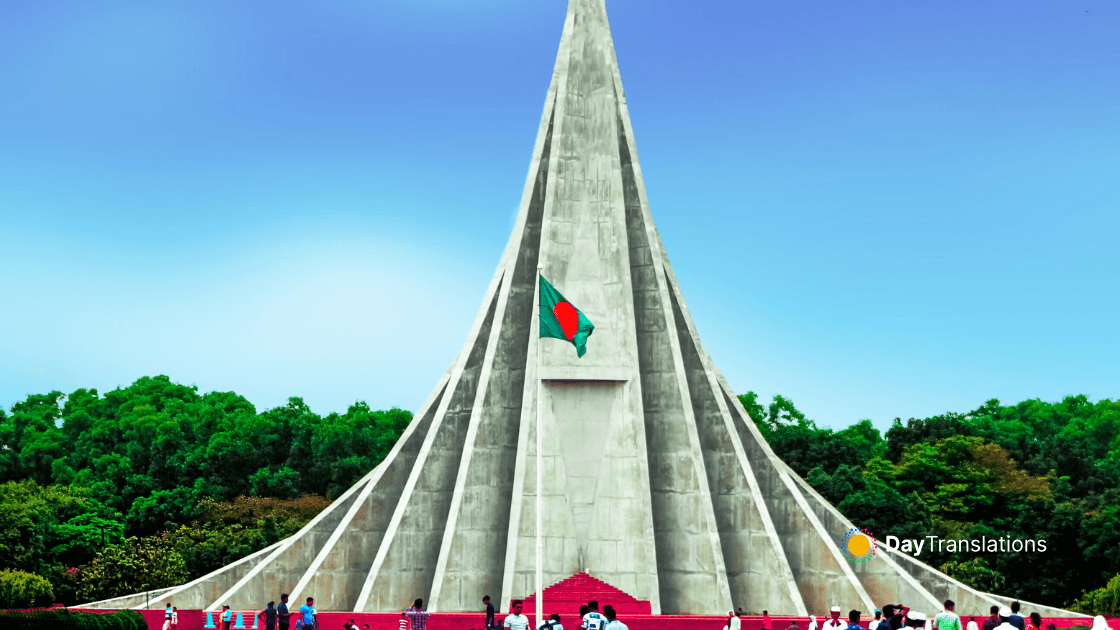
If you believe everything in the news, as a traveler you will not dare to include Bangladesh in your travel itinerary. If that is so, you will stand to miss the Royal Bengal Tigers at the Sundarbans National Park or the endangered freshwater pink dolphins, and even the two deep-water whales while you are enjoying the beaches at Cox’s Bazar, one of the world’s longest natural beaches. You will also miss the chance to explore the hidden relics of the Buddhist kingdoms that have been forgotten in Rangamati or view the lush and verdant tea plantations in Srimangal.
Yes, Bangladesh is not known for its affluence but this nation is defiant and determined to rise above natural calamities that visit the country yearly; curb its booming population and do its share in environmental protection. In comparison to Western countries, Bangladesh has been able to ban the usage of diesel and gasoline for all vehicles from the urban centers, and replace them with cleaner alternative fuel. They have created national parks and designated protected areas and banned the use of plastic bags. Bangladesh is a poor country but it is doing its share to be at par with the global community.
While the country is officially known as People’s Republic of Bangladesh, it is referred to by its conventional short form, which is Bangladesh, formerly called East Pakistan. Its capital is Dhaka, located near the center of the country, the largest in Bangladesh and the ninth largest in the world. It is one of the most populous cities in Bangladesh, teeming with about 15 million people for the whole metropolitan area, packed in a city that only measures 360 square kilometers or 139 square miles.
In this Country Profile
:: Background of Bangladesh ::
Europe’s dominance made its presence felt in Bangladesh around the sixteenth century, starting with the Portuguese traders and missionaries that started setting up trading posts in the country. They were followed by the Dutch and the French until the British came to continue the trend and Bangladesh became part of the British India Company.
Bangladesh was not originally a poor nation. It was part of the greater Bengal region and had been under Dravidian, Indo-Aryan, Mughul (Mongol), Arab, Persian, Turkish and European rules. The Muslim invasion in 1200 A.D. converted the major portion of the eastern part of Bengal, where the residents were predominantly Buddhists and Hindus, into Islam.
Chafing from the restrictions imposed by the British Empire, the Muslims and the Hindus began to exert more effort to gain independence and pushed for self-government with the British rule but the two factions, the Hindu Indian National League and the All-India Muslim League were unable to come up with the right formula to protect the Muslims. It was also a known fact that the Hindus followed the British while the Muslims continued to resist, causing incessant internal conflicts.
The United Kingdom came under extreme international pressure to reduce the size of its overseas domination after World War II and decided to grant full dominion status to Pakistan and India, with Pakistan gaining the majority of the districts where Muslims dominated, including parts of Bengal while the rest joined India. East Pakistan was created as a single province while West Pakistan was composed of its capital, Lahore plus four other provinces.
Still, peace did not reign in the region and economic difficulties and political instability were the constant occurrence for more than 26 years and dissident movement became common, especially between East and West Pakistan. India joined forces with the Bengalis to defeat the Pakistani Army and gained control of East Pakistan, which eventually became Bangladesh and restored power to Sheikh Mujibur Rahman, leader of the Awami League in 1971. The year became the mark when Bangladesh started its own history as a free nation.
:: Geography of Bangladesh ::
An almost flat, low-lying area, Bangladesh is very fertile, due mainly from the silt deposited by the numerous floods that occur in the country. Around 700 hundred rivers and other bodies of water traverse the country, mostly originating from the Ganges and emptying into the beautiful Bay of Bengal.
Location
Bangladesh is a county in Southern Asia and is almost surrounded by India, and partly by the Bay of Bengal and Burma or Myanmar. It lies 24° 00’ North and 90° 00’ East.
Area
Fertile lands cover 130,168 square kilometers while about 10% percent or 13,830 square kilometers is under water. Total land mass amount to 143,998 square kilometers. In comparison, the total land size of Bangladesh is slightly larger than New York and about two times the size of New Brunswick, Canada.
Land Boundaries
Most of Bangladesh shares a border with India, running for 4,053 kilometers along the eastern, western and northern parts of the country. A small area in the south is bordered by Myanmar (previously Burma) for 193 kilometers. The Bay of Bengal also borders the southern part of Bangladesh.
Coastline
Bangladesh has a rugged coastline of approximately 580 kilometers while its territorial waters extend to twelve nautical miles. Its contiguous zone covers 18 nautical miles and enjoys an exclusive economic zone of 200 nautical miles, which is equivalent to 370 kilometers. The continental shelf of Bangladesh is up to the outer limits of its continental margin.
Climate
Generally, Bangladesh enjoys a tropical climate. Winter occurs from October to March. March, April, May and June are the summer months and characterized by hot and humid temperature. Monsoon rains that keep the temperature warm and humid occur between the months of June and October.
Terrain
Except for the hilly parts in the southeastern section of Bangladesh, the rest of the country is basically flat and below sea level, with the Indian Ocean as its lowest point at zero meters. The highest peak in Bangladesh is Keokradong located at the border between Bangladesh and Myanmar. It is claimed to reach a height of 1,230 meters.
Natural Resources
Bangladesh has very little natural resources and the most valuable one is natural gas. Much of it is being utilized for domestic use. It is claimed that the country has deposits of coal. Outwardly, its variety of trees for commercial timber production and vast arable land are the two most viable natural resources.
Land Use
Sixty-seven percent of the land in Bangladesh is arable although less than 2% is planted with permanent crops. The rest of the land is allocated for other uses, including mining and manufacturing.
Natural Hazards
Due to its geographical location and the country being flat and low-lying, it is constantly threatened by cycles of droughts and flooding. The summer monsoon brings cyclones into Bangladesh causing numerous floods that cause damage to crops and properties and at times the floods are so severe that the lives of the Bangladeshis are also threatened.
Current Environmental Issues
Bangladesh is not an affluent country like its neighbors and it struggles with perennial problems from nature that occur with regularity. Many of the people do not have land to live on and are forced to farm in areas that are prone to floods. While these floods keep the land very fertile, water-borne diseases become common in surface water. Heavy use of commercial pesticides causes water pollution that reaches the fishing grounds while ground water becomes contaminated with arsenic that naturally occurs. Severe soil erosion and degradation due to the rise and ebb of floodwater and deforestation as well as over population are serious problems. While the rivers used to be the main sources of all their water needs, there are now sporadic water shortages as parts of the northern and central regions have falling water tables.
International Environmental Agreements
While Bangladesh has signed several international environmental agreements, it has yet to ratify any of them. The country joined in the agreements for climate change and climate change-Kyoto protocol, hazardous wastes, ozone layer protection, wetlands and ship pollution. It also agreed to be party to desertification, endangered species, law of the sea, environmental modifications and biodiversity.
:: People of Bangladesh ::
Nationals from Bangladesh are called Bangladeshis (singular: Bangladeshi). The word is used for as a noun and as an adjective.
Population
According to the CIA World Fact Book, the population of Bangladesh, in their July 2011 estimates, has reached 158,570,535. Of the total population, 34.3% are in the zero to fourteen age group, roughly translated into 27,551,594 males and 26,776,647 females. The number of females becomes more dominant in the fifteen to sixty-four age group, which comprises 61.1% of the population, broken down into 50,891,519 females and 45,96,431 males. The gender difference varies slightly in the 65 years and over age group, but still female count is higher at 3,778,119 to 3,616,225 males to make up 4.7% for this age group. Population growth is estimated at 1.566% annually. Net migration is not a cause of population growth since it is placed at -1.57 for every one thousand population. Fertility rate is estimated to be 2.6 children for every woman of childbearing age, as estimated in 2011.
Median Age
The median age in Bangladesh is quite young, estimated to be 23.3 years for the whole country. By gender, the median age is lower in males at 22.7 years and slightly higher for the females at 23.7 years.
Birth and Death Rates
Birth rate in Bangladesh is very high, estimated to reach 22.98 births per 1,000 population while there are only 5.75 deaths per 1,000 residents, contributing to the swell in population.
Sex Ratio
For the entire population of Bangladesh, the gender ratio slightly favors the males, with the total for the country estimated to be 0.93. At birth, 1.04 males are born while for those in the 15 years and under age group, the number is 1.01 males over female. The ratio slightly lowers to 0.89 males in the 15-64 years age group and rises slightly to 0.93 males over female in the 65 years and over age bracket.
Mortality Rate
Considering the staggering population figure of Bangladesh, it is surprising that there are 340 deaths/100,000 live births, according to statistical figures in 2008 and that infant mortality rate is also high, with 50.73 deaths for every 1,000 live births. More male infant deaths occur with 53.23, compared to only 43.13 deaths for every 1,000 live female births, according to estimates in 2011.
Life Expectancy at Birth
Females outlive the males by a few years in Bangladesh, estimated at 71.65 years over the 67.93 years for the males. Countrywide average is 69.75 years.
HIV / AIDS
HIV/AIDS, although still an issue, is not too rampant in Bangladesh, with an estimated 0.1% prevalence in adults. About 6,300 people are living with the disease while the death rate due to the disease is estimated to be less than 200.
Ethnic Groups
Bangladesh is basically made up of 98% Bengali while the remaining 2% is shared by non-Bengali Muslims and other tribal groups.
Religions
Muslims dominate the country at 86.6% with Hindus following a close second with 12.1%. There are about 0.6% Buddhists in Bangladesh and Christians and followers of other religions are at 0.4% and 0.3%, respectively.
Language
The official language in Bangladesh is Bengali or Bangla although English is also spoken.
Literacy
Although Bangladeshis aged 15 and over can read and write, literacy rate in the country is just about 60% to 62%, leaning slightly towards the males with an average of 54%. For the women, literacy rate is placed at 41.4%. Literacy is very low because the average stay in school for males and females and for the whole country is only eight years.
:: References ::
https://www.cia.gov/library/publications/the-world-factbook/geos/bg.html
http://www.virtualbangladesh.com/history/overview.html
http://www.parjatan.gov.bd/bd_fast_facts.php
Geography of Bangladesh: Important Geographical Information about Bangladesh
In this Country Profile
Bangladesh is a very fertile country, with about 700 rivers traversing it. But since it is generally flat and low-lying, it is prone to floods that occur annually. Bangladesh lies across the Tropic of Cancer, which gives the country a tropical monsoon climate, bringing in high temperatures, high humidity and quite heavy seasonal rainfall. Cyclones, tornadoes and floods are basically common annual occurrences in Bangladesh. These natural phenomena, although destructive also leave the flood plains fertile and very well suited for agriculture, with 67% of the land arable. The river system in Bangladesh is the country’s main source of water for drinking, for irrigation, fishing and transportation. Some of the water is also harnessed in the Kharnapuli Dam for hydroelectric power.
:: Bangladesh’s Geography ::
Bangladeshis consider their country as having six seasons, although technically the classification only falls into three categories – summer season, rainy season and winter season. But for the locals, the subdivisions include spring or bashonto in the local language, summer or grismo, rainy or barsha, sharat or autumn, hernanto or cool and winter or sheet.
Summer in Bangladesh is rainy and hot while winter is quite dry. Cool temperatures are experienced in January, when the average is about 26 °C or roughly 78 °F. April is very warm and the average temperature reaches to about 33 °C to 36 °C which is about 91 °F to 96 °F. The monsoon months are from June to September while winter is from November to February. Bangladesh is one of the wettest countries in the world, receiving over 1,525 millimeter of rain annually, and higher still on the areas near the hills, which receive over 5,080 millimeters. In Dhaka, the country’s capital, the average temperature during the coolest month of the year, January, is 19 °C or about 66 °F while May is the warmest, with temperatures averaging 29 °C which is about 84 °F.
Bangladesh is visited by cyclones regularly, coming from the Bay of Bengal. April to May and September to November are the months when cyclones are frequent. Most of these are destructive and cause damage not only to crops and properties but also to people.
Three important areas in Bangladesh are the Madhupur Tract, the Sundarbans and the Chittagong Hill Tracts. Sundari, which gave the name to the Sundarbans is a commercially valuable tree that grows in the area, while gewa and sal, also commercially valuable are found in the Madhapur Tract and garan grow in the Chittagong Hill Tracts. Groves of jackfruit, mango, betel nuts and date as well as several varieties of bamboo are grown in villages. The Sundarbans is particularly important because this is one of the remaining principal territories of the Royal Bengal Tiger. It is also the largest mangrove forest in the world, occupying the southwest portion of Bangladesh and covering about 6,017 kilometers. On the other hand elephants and leopards still consider the Chittagong Hill Tracts their home.
:: References ::
http://www.banglaembassy.com.bh/Geography.htm
http://www.bangla2000.com/bangladesh/geography.shtm
http://www.bangladesh.com/geography/
Photo credit: https://www.cia.gov/library/publications/the-world-factbook
Information about the Bangladesh Flag: Colors and Meaning of the Flag of Bangladesh
In this Country Profile
Originally the design of the national flag of the People’s Republic of Bangladesh contains a map of the country inside the red orb. However, some sources say that it was eventually removed because it was quite difficult to render the map in the same way on the reverse side of the flag.
Currently the national flag has dark green background with a red-colored disk in the center and slightly to the left of the flag, closer to the hoist side. The placement of the disk was intentionally done so that it will look to be perfectly centered in the middle of the flag when it is flown. The design was conceptualized by Bangladeshi painter, Quamrul Hassan. The red disc was used to veer way from the crescent and star that are part of the flag of Pakistan. It was first hoisted at the Dhaka University campus on March 3, 1971 by the Vice President of the Dhaka University Students’ Union, A. S. M. Adbur Rab. It was also flown at the residence of Sheik Mujibur Rahman on March 26, 1971 when he gave his historic speech during the declaration of independence.
:: Meaning of the National Flag of the People’s Republic of Bangladesh ::
Contrary to what others believed, the green background of the national flag of Bangladesh does not symbolize Islam. It is meant to represent the lush and verdant countryside of Bangladesh, while the red orb symbolizes the rising sun over the Bay of Bengal and the blood shed by the thousands of Bangladeshi patriots who fought with their lives for their country to be independent from Pakistan.
Adoption of the Flag
The current flag, with a ratio of 10:6 was adopted as the official flag of the nation on January 17, 1972. Bangladesh finally became a member of the United Nations and first flew its flag at its headquarters in September 1974.
Extensive List of Languages of Bangladesh: Spoken and Extinct Languages
In this Country Profile
Assamese
[asm] 9,000 in Bangladesh. Alternate names: Asambe, Asami, Ahomiyo. Classification: Indo-European, Indo-Iranian, Indo-Aryan, Eastern zone, Bengali-Assamese
A’tong
[aot] 5,400 in Bangladesh. Northern Netrokona District. Alternate names: Attong. Classification: Sino-Tibetan, Tibeto-Burman, Jingpho-Konyak-Bodo, Konyak-Bodo-Garo, Bodo-Garo, Koch
Bengali
[ben] 110,000,000 in Bangladesh (2001 census). 250,000,000 including L2 speakers. Population total all countries: 181,272,900. West. Also in Canada, India, Malawi, Nepal, Saudi Arabia, Singapore, United Arab Emirates, United Kingdom, United States. Alternate names: Banga-Bhasa, Bangala, Bangla. Dialects: Languages or dialects in the Bengali group according to Grierson: Central (Standard) Bengali, Western Bengali (Kharia Thar, Mal Paharia, Saraki), Southwestern Bengali, Northern Bengali (Koch, Siripuria), Rajbanshi, Bahe, Eastern Bengali (East Central, including Sylheti), Haijong, Southeastern Bengali (Chakma), Ganda, Vanga, Chittagonian (possible dialect of Southeastern Bengali). Classification: Indo-European, Indo-Iranian, Indo-Aryan, Eastern zone, Bengali-Assamese
Bihari
[urd] 250,000 in Bangladesh (2003 SIL). Mainly refugee camps in 13 districts. Alternate names: Urdu. Classification: Indo-European, Indo-Iranian, Indo-Aryan, Central zone, Western Hindi, Hindustani
Bishnupriya
[bpy] 40,000 in Bangladesh (2003). 1% monolingual. Sylhet Division, Moulvibazar District; southern Habiganj District, Sylhet City, 1 village; Sunamganj District, 2 villages. Alternate names: Bishnupria, Bishnupuriya, Bisna Puriya. Dialects: Rajar Gang, Madai Gang. Classification: Indo-European, Indo-Iranian, Indo-Aryan, Eastern zone, Bengali-Assamese
Burmese
[mya] 300,000 in Bangladesh (Johnstone and Mandryk 2001). Myanmar border area. Alternate names: Bama, Bamachaka, Myen. Dialects: Bomang. Classification: Sino-Tibetan, Tibeto-Burman, Lolo-Burmese, Burmish, Southern
Chak
[ckh] 5,500 in Bangladesh (2002). Arakan Blue Mountains, Baishari, Bandarban, south Naikhongchari area, Bishar Chokpra. Alternate names: Sak, Tsak. Classification: Sino-Tibetan, Tibeto-Burman, Jinghpo-Konyak-Bodo, Jinghpo-Luish, Luish
Chakma
[ccp] 150,000 in Bangladesh (2007). Population total all countries: 550,000. Southeast, Chittagong Hills area, and Chittagong City. Also in India. Alternate names: Sangma, Sakma, Takam. Dialects: Chakma of India [ccp] understood with difficulty. Lexical similarity: 58%–67% with Tanchangya [tnv]. Classification: Indo-European, Indo-Iranian, Indo-Aryan, Eastern zone, Bengali-Assamese
Chin, Asho
[csh] 2,340 in Bangladesh (1991 census). Bandarban, Chittagong, and Rangamati districts. Alternate names: Khyang, Khyeng, Qin, Sho, Shoa. Classification: Sino-Tibetan, Tibeto-Burman, Kuki-Chin-Naga, Kuki-Chin, Southern, Sho
Chin, Bawm
[bgr] 13,500 in Bangladesh (1991 census). Chittagong Hills. Alternate names: Bawm, Bawn, Bawng, Bom. Classification: Sino-Tibetan, Tibeto-Burman, Kuki-Chin-Naga, Kuki-Chin, Central
Chin, Falam
[cfm] Alternate names: Falam, Fallam, Halam, Hallam Chin. Dialects: Chorei, Zanniat. Classification: Sino-Tibetan, Tibeto-Burman, Kuki-Chin-Naga, Kuki-Chin, Northern
Chin, Haka
[cnh] 1,260 in Bangladesh (2000). Alternate names: Baungshe, Haka, Lai. Dialects: Klangklang (Thlantlang), Zokhua, Shonshe. Classification: Sino-Tibetan, Tibeto-Burman, Kuki-Chin-Naga, Kuki-Chin, Central
Chin, Khumi
[cnk] 2,090 in Bangladesh. Bandarban District, Thanchi, Ruma, and Rowanchari subdistricts. Alternate names: Kami, Khami, Khumi, Khuni, Khweymi, Kumi. Dialects: Khimi, Yindi (Yindu), Khami. Classification: Sino-Tibetan, Tibeto-Burman, Kuki-Chin-Naga, Kuki-Chin, Southern, Khumi
Chittagonian
[ctg] 13,000,000 (2006 SIL). Chittagong region. Alternate names: Chatgaiyan Buli, Chatgaya, Chittagonian Bengali. Dialects: Not inherently intelligible with Bengali [ben], although considered a nonstandard Bengali dialect. Dialects form a contiuum from north to south, with a larger religious distinction between Muslim and others. Rohingya in Myanmar is similar to the southern dialect of Chittagonian. Lexical similarity: 43%–64% with Bangla [ben]. Classification: Indo-European, Indo-Iranian, Indo-Aryan, Eastern zone, Bengali-Assamese
Garo
[grt] 120,000 in Bangladesh (2005). Mymensingh plains, Tangail Sherpur, Madhupur, Jamelpur, Netrakona, Sylhet, Dhaka. Alternate names: Garrow, Mande, Mandi. Dialects: Abeng, Achik, Brak, Chibok, Dual. Classification: Sino-Tibetan, Tibeto-Burman, Jingpho-Konyak-Bodo, Konyak-Bodo-Garo, Bodo-Garo, Garo
Hajong
[haj] 8,000 in Bangladesh (2005). Dhaka Division, Rangpur District east to Sunamganj District. Alternate names: Hajang. Classification: Indo-European, Indo-Iranian, Indo-Aryan, Eastern zone, Bengali-Assamese
Indian Sign Language
[ins] Classification: Deaf sign language
Khasi
[kha] Very few speakers. Alternate names: Cossyah, Kahasi, Khasie, Khasiyas, Khassee, Khuchia, Kyi. Classification: Austro-Asiatic, Mon-Khmer, Northern Mon-Khmer, Khasian
Koch
[kdq] 6,000 in Bangladesh (2006 SIL). Alternate names: Koc, Kocch, Koce, Kochboli, Konch. Dialects: Tintekiya, Chapra. Classification: Sino-Tibetan, Tibeto-Burman, Jingpho-Konyak-Bodo, Konyak-Bodo-Garo, Bodo-Garo, Koch
Koda
[cdz] 1,300 in Bangladesh (2005). Population total all countries: 1,600. Rajshahi Division, Puthia and Mundumala areas. Also in India. Dialects: Lexical similarity: 49%–55% with Santali [sat]; 61%–67% with Mundari [unr], 57%–60% with Kol [biw]; wordlist contained 19% Bengali [ben] words. Classification: Austro-Asiatic, Munda, North Munda, Kherwari, Mundari
Kok Borok
[trp] 5,000 in Bangladesh. Alternate names: Debbarma, Tipura, Tripura, Tripuri. Classification: Sino-Tibetan, Tibeto-Burman, Jingpho-Konyak-Bodo, Konyak-Bodo-Garo, Bodo-Garo, Bodo
Kurux
[kru] 40,000 in Bangladesh, decreasing. Ethnic population: 50,000. Alternate names: Kurukh, Oraoan, Uraon. Classification: Dravidian, Northern
Marma
[rmz] 150,000 in Bangladesh (2007). Population total all countries: 166,500. Rangamati, Bandarban, and Khagrachari districts. Also in India. Alternate names: “Mogh”. Dialects: Related to Rakhine [rki]. Classification: Sino-Tibetan, Tibeto-Burman, Lolo-Burmese, Burmish, Southern
Megam
[mef] 6,870 (2000). Netrokona District, Kalmakanda Subdistrict. Alternate names: Migam, Negam. Dialects: Lexical similarity: 7%–9% with Abeng [grt], 60% with Lyngngam [lyg]. Classification: Sino-Tibetan, Tibeto-Burman, Jingpho-Konyak-Bodo, Konyak-Bodo-Garo, Bodo-Garo, Garo
Meitei
[mni] 15,000 in Bangladesh (2003). 2% monolingual. Sylhet District, Moulvi Bazar District (Kamalganj Subdistrict) and Sylhet City. Alternate names: Kathe, Kathi, Manipuri, Meetei, Meiteiron, Meithe, Meithei, Mitei, Mithe, Ponna. Dialects: Hindu Meitei, Pangan (Pangal). Classification: Sino-Tibetan, Tibeto-Burman, Meitei
Mizo
[lus] 250 in Bangladesh (1991 census). Rangamati, Sajek. Alternate names: Hualngo, Lei, Lusai, Lushai, Lushei, Sailau, Whelngo. Dialects: Ralte, Dulien, Ngente, Mizo, Le. Classification: Sino-Tibetan, Tibeto-Burman, Kuki-Chin-Naga, Kuki-Chin, Central
Mru
[mro] 30,000 in Bangladesh (2007). Population total all countries: 51,230. Bandarban District. Also in India, Myanmar. Alternate names: Maru, Mrung, Murung. Dialects: Lexical similarity: 13% with Mro Chin [emr]. Classification: Sino-Tibetan, Tibeto-Burman, Mru
Mundari
[unr] 2,500 in Bangladesh (2005 Caritas). Ethnic population: 5,000. Rajshahi Division, Dinajpur and Naogaon districts; Sylhet Division, various tea estates. Alternate names: Colh, Horo, Mandari, Mondari, Munari, Munda. Dialects: Hasada’, Latar, Naguri, Kera’. Classification: Austro-Asiatic, Munda, North Munda, Kherwari, Mundari
Pangkhua
[pkh] 2,500 in Bangladesh (2007). Population total all countries: 2,730. Rangamati Dustrict. Also in India, Myanmar. Alternate names: Pangkhu, Pankho, Panko, Pankhu. Classification: Sino-Tibetan, Tibeto-Burman, Kuki-Chin-Naga, Kuki-Chin, Central
Pnar
[pbv] 4,000 in Bangladesh (2002). Northeast along India border; Sylhet Division, Sylhet District, near Jaflong, Tamabil, Jaintiapur, and north of Raipur; Moulavi Bazar District, near Fenchuganj, Madhabkunda, Barlekha, Goalbari, Fultala, Alinagar, Islampur, Khajori, Rashidpur, Satgoan, and Kamalganj. Classification: Austro-Asiatic, Mon-Khmer, Northern Mon-Khmer, Khasian
Rakhine
[rki] 35,000 in Bangladesh (2007). Cox’s Bazaar, Patuakhali, and Barguna districts. Alternate names: Rakhain, Rakkhaine, Mogh. Dialects: Rakhine, Sitwe. Classification: Sino-Tibetan, Tibeto-Burman, Lolo-Burmese, Burmish, Southern
Rangpuri
[rkt] 10,000,000 in Bangladesh (2007). Population total all countries: 15,000,000. Rajshahi Division north from Bogra, also known as the greater Dinajpur and Rangpur areas, now subdivided into Rangpur, Lalmonihat, Nilphamari, Gaibanda, Panchagar, Thakurgaon, and Dinajpur districts. Also in India. Alternate names: Bahe Bangla, Anchalit Bangla, Kamta, Polia. Classification: Indo-European, Indo-Iranian, Indo-Aryan, Eastern zone, Bengali-Assamese
Riang
[ria] 500 in Bangladesh (2007). Rangamati District. Alternate names: Kau Bru, Reang. Classification: Sino-Tibetan, Tibeto-Burman, Jingpho-Konyak-Bodo, Konyak-Bodo-Garo, Bodo-Garo, Bodo
Rohingya
[rhg] 200,000 in Bangladesh (2006). Cox’s Bazaar District. Alternate names: Rohinga, Rohinja. Classification: Indo-European, Indo-Iranian, Indo-Aryan, Eastern zone, Bengali-Assamese
Sadri, Oraon
[sdr] 166,000 (2000). Throughout Rajshahi Division; Sylhet Division, Moulvibazar and Habiganj districts; Khulna Division, Jhenaidah District (Jhenaidah Subdistrict, Moheshpur Subdistrict), Kushtia District (Mirpur Subdistrict), Magura District (Magura Subdistrict). Dialects: Borail Sadri, Nurpur Sadri, Uchai Sadri, Mokkan Tila Sadri. Dialects may need separate literature. Inherent intelligibility of 7 Sadri varieties on Borail ranges from 70%–93%; of 8 varieties on Nurpur from 78%–94%. Lexical similarity: of 14 Sadri varieties with the Borail Sadri dialect ranges from 88%–97%. Classification: Indo-European, Indo-Iranian, Indo-Aryan, Eastern zone, Bihari
Santali
[sat] 157,000 in Bangladesh (Johnstone and Mandryk 2001). Alternate names: Har, Hor, Sandal, Sangtal, Santal, Santhali, Satar, Sonthal. Dialects: Santali, Mahali (Mahle). Classification: Austro-Asiatic, Munda, North Munda, Kherwari, Santali
Sauria Paharia
[mjt] 7,000 in Bangladesh (2007). Alternate names: Malto, Paharia. Classification: Dravidian, Northern
Sylheti
[syl] 7,000,000 in Bangladesh. Population total all countries: 10,300,000. Districts of Sylhet, Sunamganj, Habiganj, Moulvibazar. Also in Australia, Canada, India, Italy, Malaysia (Peninsular), Myanmar, Singapore, United Kingdom, United States. Alternate names: Sileti, Siloti, Sylhetti, Sylhetti Bangla, Syloti, Syloty, Srihattia. Dialects: Similar to Bengali [ben], Assamese [asm]. Lexical similarity: 70% with Bengali. Classification: Indo-European, Indo-Iranian, Indo-Aryan, Eastern zone, Bengali-Assamese
Tangchangya
[tnv] 21,600 (1991 census). Chittagong Hills. Alternate names: Tanchangya. Dialects: 90% intelligibility of Chakma [ccp]. Lexical similarity: 58%–67% with Chakma. Classification: Indo-European, Indo-Iranian, Indo-Aryan, Eastern zone, Bengali-Assamese
Tippera
[tpe] 85,000. Chittagong Hills, Khagrachari District, Chittagong District, Fatikchari Subdistrict. Alternate names: Kok Borok, Tipperah, Tippurah, Tipra, Tipura, Triperah, Tripura. Dialects: Naitong, Dendak, Gabing, Khali, Phatung, Tongpai, Anok, Kewa, Kema, Aslong. 36 dialects. Lexical similarity: 56%–85% between dialects, 61%–74% with Kok Borok [trp], 53%–65% with Riang [ria], 37%–59% with Usoi Tripura [usi]. Classification: Sino-Tibetan, Tibeto-Burman, Jingpho-Konyak-Bodo, Konyak-Bodo-Garo, Bodo-Garo, Bodo
Usoi
[usi] 22,400. Bandarban District. Alternate names: Kau Brung, Tippera, Tripura, Unshoi, Unsuiy, Ushoi. Dialects: Lexical similarity: 88% between Panji and Joloi dialects, 59%–67% with Riang [ria], 47%–58% with Kok Borok [trp], 37%–59% with Tippera [tpe]. Classification: Sino-Tibetan, Tibeto-Burman, Jingpho-Konyak-Bodo, Konyak-Bodo-Garo, Bodo-Garo, Bodo
War-Jaintia
[aml] 16,000 in Bangladesh (2003 SIL). 25% monolingual. Population total all countries: 28,000. Northeast along India border; Sylhet Division, Sylhet District, near Jaflong, Tamabil, Jaintiapur, and north of Raipur; Moulavi Bazar District, near Fenchuganj, Madhabkunda, Barlekha, Goalbari, Fultala, Alinagar, Islampur, Khajori, Rashidpur, Satgoan and Kamalganj. Also in India. Dialects: War-Jaintia, War-Khasi. Not intelligible with Lyngngam [kha], Khasi War [aml] or Jowai, partially intelligible with Synteng [pbv], Standard Khasi [kha] 55% (acquired); sufficient to understand complex and abstract discourse with War-Jaintia in India. Lexical similarity: 86%–92% between dialects in Bangladesh; 83%–89% between War-Jaintia in India and Bangladesh; India variety 41%–45% with Pnar [pbv] (from scant data); 27%–35% with standard Khasi [kha]; 24%–28% with War dialect of Khasi. Classification: Austro-Asiatic, Mon-Khmer, Northern Mon-Khmer, Khasian
:: Reference ::
Gordon, Raymond G., Jr. (ed.), 2005. Ethnologue: Languages of the World, Fifteenth edition. Dallas, Tex.: SIL International. Online version: http://www.ethnologue.com/
Famous Bangladeshi People: Bangladeshi Artists, Scientists, Leaders, Musicians, Politicians and Athletes
In this Country Profile
Bangladesh may be a small nation but some of its citizens made quite a mark in this world, then and now. From their struggle to be independent to making their country part of the global community, notable Bangladeshis carved a niche in the arts, economics, politics and fashion. Some of them were born in India, others in Pakistan before the separation and the formation of the People’s Republic of Bangladesh.
:: List of Famous People from Bangladesh ::
Bangabandhu Sheikh Mujibur Rahman
He was born on the 17th of March 1920. He was considered the founder of the People’s Republic of Bangladesh and Sheikh Mujib became the shortened version of his name. Bangabandhu was the honorary title given to him, which in Bengali means Friend of Bengal. Sheikh Mujib was the head of the Awami League, the short form of the more formal Bangladesh Awami League, a leading political party. He was a great orator and greatly opposed the military rule of Ayub Khan and the institutional and ethnic discrimination of the Bengalis. He championed provincial autonomy causing him to be accused of conspiring with India. It was proven that the allegation was wrong when he was tried in 1968.
Although he greatly helped his party win in the elections, he was not called to participate in the formation of a new government in 1970. He subsequently rose from the ranks and eventually came into power to declare East Pakistan’s independence on March 26, 1971, establishing the country as the People’s Republic of Bangladesh. It was met with resistance and political uprisings ensued and he had to flee to India together with thousands of Bangladeshis. The Indian Army joined forces with the Bangladesh Army to topple the opposition and installed Sheikh Mujib as the interim president. He was later proclaimed as the prime minister. Sheikh Mujib was able to draft a constitution but was faced with massive unemployment, poverty and corruption. When the great famine struck in 1974, Sheikh Mujib announced that there will only be one political party and banned most newspaper publishers except those owned by the government. He focused on national issues, industrial socialism and unification thus neglecting local government and its many issues. He and his cabinet were also not prepared for all the problems faced by the country, with scant funds and lack of qualified personnel, and massive unrest among the masses. He was able to stem some of the uprisings but did not foresee that the military would cause his downfall. A group of junior officers stole into his residence on August 15, 1975 and assassinated him, together with 23 assistants and family members. Only his two daughters, Sheikh Hasina and Sheikh Rehana who were visiting Germany at that time survived.
Khaleda Zia
Former Bangladeshi First Lady and later the first female prime minister in Bangladesh, Begum Khaleda Zia was born on August 10, 1945. She was one of the first two women prime ministers in Asia, after Benazir Bhutto of Pakistan. She was married to President Ziaur Rahman, one of the leaders of Bangladesh’s fight for independence until his assassination in 1981. Under the military rule of Chief of Army Staff H. M. Ershad who wrestled the power from Justice Sattar of the Bangladesh National Party, she was appointed by Justice Sattar as vice-chairperson of the party and then became its chairperson when Justice Sattar retired. Eventually she was officially elected to the post and formed a coalition with six other parties to oppose Ershad who eventually resigned. During the nine years that Ershad was in office, Khaleda was detained seven times. In the free elections, she became the prime minister of Bangladesh in 1991 up to 1996 and then again from 2001 to 2006. Education was one of her main focus during her reign and she made primary education compulsory, with the government subsidizing it. Khaleda Zia made it a point to give priority to girls by giving them free education up to grade ten, including stipend. She was also credited with raising the entry level age to 30 for those seeking work in the government.
Bibi Russell
People who follow international fashion will surely have heard of Bibi Russell, the pride of Bangladesh. Bibi was a former international model who worked with big fashion houses like Giorgio Armani, Kenzo, Yves San Laurent and Karl Lagerfeld until 1994. She was a graduate of London College of Fashion and upon her retirement from modeling returned to Bangladesh to open Bibi Productions. She’s tirelessly working to support the indigenous weavers in her country and using her own fashion house and her designs to incorporate their work. As of 2004, she has 35,000 weavers in her employ.
Kazi Nazrul Islam
He was a musician and poet from Bengal where he was born on May 24, 1899. He was also a revolutionary who used his works to raise the spirit of nationalism and putting forth his ideas on oppression and fascism. His activism earned him the title of Rebel Poet or Bidrohi Kobi. In his younger years he served as a muezzin at a mosque and got exposed to literature, drama and poetry when he worked with people from the theater. He worked as a journalist in Calcutta after serving in the army and made veiled attacks on the British Raj through his publications. He preached revolution through his various works, earning the ire of the British and landing him in prison. Some of his famous works include The Rebel; or Bidrohi, Bhangar Gaan or The Song of Destruction, Deposition of a Political Prisoner or Rajbandir Jabanbandi, a piece he wrote while in prison. He began to suffer memory and voice loss in 1942 which greatly affected his health. He and his family were invited by the Government of Bangladesh to live in Dhaka where he spent four short years before his death on August 29, 1976. He was hailed as the national poet of Bangladesh. His legacy included nearly 4,000 songs which are still popular to this day.
Ziaur Rahman
Born on January 19, 1936, Rahman was a freedom fighter, born to a chemist working in a government office in Calcutta. He spent his early childhood in Calcutta and Bagbari, Bogra where he was born. After India was divided, his father was transferred to Karachi and Rahman continued his education there. He eventually joined the Pakistan Military Academy. He rose from the ranks and established himself as a very able leader, receiving further training in Germany. When Sheikh Mujibur Rahman came under arrest on March 25, 1971 and their leadership was in disarray, Major Ziaur Rahman led the revolt against the Pakistan Army and raised the flag of Bangladesh a day after, declaring the independence of Bangladesh and started the War of Independence, which lasted for nine months. He served first as Deputy Chief of Staff in 1972 and became a Major General by the end of 1973. He served as Army Chief of Staff in August 1975 but was forced to resign and placed under house arrest during a coup led by Shafat Jamil on November 3, 1975. He was nevertheless installed to manage the country’s affairs four days later and named Chief Martial Law Administrator under three rulers, until the resignation of President Sayem in 1997 and Rahman became the president of Bangladesh. He instituted many government reforms and instilled the spirit of nationalism among the Bangladeshis. He lifted martial law in 1979 and planned a 19-point program for socio-economic development and established regional cooperation within South Asia and the outside world. Ziaur Rahman was however assassinated on May 30, 1981 in Chittagong before he can see the fulfillment of his dream for his country.
Shah Sultan Rumi
He is a saint from the Netrakona district in Bangladesh. The accounts of his life are culled from folklore but he is nevertheless a revered saint by the Muslims. According to legend he was a charismatic person that he attracted people wherever he went and that converts were created once they come in contact with the saint. His popularity was so widespread that even the king sought an audience with him to check on his activities. The king tested Shah Sultan Rumi by giving him a poisoned drink. Uttering Bismallah, which translates to “in the name of Allah” he drank the poison and survived, which impressed the king and gave the saint the village of Madanpur for free as a reward. The estate attached to the shrine has the necessary papers proving their ownership that even the British East India Company was not able to take it away from them.
Rabindranath Tagore
He was revered as a poet, artist, mystic and Nobel Prize recipient for Literature both in India and Bangladesh. The youngest of fourteen children, he was born on May 7, 1861 in Calcutta to a Sanskrit scholar father. He received home schooling at a young age and was considered a dreamer while in school but was able to write his first poem by age seven. At 17 he already had a book of poems published. Tagore went for further studies in England in 1878 but found that he was not that interested in learning and returned home. His 1912 collection of poems, Gitanjali or Song Offerings was what earned him his Nobel Prize. He later became the voice of spiritual heritage of India and Bangladesh. He left this world on August 7, 1941, leaving a legacy of more that fifty volumes of poetry, plays, short stories, novels, essays, musical and dance dramas and two autobiographies. He also left several songs, drawings and paintings.
Shamsur Rahman
From the many poets that came from Bangladesh, Shamsur Rahman was considered as one, if not the greatest poet this country has ever produced. Born on October 23, 1929 in Dhaka, he had written over 60 poetry books. He received his Bachelor of Arts and later his Master of Arts degree in Literature from Dhaka University. He started writing poetry at age 18 and during the 1980s was the editor of Dainik Bangla, a national daily newspaper and Bichitra, a weekly paper. He was inspired by one of Tagore’s books, Golpo Guccho. He became outspoken against the reactionary nationalism and religious fundamentalism in his country and became the target of attacks by the Islamists and other political conservatives. He was once physically attacked by members of the Harkut-ul-Jihad-al-Islami in 1999 and managed to survive. Shamsur Rahman became frail though and had two major cardiac surgeries. He eventually succumbed to heart and kidney failure in 2006 after being comatose for twelve days.
The most famous of his poems was Asader Shirt, a literary piece he wrote to show respect to the mass rebellion of 1969. He had special poems written that inspired and were recited by freedom fighters as well as poems that chronicle the history of his beloved country.
Iajuddin Ahmed
Iajuddin Ahmed was born on February 1, 1931 in the district of Munshiganj in Bengal. He received his university education from the University of Dhaka and the University of Wisconsin-Madison. He joined the Department of Soil Science of the University of Dhaka as an assistant professor. Ahmed was promoted to full professor and later as the chair of the Soil Science Department of the university and the dean of his alma mater’s Faculty of Biological Science. He invented a timed-release system for providing nutrients to the soil. Ahmed had stints as a visiting professor at Cornell University in the US and in the University of Göttingen and German Technical University in 1984 before he got interested in politics. He had some exposure in politics being adviser in 1991 to the caretaker government; chaired the Public Service Commission from 1991 to 1993 and the University Grants Commission in 1995 up to 1999. In 2002 he decided to run for presidency and easily won since he was the only candidate to register during that election year. Iajuddin Ahmed served as the President of Bangladesh from September 2, 2002 to February 12, 2009.
Zillur Rahman
Zillur Rahman is the 19th and incumbent president of Bangladesh and a senior leader of the Awami League. He assumed the presidency on February 2, 2009, getting the seat without any opposition. He was born on March 9, 1929 in Bhairab, formerly a part of the British Raj. His father was a famous lawyer during that time. He received his law degree and his masters in history from the prestigious Dhaka University. His wife, Ivy Rahman, also an Awami League politician, was a victim of the terrorist violence that rocked Bangladesh in previous years. She was not able to survive the grenade attack launched by the Harkat-ul-Jihad-al-Islami members in 2004.
Zillur Rahman was involved in politics as early as 1952 when he participated in the Bengali language movement. In the 1970 national elections he was elected as a member of the parliament under the Awami League. He was also part of the Bangladesh Liberation War and was an active member of the government while they were in exile. In 1972, when the war ended he was chosen as the General Secretary of Awami League and again elected as a member of parliament the following year. Politics is a dirty business and no one seems to escape from its claws. Zillur Rahman was arrested by the army junta and sentenced to four years in prison when Sheikh Mujibur Rahman, founding leader of the Awami League was assassinated in 1975.
:: References ::
http://asia-bangladesh.weebly.com/famous-people.html
http://en.wikipedia.org/wiki/List_of_Bangladeshi_people
http://www.mediabangladesh.net/en/index.php?option=com_content&view=category&id=33&Itemid=46
http://ethikana.com/bangladesh/greatpersonality/index.htm
http://www.topfamousbiography.com/country/1/famous_bangladeshi_biography.html